4 Rail Black Vinyl Ranch Fence Panels
4 rail black vinyl ranch fence panels are engineered for livestock containment and property delineation in agricultural and rural environments. These panels feature four horizontal rails spaced to
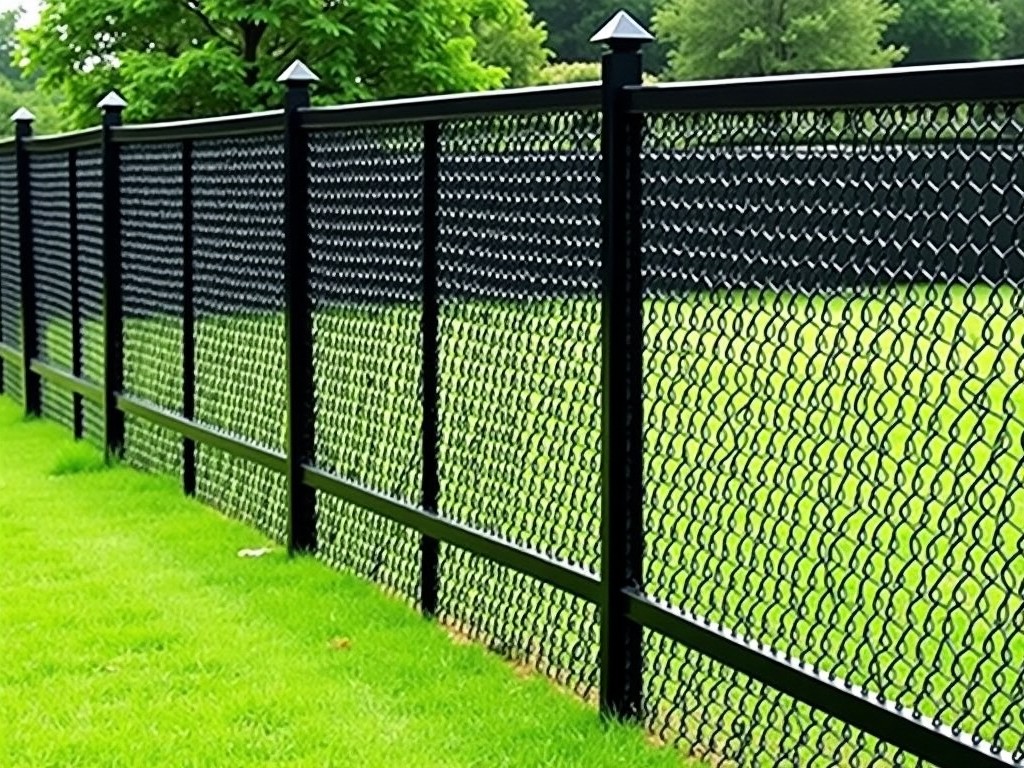
4 Rail Black Vinyl Ranch Fence Panels
4 rail black vinyl ranch fence panels are engineered for livestock containment and property delineation in agricultural and rural environments. These panels feature four horizontal rails spaced to prevent animal escape while maintaining structural integrity under lateral loads from cattle, horses, or wildlife. The black vinyl formulation includes UV stabilizers and impact modifiers to resist fading, cracking, and embrittlement from prolonged sun exposure and temperature cycling. Unlike wood or metal alternatives, vinyl requires no painting, staining, or rust prevention, reducing long-term maintenance costs. Panels are typically manufactured in 8-foot sections for standard post spacing, though custom lengths are available upon request to accommodate site-specific layouts.
Material Composition and Performance Characteristics
The panels are constructed from rigid polyvinyl chloride (PVC) compounded with titanium dioxide for UV resistance and calcium-zinc stabilizers for thermal stability. The black color is achieved through carbon black dispersion, which also enhances UV absorption and extends service life in high-sunlight regions. Typical tensile strength exceeds 5,500 psi, with flexural modulus around 350,000 psi, ensuring rigidity without brittleness across temperature ranges from -20°F to 120°F. Impact resistance is measured via notched Izod testing, with values typically above 1.5 ft-lb/in, indicating resilience against accidental impacts from livestock or equipment. The material is non-conductive, non-corrosive, and resistant to common agricultural chemicals, including fertilizers and mild acids.
Design and Structural Configuration
Each panel consists of four horizontal rails: a top rail, two intermediate rails, and a bottom rail, all connected to vertical pickets via mortise-and-tenon or tongue-and-groove joints reinforced with internal aluminum stiffeners where required for long spans. Rail dimensions are typically 1.5 inches in width and 1 inch in thickness, providing sufficient bending resistance to withstand wind loads and animal pressure. Pickets are spaced at 3.5-inch intervals to prevent hoof entrapment while maintaining visibility and airflow. The bottom rail is elevated 2 inches above grade to prevent moisture wicking and facilitate ground clearance for mowing or snow removal. Post pockets are molded into the rail ends to accept 5-inch square vinyl posts, ensuring alignment and reducing installation time.
Typical Applications in Agricultural and Rural Settings
These panels are commonly used for perimeter fencing around pastures, paddocks, and equine facilities where animal safety and containment are critical. The four-rail design provides adequate height (typically 50–54 inches total) to deter jumping by horses and cattle while allowing visual monitoring of livestock. In vineyards or orchards, the panels serve as windbreaks and pest barriers without interfering with irrigation lines or equipment access. Rural residential properties use them for boundary definition where aesthetic consistency with rustic surroundings is desired, and low maintenance is a priority. Unlike chain-link or welded wire, vinyl panels present no sharp edges, reducing injury risk to animals and handlers.
Installation Considerations and Site Preparation
Installation requires setting posts in concrete footings to a depth of at least 36 inches or below the local frost line, whichever is greater, to prevent heaving. Posts should be spaced at 8-foot intervals on center to match panel length, with allowances for thermal expansion—typically 1/4 inch per 10 feet of rail length in extreme climates. Panels are designed to slide into post pockets and are secured with stainless steel screws or vinyl-specific fasteners to avoid material deformation. Ground contact should be avoided for the bottom rail; a gravel base or concrete curb is recommended in poorly drained soils. All fasteners must be compatible with vinyl to prevent stress cracking over time.
Maintenance and Lifecycle Expectations
Routine maintenance consists of periodic cleaning with water and mild detergent to remove dirt, algae, or manure buildup; pressure washing should not exceed 1,500 psi to avoid surface damage. Unlike wood, vinyl does not require sealing, painting, or insect treatment. The expected service life exceeds 20 years under normal conditions, with warranty terms often covering 15–25 years against fading, cracking, and peeling. At end-of-life, the material is recyclable through specialized PVC reclamation streams, though separation from metal fasteners is required. No special disposal procedures are needed beyond standard plastic recycling protocols.
Comparison with Alternative Fencing Materials
| Property | 4 Rail Black Vinyl | Pressure-Treated Wood | Galvanized Steel |
|---|---|---|---|
| Initial Cost (per ft) | $25–$35 | $15–$25 | $20–$30 |
| Annual Maintenance Cost | <$1 | $1–$2 | $0.50–$1.50 |
| Expected Lifespan | 20–25 years | 10–15 years | 15–20 years |
| UV Resistance | High (with stabilizers) | Low (requires staining) | Moderate (coating dependent) |
| Animal Safety | No splinters, no sharp edges | Splinter risk, chemical leaching | Sharp edges, corrosion points |
| Thermal Expansion | Requires gap accommodation | Minimal | Significant |
While vinyl has a higher upfront cost than wood, its elimination of recurring maintenance expenses often results in lower total cost of ownership over 15+ years. Steel fencing, though strong, poses corrosion risks in humid or saline environments and requires grounding for lightning protection—concerns absent in vinyl. Wood offers lower initial cost but demands regular upkeep to prevent rot, warping, and insect damage, particularly in ground-contact applications. Vinyl’s non-conductive nature also eliminates stray voltage risks in dairy or electrified fence systems, a consideration in modern livestock operations.
Customization Options and Ordering Information
Standard panels are 8 feet wide and 50–54 inches high, but custom lengths from 6 to 12 feet are available to accommodate irregular post spacing or gate openings. Rail height and spacing can be adjusted for specific animal types—for example, closer bottom rail placement for small livestock or increased height for deer exclusion. Post dimensions (5-inch square) are standard, but larger profiles (6-inch or 8-inch) can be supplied for high-wind areas or taller fence systems. Color options beyond black include white, brown, and gray, though black remains preferred for ranch applications due to its low visibility of dirt and UV stability. All customizations require engineering review to ensure structural adequacy under expected loads.
More Products

Send Inquiry
If you are interested in our products, leave your information here and we will be in touch shortly.