Automatic Chain Link Fence Machine Manufacturers
Selecting an automatic chain link fence machine requires understanding the interplay between mechanical design, material compatibility, and production throughput. This page details the engineering
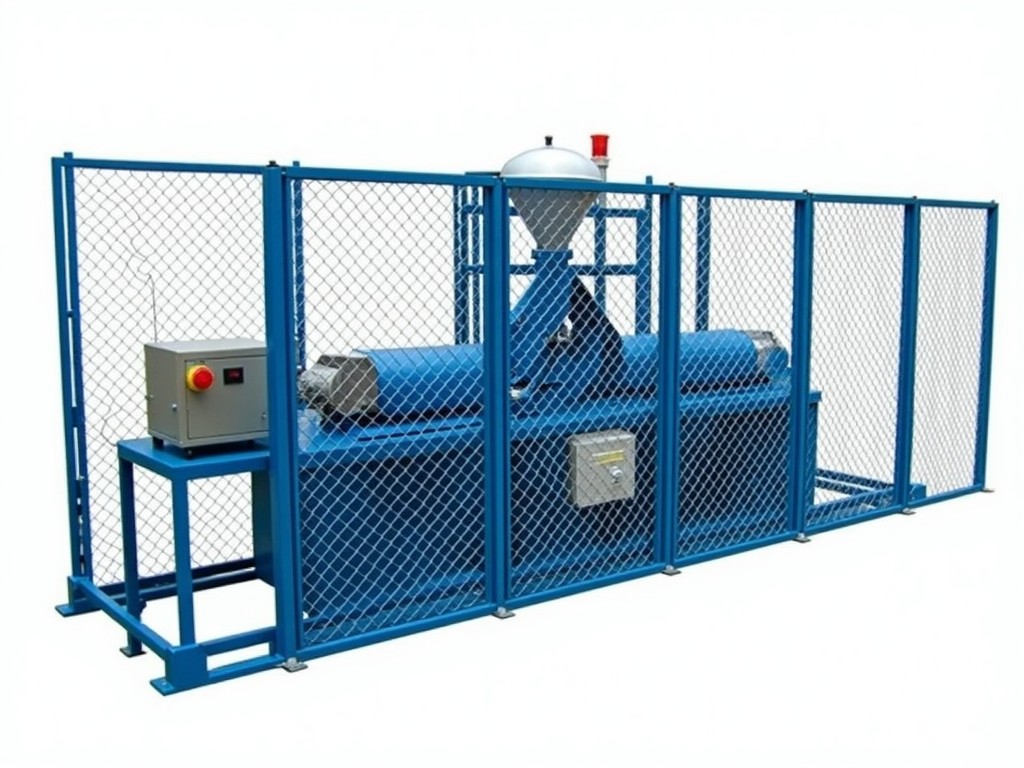
Automatic Chain Link Fence Machine Manufacturers: Technical Specifications and Selection Criteria
Selecting an automatic chain link fence machine requires understanding the interplay between mechanical design, material compatibility, and production throughput. This page details the engineering characteristics that distinguish manufacturers in this niche, focusing on measurable parameters rather than subjective claims. Industrial buyers evaluate these machines based on consistent output quality, changeover efficiency, and long-term operational reliability in continuous production environments.
The core function of these machines is to transform galvanized or coated steel wire into uniform diamond-pattern mesh at controlled speeds. Key performance indicators include wire tension stability, knuckle formation precision, and roll winding consistency—factors directly impacting downstream installation efficiency and fence longevity. Manufacturers differentiate themselves through innovations in feed mechanisms, cutting systems, and tension control algorithms.
Mechanical Design and Operational Parameters
Automatic chain link fence machines operate on a continuous feed principle where wire is drawn from pay-off spools, guided through forming heads, interlooped via rotary knuckle mechanisms, and wound onto take-up reels. The forming process relies on synchronized rotation of multiple weaving heads—typically 4 to 12 units—each responsible for creating one diamond cell per revolution. Machine speed is measured in meters per minute (mpm) of finished mesh, not wire input rate, due to the geometric complexity of the diamond weave.
Critical mechanical specifications include main drive motor power (commonly 3–7.5 kW), weaving head RPM range (typically 80–200 RPM), and maximum wire diameter capacity (usually 2.0–4.0 mm for galvanized steel). Tension control systems employ dancer arms or load cells to maintain wire feed consistency within ±2% variation, preventing mesh distortion or wire breakage during operation. Frame rigidity, often quantified by natural frequency analysis, affects vibration dampening at operational speeds.
Wire Compatibility and Material Handling
Material versatility defines a machine’s applicability across fence specifications. Compatible wire types include hot-dip galvanized (HDG), electro-galvanized (EG), PVC-coated, and aluminum-coated steel, each requiring adjusted forming pressures and lubrication protocols. Wire diameter range is not merely a maximum value; manufacturers specify minimum practical diameters (often 1.6 mm) below which feeding reliability decreases due to insufficient column strength in the wire path.
Pay-off and take-up systems significantly influence operational uptime. Dual pay-off spools allow continuous operation during spool changes, while automatic splice detection minimizes scrap. Take-up tension must match feed tension to prevent mesh stretching or slack winding—achieved via torque-regulated motors with feedback encoders. Some manufacturers offer programmable winding patterns (e.g., zigzag or traverse) to improve roll stability for long-term storage or transport.
Mesh Specifications and Customization Logic
Mesh characteristics are defined by three interdependent parameters: wire diameter, mesh opening size (clear opening between wires), and knuckle type (twisted or barbed). The relationship follows: mesh opening = (pitch × number of wires per pitch) – wire diameter, where pitch is the center-to-center distance of adjacent weaving heads. Machines are calibrated for specific pitch configurations; changing mesh size often requires mechanical adjustment of head spacing or gear ratios, not merely software updates.
Customization options reflect production flexibility. Common variants include:
- Adjustable mesh opening: 40 mm to 100 mm (standard range)
- Variable wire diameter handling: 1.6 mm to 4.0 mm
- Dual knuckle capability: twisted (standard) and barbed (optional)
- Width adjustment: typically 0.5 m to 3.0 m in 0.1 m increments
- Coating compatibility: HDG, EG, PVC, aluminum-zinc alloy
Manufacturers quantify changeover time between specifications—critical for job-shop operations. Typical mesh width adjustment takes 15–30 minutes via threaded shafts or servo-driven positioning; wire diameter changes may require 45–90 minutes for roller and guide replacement. Machines with modular forming heads reduce this to under 20 minutes for diameter shifts, a measurable advantage in high-mix environments.
Quality Control and Process Monitoring
Consistent mesh quality depends on real-time monitoring of process variables rather than end-of-line inspection alone. Leading manufacturers integrate sensors for wire tension (load cells), weaving head position (rotary encoders), and roll diameter (ultrasonic or laser gauges). Feedback loops adjust motor torque and feed rates to compensate for wire diameter variations or coating inconsistencies, maintaining mesh uniformity within specified tolerances.
Key quality metrics include:
- Mesh opening variance: typically ±3 mm under stable conditions
- Wire break frequency: <0.5 incidents per 8-hour shift with proper tension control
- Roll edge straightness: <5 mm deviation over 20 m length
- Coating adhesion integrity: verified via mandrel bend test (no cracking at 180° bend)
Documentation capabilities vary. Advanced systems log production data (speed, tension, alerts) for traceability, supporting ISO 9001 compliance. Some offer OPC-UA connectivity for MES integration, enabling predictive maintenance alerts based on motor current harmonics or vibration trends—features that reduce unplanned downtime by identifying wear in bearings or gearboxes before failure.
Applications and Industry-Specific Considerations
Chain link fence production serves distinct end-use markets, each imposing unique technical demands. Security installations (e.g., correctional facilities, military bases) often require tighter mesh openings (50 mm or less) with barbed knuckles to deter climbing—necessitating machines capable of handling 2.5–3.0 mm wire at consistent tension to avoid weak points. Sports field enclosures prioritize smooth edges and uniform coating to prevent athlete injury, driving demand for precision knuckle formation and zero-defect coating compatibility.
Agricultural applications emphasize cost-effectiveness and corrosion resistance in humid environments, favoring HDG wire with zinc coating weights of 200–275 g/m². Here, machines must maintain consistent wire feed when processing slightly irregular HDG wire (common due to molten zinc variations) without increasing breakage rates. Temporary construction fencing prioritizes rapid changeover between widths (e.g., 1.0 m to 2.4 m) for rental fleet flexibility, making servo-assisted width adjustment a value driver despite higher initial cost.
Export-oriented manufacturers face additional constraints: containerization limits roll diameter (typically ≤1.2 m) and weight (≤2,000 kg), influencing take-up system design. Machines designed for export often feature active roll braking to prevent telescoping during transit and modular frames for easier container loading. Understanding these application-specific nuances helps buyers avoid over-specifying (paying for unused capabilities) or under-specifying (risking field failures).
Typical Technical Comparison
| Parameter | Standard Configuration | High-Output Variant | Flexible Job-Shop Option |
|---|---|---|---|
| Main Drive Power | 4.0 kW | 7.5 kW | 4.0 kW with servo assist |
| Max Speed (HDG 2.5mm wire) | 18 m/min | 32 m/min | 20 m/min |
| Wire Diameter Range | 2.0–3.0 mm | 2.0–4.0 mm | 1.6–3.2 mm |
| Mesh Width Adjustment | Manual (15–30 min) | Motorized (5–8 min) | Servo-driven (2–4 min) |
| Pay-off System | Single spool | Dual spool with auto-splice | Single spool with dancer |
| Take-up Tension Control | Torque-limited motor | Closed-loop encoder | Load cell feedback |
Values represent typical ranges; actual specifications vary by manufacturer and project requirements. Custom configurations available upon request.
Selection Framework for Procurement Engineers
Evaluating manufacturers requires aligning machine capabilities with production volume, product mix, and facility constraints. Begin by defining the annual output requirement in linear meters of finished mesh—not wire input—to avoid overestimating capacity. Calculate peak hourly demand considering changeover time, maintenance windows, and shift patterns. A machine rated for 25 m/min may only achieve 15 m/min effective output if frequent width adjustments consume 30% of shift time.
Next, map the product mix: percentage of orders requiring different mesh widths, wire diameters, or knuckle types. High-mix environments benefit from rapid changeover features (servo width adjustment, quick-change forming heads), even if nominal speed is lower. Low-mix, high-volume operations prioritize sustained speed and minimal consumable wear (e.g., hardened forming rollers, self-lubricating bushings). Request cycle time studies for your specific SKU transitions rather than relying on vendor-provided ideal-cycle data.
Finally, assess technical support structure. Inquire about spare parts availability for wear items (forming rollers, cutting blades, drive belts), typical lead times for critical components, and remote diagnostics capabilities. Manufacturers offering preventive maintenance kits with wear-part life predictions (based on operational hours) demonstrate deeper process understanding. Validate claims by asking for field service reports from similar installations in your industry segment.
For detailed technical consultations, customization requests, or quotation preparation, contact our engineering team to discuss your specific production requirements.
Request Technical Specification Sheet

More Products

Send Inquiry
If you are interested in our products, leave your information here and we will be in touch shortly.