035 Flux Core Stainless Steel Welding Wire
035 flux core stainless steel welding wire is a tubular electrode designed for gas-shielded or self-shielded arc welding of austenitic stainless steels. Its 0.035-inch (0.9 mm) diameter provides
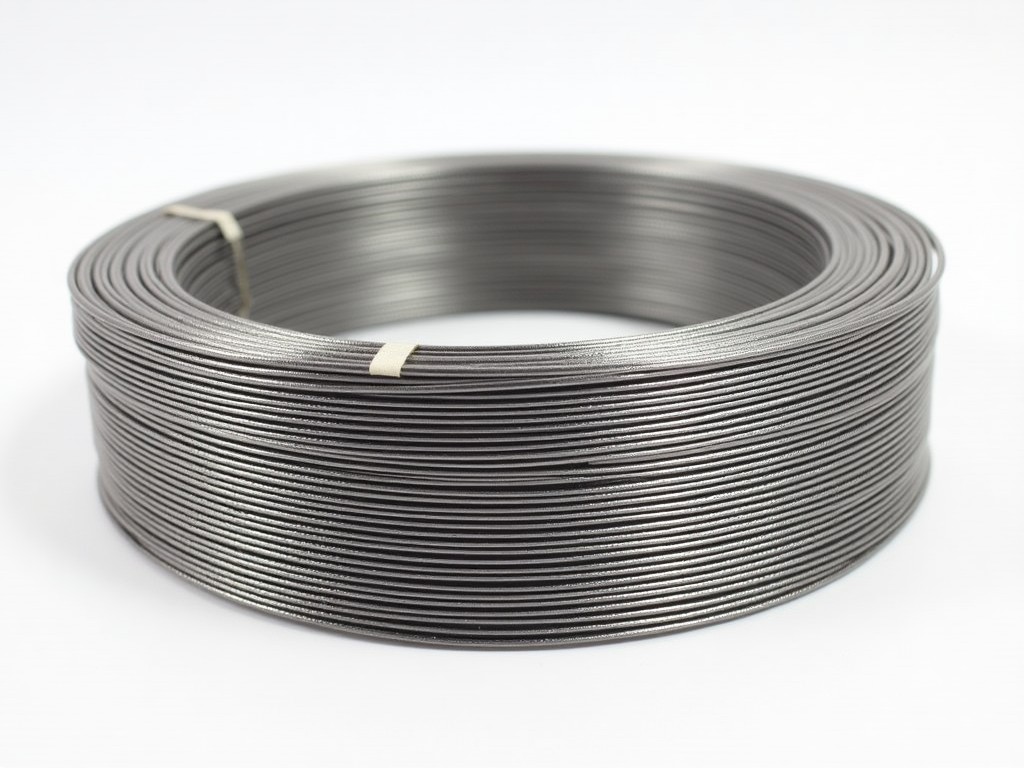
035 Flux Core Stainless Steel Welding Wire
035 flux core stainless steel welding wire is a tubular electrode designed for gas-shielded or self-shielded arc welding of austenitic stainless steels. Its 0.035-inch (0.9 mm) diameter provides precise deposition control for thin-gauge materials and positional welding applications. The flux core formulation generates a protective slag layer and shielding gas during welding, minimizing atmospheric contamination without requiring external gas supply in certain variants. This wire is commonly used in fabrication, repair, and maintenance where portability and ease of use are critical.
The wire’s composition typically includes chromium, nickel, and molybdenum to match the corrosion resistance and mechanical properties of base metals such as 304L, 316L, or 321 stainless steel. Deposition efficiency ranges from 85% to 92% depending on shielding conditions and welding parameters. Mechanical properties of the weld metal typically achieve tensile strengths between 550–750 MPa and elongation values exceeding 30%, ensuring ductility in formed or stressed joints.
Key Technical Characteristics
The flux core design enables stable arc performance even in drafty or outdoor environments where bare wire processes may fail. Slag formation is self-lifting in most positions, reducing post-weld cleaning time. The wire operates effectively on DCEN (direct current electrode negative) polarity, compatible with standard inverter-based welding power sources.
Chemical composition of the weld deposit is controlled to maintain low carbon content (<0.04%) to prevent sensitization and intergranular corrosion. Ferrite content in the weld metal typically falls between 3–8 FN, providing resistance to hot cracking during solidification. Diffusible hydrogen levels are kept below 5 mL/100g to minimize the risk of hydrogen-induced cracking in high-strength or thick-section applications.
Typical welding parameters for 0.035-inch flux core stainless wire range from 18–26 volts and 150–250 amps, depending on joint design and base metal thickness. Travel speed influences bead shape and penetration; optimal settings produce a slightly convex bead profile with uniform tie-in at the toes. These parameters are adjustable based on shielding gas mix (if used) or self-shielded operation.
Applications and Industry Use Cases
This wire is selected for welding thin-walled stainless steel tubing in food processing equipment where sanitary welds and minimal heat distortion are required. The small diameter allows precise control over bead placement in confined spaces, such as inside piping or tank interiors. Its ability to weld in all positions (flat, horizontal, vertical, overhead) supports fabrication of complex assemblies without repositioning.
In chemical processing plants, it is used for repairing heat exchangers, valves, and piping systems exposed to corrosive media. The weld deposit’s resistance to pitting and crevice corrosion aligns with the performance of 316L base metal when matching filler is used. Maintenance teams favor it for on-site repairs due to its tolerance for minor surface contaminants like light oxide or oil.
Architectural stainless steel components, such as handrails, brackets, and decorative panels, benefit from the wire’s smooth bead appearance and low spatter levels. Post-weld finishing requirements are reduced, saving labor time. The wire also finds use in cryogenic equipment fabrication where toughness at low temperatures is essential, provided the correct alloy variant is selected.
Comparison with Alternative Welding Consumables
| Property | 0.035" Flux Core Stainless Wire | 0.035" Solid Stainless Wire (GMAW) | Stainless Stick Electrode (SMAW) |
|---|---|---|---|
| Shielding Requirement | Self-shielded or gas-shielded variants available | Requires external shielding gas (e.g., C2 mix) | Flux coating provides self-shielding |
| Deposition Rate | High (85–92% efficiency) | Moderate (typically 70–80% efficiency) | Lower (50–60% efficiency due to stub loss) |
| Positional Flexibility | Excellent for all positions | Good, but limited by gravity in vertical/overhead | Good, but slag control varies |
| Typical Use Case | Field repairs, thin materials, outdoor work | Shop fabrication, clean environments | Maintenance, rusty/dirty surfaces |
Manufacturing and Quality Control
The flux core is manufactured by forming a stainless steel strip into a tube and filling it with a precise blend of mineral powders, alloys, and deoxidizers. The filling density and homogeneity are critical to consistent arc performance and chemical composition of the weld deposit. In-line monitoring during core filling ensures uniform distribution along the entire wire length.
After drawing to the final 0.035-inch diameter, the wire undergoes continuous lubrication coating to improve feedability through welding equipment. The lubricant is formulated to be non-contaminating and compatible with stainless steel welding, avoiding porosity or bead irregularities. Final spooling is done under controlled tension to prevent deformation or layer slipping.
Quality assurance includes chemical analysis of the weld deposit per AWS A5.22 or EN ISO 17633 standards. Mechanical testing verifies tensile strength, yield strength, and elongation. Ferrite content is measured using a feritscope to predict cracking resistance. Each production lot is traceable, and test reports are available upon request.
Ordering and Technical Support
The wire is typically supplied on spools weighing 2.5 kg (5 lb) or 12.5 kg (25 lb), depending on application volume and handling requirements. Spools are designed with a standard hub size (e.g., 50 mm or 100 mm arbor) to fit common wire feeders. Packaging includes moisture-resistant barriers and desiccant to prevent oxidation or hydrogen pickup during storage.
Technical datasheets provide detailed information on recommended welding parameters, chemical composition ranges, and mechanical properties for each alloy variant (e.g., 308L, 309L, 316L). Customers are advised to match the filler metal to the base metal composition and service conditions. For specialized environments such as high-temperature or sulfur-containing atmospheres, alternative alloy options are available.
To ensure proper selection, buyers should provide base metal specifications, joint design, welding position, and environmental exposure details. This enables technical support to recommend the correct wire type, shielding method, and parameter settings. Samples are available for evaluation prior to bulk purchase.
Environmental and Safety Considerations
Fume generation during welding is influenced by the flux composition and base metal. Proper ventilation or fume extraction is recommended to manage exposure to metallic oxides and fluorides. The wire itself does not contain hazardous substances above threshold limits, but standard PPE—including welding helmet, gloves, and protective clothing—should be used.
Spent slag and packaging materials are recyclable where facilities exist. The manufacturing process aims to minimize waste through efficient material use and closed-loop lubricant recovery. Compliance with RoHS and REACH regulations is maintained for applicable substances.
End-of-life handling follows local regulations for metal scrap. The wire and its packaging do not pose environmental hazards under normal use and disposal conditions. Safety data sheets (SDS) are available for download or upon request to support workplace risk assessments.
Technical Specification Summary
| Parameter | Typical Value or Range |
|---|---|
| Wire Diameter | 0.035 inch (0.9 mm) |
| Core Type | Flux core (gas-shielded or self-shielded variants) |
| Shielding Gas (if used) | 100% CO₂ or Ar/CO₂ mixes (e.g., C25) |
| Polarity | DCEN (electrode negative) |
| Typical Voltage Range | 18–26 V |
| Typical Amperage Range | 150–250 A |
| Deposition Efficiency | 85–92% |
| Weld Metal Tensile Strength | 550–750 MPa |
| Weld Metal Elongation | >30% |
| Ferrite Number (FN) | 3–8 FN (varies by alloy) |
| Diffusible Hydrogen | <5 mL/100g |
| Available Alloy Types | 308L, 309L, 316L, 321, 347 (custom alloys upon request) |
| Spool Weights | 2.5 kg (5 lb), 12.5 kg (25 lb) |
| Storage Recommendation | Dry environment, <60% RH, sealed when not in use |
For procurement engineers and welding supervisors seeking a reliable solution for stainless steel fabrication and repair, the 0.035 flux core stainless steel welding wire offers a balance of deposition control, positional versatility, and weld quality. Its performance in challenging environments reduces rework and supports consistent output in both shop and field settings.
To discuss your specific application requirements, request a technical datasheet, or arrange for sample evaluation, contact our technical team. Provide your base metal details, joint configuration, and service conditions to receive a tailored recommendation.
Request Technical Consultation
More Products

Send Inquiry
If you are interested in our products, leave your information here and we will be in touch shortly.