045 Stainless Steel Tig Wire Factory
The 045 stainless steel TIG wire refers to a filler metal with a nominal diameter of 0.045 inches (1.14 mm) commonly used in gas tungsten arc welding (GTAW) processes. This size is frequently
045 Stainless Steel TIG Wire Factory
The 045 stainless steel TIG wire refers to a filler metal with a nominal diameter of 0.045 inches (1.14 mm) commonly used in gas tungsten arc welding (GTAW) processes. This size is frequently selected for welding thin to medium gauge stainless steel components where precise bead control and low heat input are critical. The wire composition typically follows AWS A5.9 classifications such as ER308L, ER309L, or ER316L, depending on the base metal being joined. These classifications indicate specific chromium-nickel ratios and carbon content limits designed to minimize sensitization and maintain corrosion resistance in the weld zone.
In TIG welding, the 0.045-inch diameter offers a balance between deposition rate and arc stability. Thinner wires (e.g., 0.035 inch) may be prone to burning back or inconsistent feeding in automated systems, while thicker wires (e.g., 0.062 inch) require higher amperage and can overwhelm thin materials. The 0.045 size allows for stable arc initiation at lower amperages (typically 60–120 A depending on joint design and shielding gas) and produces a narrow, controllable weld pool suitable for precision fabrication.
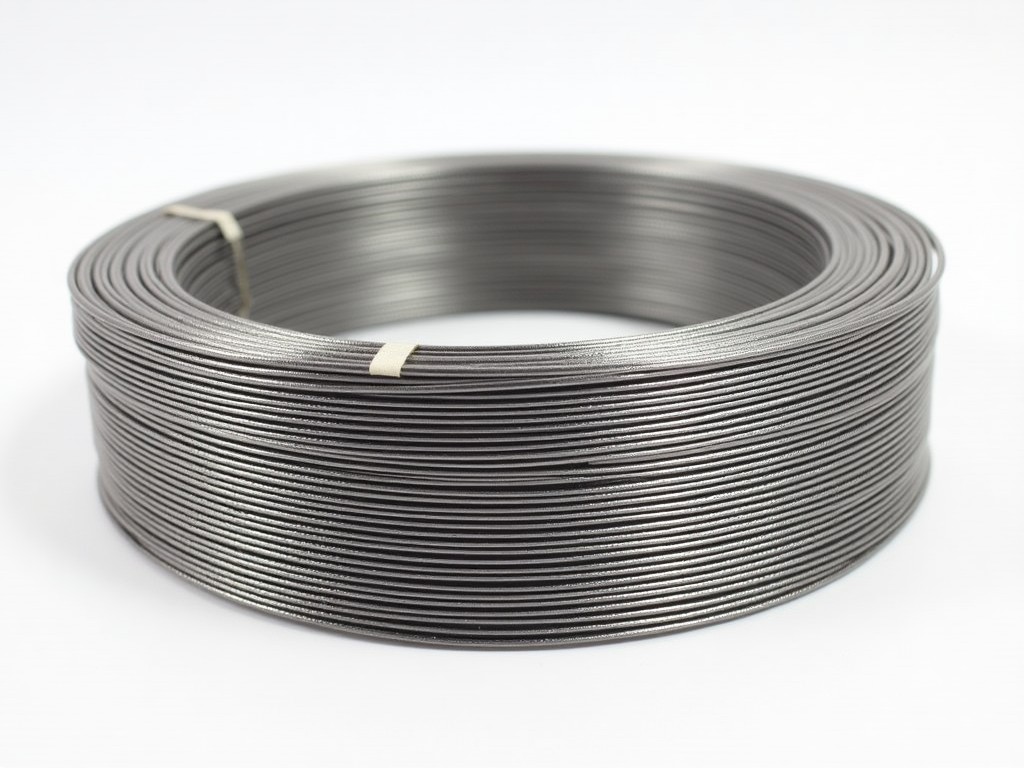
Manufacturing tolerances for 045 TIG wire are tightly controlled to ensure consistent electrical conductivity and feedability. Diameter variation is typically held within ±0.002 inch (±0.05 mm) along the entire spool length. Surface finish is inspected for absence of lubricants, oxides, or contaminants that could introduce porosity or affect arc starting. Spools are usually wound to avoid tangling and mounted on standard 1-inch or 2-inch wire hubs compatible with most TIG wire feeders.
Material Composition and Metallurgical Properties
The chemical composition of 045 stainless steel TIG wire directly influences weldability, mechanical properties, and corrosion resistance of the deposited metal. For ER308L wire, common in welding 304 and 304L base metals, the typical composition includes 18–20% chromium, 8–12% nickel, and a maximum carbon content of 0.03%. The low carbon level reduces the risk of carbide precipitation during welding, which helps preserve the austenitic structure and intergranular corrosion resistance in the heat-affected zone.
ER309L wire, used for joining dissimilar metals such as stainless steel to carbon steel, contains higher nickel (12–14%) and chromium (22–24%) to accommodate dilution from the carbon steel side. ER316L wire, selected for improved resistance to chlorides and acidic environments, adds 2–3% molybdenum to the base ER308L composition. These alloying elements are carefully balanced during wire drawing to maintain uniform melt chemistry and prevent segregation that could lead to hot cracking or uneven bead appearance.
Mechanical properties of the undiluted weld metal typically include a tensile strength of 75–85 ksi (515–585 MPa) and yield strength of 45–55 ksi (310–380 MPa) for ER308L, with elongation exceeding 35% in 2 inches. These values are influenced by shielding gas choice—argon provides a smoother bead and lower spatter, while argon-helium or argon-hydrogen mixtures increase penetration and travel speed but may affect bead shape and oxidation levels. Post-weld properties are further affected by interpass temperature and cooling rate, which must be controlled according to welding procedure specifications.
Manufacturing Process and Quality Control
The production of 045 stainless steel TIG wire begins with precision melting of raw alloy materials in an inert atmosphere or vacuum induction furnace to minimize gas pickup and oxide formation. The molten metal is cast into billets, then hot-rolled and cold-drawn through a series of progressively smaller dies to achieve the target 0.045-inch diameter. Each drawing pass reduces cross-sectional area while increasing length, and intermediate annealing steps may be used to relieve work hardening and maintain ductility for subsequent processing.
After final drawing, the wire undergoes straightening and spooling under controlled tension to avoid surface scoring or deformation. Surface cleaning is performed using alkaline or ultrasonic methods to remove drawing residues, followed passivation in nitric acid to enhance the passive chromium oxide layer. Final inspection includes diameter verification via laser micrometry, tensile testing of samples, and chemical analysis using optical emission spectroscopy (OES) to confirm compliance with AWS A5.9 requirements.
Spools are typically labeled with heat number, wire size, classification, and lot traceability data. Packaging uses moisture-resistant barriers such as vacuum-sealed bags with desiccant packs to prevent oxidation during storage and transit. Each batch is retained for quality review, and documentation including mill test reports (MTRs) is available upon request to support material certification needs for regulated industries such as pharmaceuticals, food processing, or marine engineering.
Applications in Industrial Fabrication
The 0.045-inch diameter is particularly suited for welding thin-walled tubing, sheets, and precision components where excessive heat input could cause distortion, burn-through, or loss of mechanical properties. In the fabrication of stainless steel food processing equipment—such as mixers, tanks, and conveyor systems—this wire size allows for consistent, low-profile fillet and butt joints on 16–11 gauge material (0.06–0.12 inch) without requiring aggressive pulsing or advanced waveform controls.
In aerospace and medical device manufacturing, where weld appearance and integrity are critical, the 045 wire enables precise control over bead geometry in tight joints and thin flanges. For example, welding 0.065-inch thick 316L stainless steel tubing for hydraulic lines or implantable device housings benefits from the low heat input and stable arc characteristics of this wire size, reducing the risk of sensitization or microfissuring in the heat-affected zone.
Automotive exhaust and emissions control systems often use 045 ER309L or ER316L wire to join stainless steel manifolds, catalysts, and tubing to mild steel housings. The wire’s ability to accommodate dilution while maintaining crack resistance and oxidation protection makes it suitable for cyclic thermal environments. Similarly, in chemical processing plants, the wire is used to fabricate piping, valves, and reactor components exposed to corrosive media, where weld integrity directly impacts safety and service life.
Technical Specifications and Customization Options
| Parameter | Typical Value / Range | Notes |
|---|---|---|
| Wire Diameter | 0.045 in (1.14 mm) | Tolerance: ±0.002 in (±0.05 mm) |
| Classification | ER308L, ER309L, ER316L (AWS A5.9) | Other grades available upon request |
| Spool Size | 2 lb (0.9 kg), 5 lb (2.3 kg), 10 lb (4.5 kg) | Plastic or fiber spools; 1 in or 2 in hub |
| Surface Finish | Clean, dry, oxide-free | No lubricants or contaminants |
| Shielding Gas Compatibility | 100% Ar, Ar/He, Ar/H2 | Flow rate: 15–25 CFH typical |
| Recommended Amperage | 60–120 A | Dependent on joint thickness and position |
Customization of 045 stainless steel TIG wire is available to meet specific production or application requirements. Wire can be supplied with alternative surface treatments such as electropolished finishes for ultra-clean environments or coated with specialized anti-spatter agents for robotic welding cells. Spools can be customized with specific weights, hub sizes, or labeling formats to integrate with automated material handling systems or barcode tracking.
Chemical composition can be adjusted within AWS A5.9 limits to optimize for particular service conditions—for example, increasing nickel content slightly to improve hot cracking resistance in constrained joints, or adjusting manganese and silicon levels to influence fluidity and bead shape. These modifications are made in consultation with metallurgical engineers and validated through weld procedure qualification according to ASME Section IX or ISO 15614-1 standards.
Packaging options include nitrogen-purged bags, vacuum sealing with oxygen indicators, or corrosion-inhibiting vapor (VCI) films for long-term storage in high-humidity environments. Documentation packages can be tailored to include full chemical test reports, ferrite measurements, or radiography sample data to satisfy audit requirements in regulated sectors. All customizations are subject to minimum order quantities and lead time adjustments based on raw material availability and production scheduling.
Quality Assurance and Testing Protocols
Quality control for 045 stainless steel TIG wire follows a multi-stage verification process starting with raw material certification. Each incoming alloy lot is accompanied by a supplier MTR confirming chemical composition within specified ranges. During production, in-process checks include diameter monitoring via laser gauges at the drawing exit, tensile strength testing of every fifth coil, and surface cleanliness evaluation using wipe tests analyzed for chloride and hydrocarbon residues.
Finished spools undergo batch testing where samples are cut for chemical analysis (OES), ferrite measurement (if applicable), and mechanical property validation. Weldability is assessed through test coupons welded under controlled conditions using standard TIG parameters—typically 90 A DCEN, 100% argon, 1/16-inch tungsten, and 3/32-inch cup size. The resulting welds are examined for porosity, cracking, bead profile, and uniform fusion, then subjected to bend or tensile testing as required by the intended application standard.
Traceability is maintained throughout the process, with each spool labeled to link back to its specific heat number, drawing lot, and test results. This enables rapid investigation in the event of a field issue and supports compliance with quality management systems such as ISO 9001, AS9100, or IATF 16949. Customers can request copies of test reports, calibration certificates, or material safety data sheets (MSDS) as part of the procurement documentation.
For technical inquiries, material data sheets, or to discuss customization options for 045 stainless steel TIG wire, please contact our engineering team. We provide detailed mill test reports, welding procedure support, and logistics assistance to ensure seamless integration into your production workflow.
Reach out via our contact form or email to request samples, quotation, or technical consultation.
More Products

Send Inquiry
If you are interested in our products, leave your information here and we will be in touch shortly.