1 8 Inch Stainless Steel Wire Factory
Stainless steel wire with a nominal diameter of 1/8 inch (approximately 3.175 mm) is a precision-engineered product used across multiple industrial sectors where corrosion resistance, tensile
1/8 Inch Stainless Steel Wire Factory
Stainless steel wire with a nominal diameter of 1/8 inch (approximately 3.175 mm) is a precision-engineered product used across multiple industrial sectors where corrosion resistance, tensile strength, and dimensional consistency are critical. This size falls within the range commonly specified for mechanical fastening, filtration, and structural reinforcement applications.
Manufacturing 1/8 inch stainless steel wire involves drawing annealed stainless steel billets or rods through a series of progressively smaller dies to achieve the target diameter. The process requires tight control over reduction per pass, lubrication, and temperature to avoid surface defects, internal stresses, or diameter variations beyond tolerance.
Material selection for this wire size typically includes austenitic grades such as 304, 316, or 316L due to their balance of formability, weldability, and resistance to atmospheric and chemical corrosion. Ferritic or martensitic grades like 430 or 420 may be selected for specific magnetic or wear-resistant requirements, though they offer lower corrosion resistance in chloride environments.
Material Properties and Specifications
The mechanical and chemical properties of 1/8 inch stainless steel wire are directly influenced by the alloy composition, cold work level from drawing, and any post-processing treatments such as annealing or stress relieving. These factors determine suitability for dynamic load, static load, or environmental exposure conditions.
Typical tensile strength for cold-drawn 304 stainless steel wire at this diameter ranges from 1200 to 1800 MPa, depending on the degree of elongation reduction. Yield strength typically falls between 800 and 1400 MPa. Elongation at break varies from 10% to 25%, inversely related to tensile strength—higher strength grades show lower ductility.
Chemical composition adheres to ASTM A313 or EN 10270-3 standards. For 304 grade: chromium 18–20%, nickel 8–10.5%, carbon ≤0.08%, manganese ≤2%, silicon ≤1%, phosphorus ≤0.045%, sulfur ≤0.03%. For 316L: chromium 16–18%, nickel 10–14%, molybdenum 2–3%, carbon ≤0.03%. These values ensure resistance to pitting and crevice corrosion in mild to moderate chloride environments.
Manufacturing Process and Quality Control
Wire drawing begins with descaled hot-rolled rod, which is cleaned via acid pickling or mechanical descaling to remove oxide scale. The rod is then coated with a drawing lubricant—commonly a soap-based or polymer-based film—to reduce friction and heat during deformation.
Each drawing pass reduces the diameter by approximately 10–25%, depending on material grade and target properties. Intermediate annealing may be required between passes for highly cold-worked grades to restore ductility and prevent cracking. Final dimensions are verified using laser micrometers or contact gauges with calibration traceable to national standards.
Surface quality is inspected for scratches, seams, pits, or embedded lubricant residue using visual inspection under controlled lighting and magnification. Diameter tolerance is typically maintained within ±0.02 mm for standard commercial grades, with tighter tolerances (±0.01 mm or better) available for precision applications such as medical devices or sensor components.
Tensile testing is performed on samples cut from each batch according to ASTM A370. Results are recorded and linked to batch numbers for traceability. Additional tests may include torsion (for spring applications), bend fatigue, or salt spray exposure (ASTM B117) to validate corrosion resistance claims.
Applications in Industrial Sectors
In the food and beverage industry, 1/8 inch 316L stainless steel wire is used in conveyor belts, sieve screens, and agitator components where resistance to acidic juices, cleaning agents, and steam sterilization is required. The smooth surface minimizes bacterial adhesion and facilitates CIP (clean-in-place) procedures.
Chemical processing plants utilize this wire size in mist eliminators, catalyst supports, and filtration baskets exposed to sulfuric acid, sodium hydroxide, or organic solvents. The 316L grade’s molybdenum content enhances resistance to chloride-induced pitting compared to 304, particularly in warm or agitated solutions.
Automotive and aerospace sectors employ the wire in safety-critical components such as seat frame springs, sensor wire forms, and hydraulic filter elements. Here, consistent tensile strength and fatigue resistance are paramount, often validated through cyclic load testing simulating years of operational stress.
Architectural applications include tension cables for facade systems, balustrade infill, and green wall supports. The wire’s aesthetic finish, combined with long-term resistance to urban pollution and weathering, reduces maintenance frequency compared to coated carbon steel alternatives.
Customization Options
Beyond standard grades and finishes, 1/8 inch stainless steel wire can be tailored to specific functional needs through value-added processing. These modifications affect performance, installation method, or service life without altering the core diameter.
Surface finishes range from bright drawn (as-drawn, with lubricant residue) to polished, passivated, or coated. Passivation (per ASTM A967) enhances the passive chromium oxide layer, improving corrosion resistance after machining or welding. Electropolishing provides a micro-smooth finish ideal for hygienic or high-purity environments.
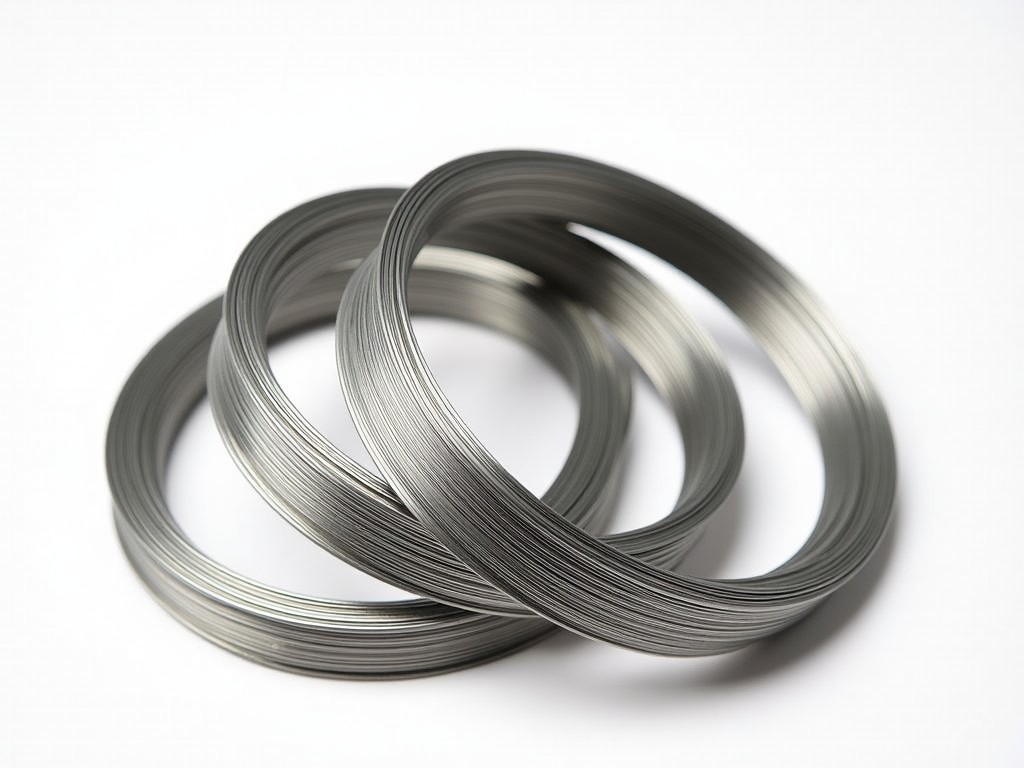
Wire can be supplied in various forms: straight cut lengths, coiled on reels or spools, or fabricated into pre-formed shapes such as rings, hooks, or custom bends. Coil orientation (oscillate-wound vs. ribbon-wound) affects payout behavior in automated feeding systems—oscillate-wound coils reduce tangling in high-speed wire straighteners.
Temper options include annealed (soft, for bending or forming), spring temper (high strength, for dynamic load), or intermediate tempers adjusted via controlled drawing reduction. Hardness values (Rockwell B or C scale) are specified based on temper and validated via indentation testing.
Additional value-added services include laser marking for identification, ultrasonic cleaning to remove particulates, or vacuum packaging to prevent oxidation during transit and storage. These are particularly relevant for medical, semiconductor, or aerospace supply chains.
Quality Assurance and Certification
Quality management follows ISO 9001 principles, with process controls documented at each stage: raw material inspection, in-process monitoring, final testing, and packaging. Calibration of measuring equipment is performed regularly against NIST-traceable standards.
Material test reports (MTRs) are provided upon request, detailing chemical composition (via spark OES or XRF), mechanical properties, and heat treatment lot numbers. For regulated industries, documentation can be extended to include EN 10204 3.1 or 3.2 certification, confirming independent verification of test results.
Environmental compliance is addressed through adherence to RoHS and REACH regulations, particularly important for wire used in consumer-facing or electronic applications. Conflict mineral sourcing policies are implemented for tin, tantalum, tungsten, and gold, though these are less relevant for stainless steel wire unless used in plated or coated variants.
Packaging is designed to protect wire from mechanical damage and environmental exposure. Coils are wrapped in water-resistant film, placed in corrugated cartons or wooden crates, and secured with desiccant packs in humid climates. Custom labeling includes part number, grade, diameter, length, batch number, and QR code for digital traceability.
Typical Specifications Table
| Property | Typical Value / Range | Notes |
|---|---|---|
| Nominal Diameter | 3.175 mm (1/8 inch) | Actual diameter controlled per tolerance |
| Material Grades | 304, 304L, 316, 316L, 430, 420 | Selected based on corrosion, strength, magnetic needs |
| Tensile Strength | 800 – 2200 MPa | Dependent on grade and temper (annealed to full hard) |
| Yield Strength (0.2% offset) | 400 – 1800 MPa | Increases with cold work level |
| Elongation at Break | 10% – 45% | Higher in annealed conditions |
| Diameter Tolerance | ±0.01 mm to ±0.05 mm | Tighter tolerances available for precision use |
| Surface Finish | Bright, Polished, Passivated, Electropolished | Selected per hygiene, friction, or appearance needs |
| Coil Weight | 5 kg – 500 kg | Dependent on wire length and packaging constraints |
| Standards Compliance | ASTM A313, EN 10270-3, ISO 6931-1 | Equivalent standards available upon request |
For technical inquiries, custom specifications, or sample requests regarding 1/8 inch stainless steel wire, contact our engineering team to discuss your application requirements. We provide detailed material data sheets, drawing capabilities, and logistics support for domestic and international orders.
Request Technical Consultation
More Products

Send Inquiry
If you are interested in our products, leave your information here and we will be in touch shortly.