17 7 Ph Stainless Steel Spring Wire
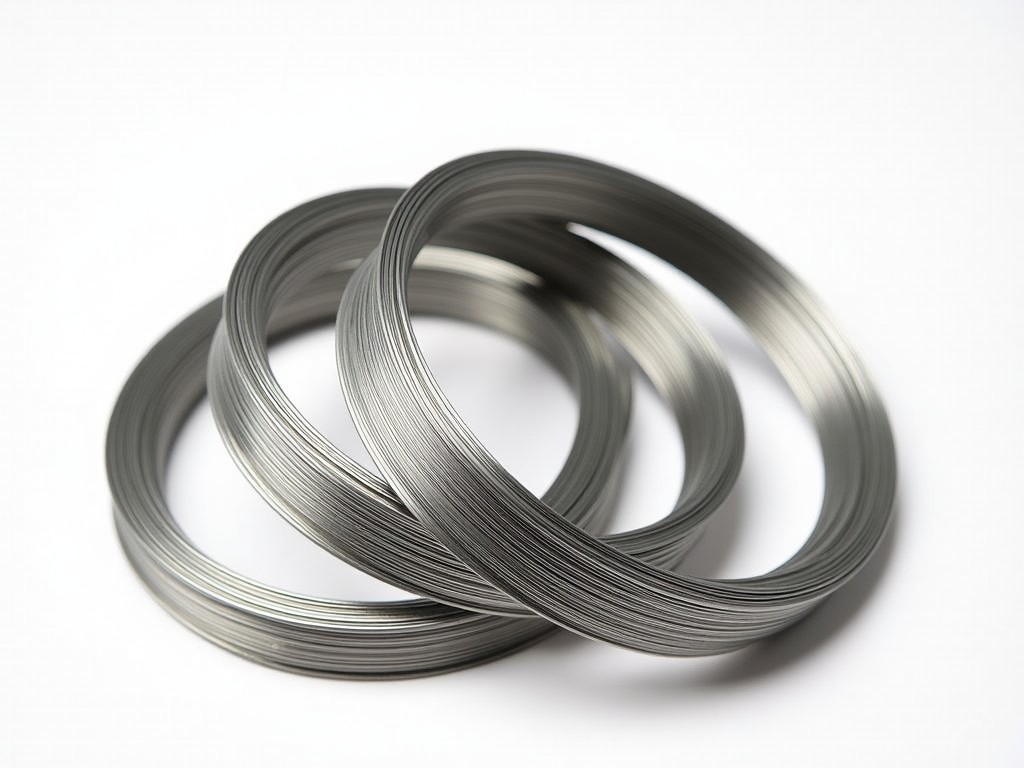
17-7 PH stainless steel spring wire is a precipitation-hardening alloy engineered for applications requiring high strength, excellent fatigue resistance, and superior corrosion performance after heat
17-7 PH Stainless Steel Spring Wire
17-7 PH stainless steel spring wire is a precipitation-hardening alloy engineered for applications requiring high strength, excellent fatigue resistance, and superior corrosion performance after heat treatment. Its composition—approximately 17% chromium, 7% nickel, and 1% aluminum—allows it to achieve tensile strengths up to 280 ksi (1930 MPa) when subjected to appropriate aging treatments, making it suitable for dynamic load environments where conventional austenitic grades would deform or fail.
Unlike standard 302 or 304 spring wires, 17-7 PH undergoes a martensitic transformation during cold drawing followed by age hardening, enabling a unique combination of high yield strength and good ductility in the hardened condition. This allows the wire to withstand repeated stress cycles without permanent set, a critical factor in precision springs, actuators, and sealing elements exposed to fluctuating loads or vibration.
The alloy maintains its corrosion resistance in mildly aggressive environments, including exposure to moisture, alkalies, and certain organic acids, due to its stable passive chromium oxide layer. While not as resistant as super austenitic grades in chloride-rich settings, it outperforms standard precipitation-hardening grades like 15-5 PH in neutral and oxidizing conditions, making it a preferred choice for aerospace, medical device, and industrial equipment springs where both mechanical reliability and environmental durability are required.
Key Material Characteristics
The mechanical behavior of 17-7 PH spring wire is highly dependent on heat treatment condition. In the annealed state (Condition A), the wire exhibits tensile strengths around 180–200 ksi with elongation exceeding 15%, allowing for easy forming and coiling. After cold working to approximately 90% reduction in area and subsequent aging at 900°F (482°C) for 90 minutes (Condition CH900), tensile strength increases to 260–280 ksi, yield strength reaches approximately 250 ksi, and elastic limit improves significantly—directly enhancing spring efficiency and resistance to stress relaxation.
Elastic modulus remains consistent at approximately 29.0 × 10⁶ psi (200 GPa) across conditions, ensuring predictable spring rate behavior. Fatigue strength at 10⁷ cycles typically reaches 60–70% of tensile strength in the CH900 condition, outperforming many conventional spring wires under cyclic loading. The alloy also demonstrates low magnetic permeability in the annealed state, which increases slightly after hardening but remains suitable for non-sensitive electromagnetic applications.
Dimensional stability is another critical attribute; 17-7 PH exhibits minimal dimensional change during age hardening compared to other precipitation-hardening alloys, reducing the need for post-treatment straightening or dimensional compensation in precision winding processes. This characteristic simplifies manufacturing and improves yield in high-volume spring production.
Typical Applications
In aerospace systems, 17-7 PH spring wire is commonly used in fuel metering valves, actuator return springs, and latch mechanisms where weight savings, long-term reliability, and resistance to atmospheric corrosion are essential. Its ability to maintain spring force after extended exposure to temperature cycling and vibration makes it suitable for flight control surfaces and landing gear assemblies.
Medical device manufacturers specify this alloy for implantable drug delivery pumps, endoscopic tool return springs, and orthopedic device components due to its biocompatibility after passivation, resistance to body fluids, and consistent mechanical properties over time. The absence of nickel leaching concerns in passivated condition further supports its use in long-term implant applications.
Industrial applications include high-pressure valve seals, electrical connector springs, and precision gauges operating in environments with occasional exposure to cleaning agents, humidity, or light chemical vapors. The wire’s resistance to stress corrosion cracking in neutral chloride environments extends service life in pump and compressor systems where intermittent moisture exposure occurs.
Additionally, 17-7 PH is favored in semiconductor manufacturing equipment for wafer handling springs and vacuum chamber latches, where outgassing must be minimized and particulate generation avoided. Its clean surface finish after electropolishing and low particle shedding contribute to maintaining cleanroom integrity.
Manufacturing and Processing Considerations
The production of 17-7 PH spring wire begins with vacuum induction melting or argon oxygen decarburization to ensure low interstitial content and homogeneous microstructure. Hot working is followed by cold drawing through precision dies with intermediate annealing to achieve desired tensile levels before final aging. Drawing lubricants are carefully selected to avoid surface contamination that could impair subsequent passivation or heat treatment response.
Age hardening is typically performed in a controlled atmosphere furnace to prevent oxidation and decarburization. The standard CH900 treatment (900°F for 90 min) provides optimal strength-toughness balance, though alternative conditions like CH1025 or CH1150 may be selected based on specific ductility or stress relaxation requirements. Post-age straightening is often necessary due to slight helical twist induced during cooling, which is corrected using precision straighteners to meet tight tolerance specifications.
Surface finish is critical for fatigue performance; wire is typically supplied with a bright drawn finish (Ra ≤ 16 µin) or optionally electropolished for enhanced corrosion resistance and reduced friction in dynamic applications. Edge condition and circumferential defects are monitored via eddy current testing and visual inspection to ensure compliance with ASTM A313 and AMS 5673 standards.
Packaging involves spooling onto corrosion-resistant reels or lay-flat packing in anti-static bags with desiccant to prevent surface oxidation during transit and storage. Each coil is labeled with heat number, size, condition, and traceability code to support quality audits and material certification.
Quality Assurance and Testing
Quality verification follows a multi-stage protocol aligned with industry specifications. Chemical composition is confirmed via optical emission spectroscopy (OES) against AMS 5673 limits, with chromium held between 16.00–18.00%, nickel between 6.50–7.80%, and aluminum between 0.75–1.50%. Carbon is maintained below 0.09% to avoid carbide precipitation during aging, which could reduce toughness and increase brittleness.
Mechanical properties are validated through tensile testing of straightened samples per ASTM A370, with results conditioned to the specified heat treatment state. Hardness is measured using Rockwell C scale, typically ranging from C38–C45 in the CH900 condition. Elongation and reduction of area are assessed to ensure ductility suffices for coiling without cracking.
Non-destructive evaluation includes eddy current testing for surface-breaking defects and ultrasonic testing for internal inconsistencies in larger diameters. Magnetic permeability checks may be performed for applications requiring low residual magnetism. All test reports are traceable to the heat lot and provided with material test certificates (MTCs) upon request.
For critical applications, additional validation such as salt spray testing (ASTM B117), stress corrosion cracking exposure (ASTM G36), or fatigue life testing can be arranged. These services are available upon request and quoted based on sample quantity, test duration, and environmental parameters.
Technical Specification Table
| Property | Typical Value (Condition CH900) | Standard Reference |
|---|---|---|
| Tensile Strength | 260–280 ksi (1790–1930 MPa) | AMS 5673 |
| Yield Strength (0.2% offset) | ≥250 ksi (1720 MPa) | ASTM A313 |
| Elastic Modulus | 29.0 × 10⁶ psi (200 GPa) | Typical for PH grades |
| Elongation in 10" | 8–12% | ASTM A370 |
| Hardness (Rockwell C) | C38–C45 | ASTM E18 |
| Density | 0.282 lb/in³ (7.80 g/cm³) | Material constant |
| Corrosion Resistance | Good in atmospheric, alkaline, and mild acidic environments | ASTM G48 (pitting resistance) |
For procurement engineers and designers requiring a spring wire that combines high mechanical strength with dependable corrosion resistance in demanding cyclic applications, 17-7 PH stainless steel offers a proven solution. Its predictable response to heat treatment, consistent fatigue performance, and compatibility with precision winding processes make it suitable for critical components where failure is not an option.
To discuss your specific diameter, length, heat treatment condition, or surface finish requirements, please provide your application details. Our technical team will review your specifications and respond with available options, lead times, and compliance documentation.
More Products
Send Inquiry
If you are interested in our products, leave your information here and we will be in touch shortly.