Black Annealed Steel Rebar Tie Wire
Black annealed steel rebar tie wire is a low-carbon steel wire specifically processed through controlled annealing to achieve optimal ductility and tensile strength for securing reinforcing steel in
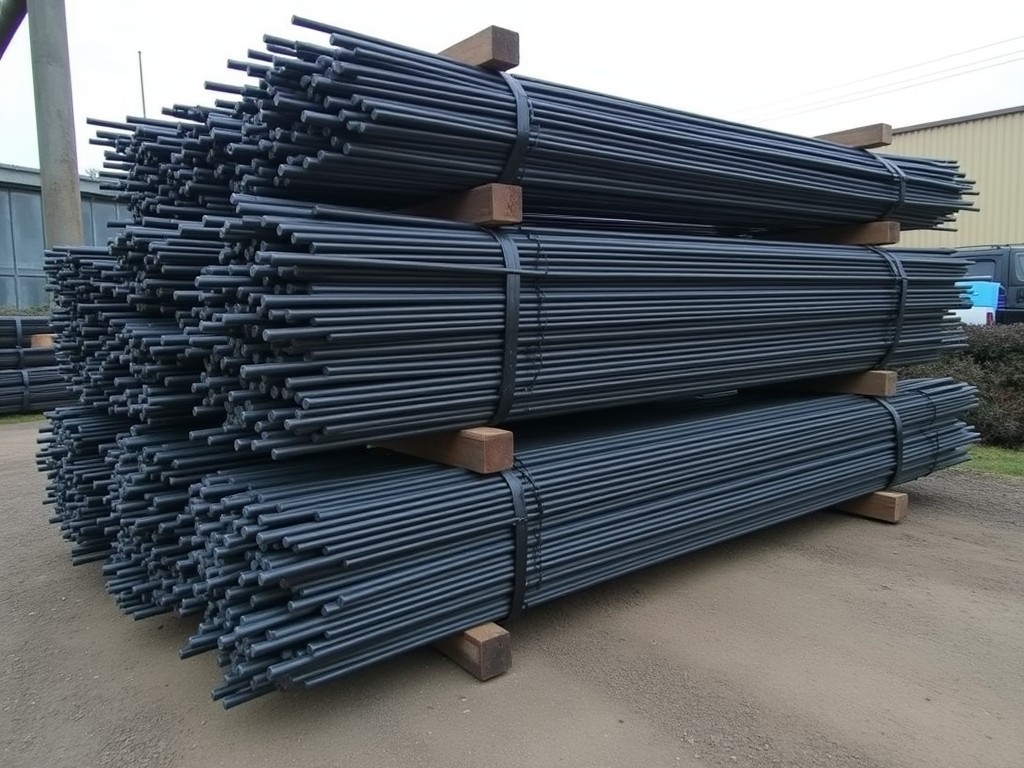
Black Annealed Steel Rebar Tie Wire
Black annealed steel rebar tie wire is a low-carbon steel wire specifically processed through controlled annealing to achieve optimal ductility and tensile strength for securing reinforcing steel in concrete construction. The annealing process relieves internal stresses from cold drawing, resulting in a wire that can be repeatedly bent and twisted without fracturing, while maintaining sufficient holding force to resist displacement during concrete pouring and vibration. This balance of flexibility and strength makes it suitable for both manual tying and mechanical tying tools across a wide range of rebar diameters and spacings.
Typically manufactured from SAE 1006 or equivalent low-carbon steel wire rod, the wire undergoes drawing to precise diameters followed by annealing in a protective atmosphere to prevent oxidation and ensure uniform microstructure. The resulting product features a characteristic dark gray to black surface finish due to the formation of a thin magnetite layer during annealing, which also provides mild short-term corrosion resistance in alkaline concrete environments. Wire dimensions are controlled to tight tolerances to ensure consistent performance in automated tying systems.
Unlike galvanized or stainless alternatives, black annealed wire is selected primarily for cost-effectiveness in applications where long-term corrosion resistance is not critical, as the concrete cover provides adequate protection for the embedded steel. Its soft temper allows for rapid, secure tying with minimal operator fatigue, reducing labor time on large-scale pours. The wire’s consistent elongation and yield characteristics ensure repeatable knot integrity, minimizing the risk of bar movement that could lead to structural deficiencies or costly rework.
Key Technical Characteristics
The performance of black annealed tie wire is defined by several measurable properties that directly impact handling, reliability, and in-place behavior. Tensile strength typically ranges from 350 to 500 MPa, providing sufficient resistance to slippage under load while allowing the wire to deform plastically during twisting without sudden fracture. Elongation at break generally falls between 15% and 25%, indicating high ductility essential for forming tight, secure knots that maintain tension over time.
Wire diameter is a critical selection factor, with common sizes ranging from 0.8 mm to 1.6 mm (20 to 14 AWG), chosen based on rebar size, spacing, and tying method. Thinner wires (0.8–1.0 mm) are often used for lighter gauges and manual tying where ease of handling is prioritized, while thicker wires (1.2–1.6 mm) provide greater holding strength for larger rebars and mechanical tying tools. Tolerances on diameter are typically held to ±0.03 mm to ensure consistent feed in power tiers.
The annealing process produces a uniform grain structure that minimizes yield point elongation, reducing the likelihood of sudden slackening after initial tightening. Residual stresses are minimized through controlled cooling, contributing to dimensional stability during storage and use. Surface cleanliness is maintained to prevent abrasion of tying tool components and to ensure consistent friction characteristics during twisting.
Applications in Concrete Reinforcement
Black annealed tie wire is predominantly used in cast-in-place concrete construction where reinforcing bars must be accurately positioned and held prior to pouring. Its primary function is to maintain the designed spacing, alignment, and elevation of rebar mats, cages, and dowels, ensuring that the structural concrete acts as a unified composite element. Without secure tying, rebar can shift during concrete placement or vibration, leading to inadequate cover, congestion, or misaligned load paths.
The wire’s flexibility allows it to conform tightly around intersecting bars, creating a low-profile connection that does not interfere with concrete flow or consolidation. This is particularly important in heavily reinforced sections such as beam-column joints, foundation mats, and shear walls, where congestion increases the risk of voids if tying material is too bulky. The black finish also reduces visual glare on site, improving worker comfort during prolonged outdoor operations.
In precast concrete manufacturing, the same wire properties enable rapid assembly of reusable cages and molds, where consistent tying speed and reliability directly impact production throughput. The wire’s ability to withstand repeated bending without fatigue makes it suitable for applications where cages are frequently assembled, disassembled, and reassembled. For projects requiring temporary bracing or forming accessories, the wire provides a cost-effective means of securing auxiliary components that are removed after curing.
Comparison with Alternative Tying Materials
| Property | Black Annealed Steel | Galvanized Steel | Stainless Steel (302/304) | Polymer Coated |
|---|---|---|---|---|
| Tensile Strength (MPa) | 350–500 | 400–550 | 800–1000 | Variable (core dependent) |
| Elongation at Break (%) | 15–25 | 10–20 | 10–15 | Dependent on coating |
| Corrosion Resistance | Low (relies on concrete cover) | Moderate (zinc barrier) | High (passive oxide layer) | High (polymer isolation) |
| Typical Cost Factor | 1.0 (baseline) | 1.3–1.6 | 2.5–3.5 | 1.8–2.2 |
| Ease of Tying | Excellent (soft temper) | Good | Fair (springback) | Good to Excellent |
*Note: Values represent typical ranges; actual properties depend on specific manufacturing processes and material grades. Selection should be based on project-specific exposure conditions, design life, and cost-performance requirements.*
Selection Considerations for Procurement
When specifying black annealed tie wire, engineers and procurement professionals should evaluate wire diameter in relation to rebar size and tying method. For #3 to #5 rebar (10–16 mm), 0.9 mm or 1.0 mm wire is commonly sufficient for manual tying, while #6 to #8 rebar (19–25 mm) often benefits from 1.2 mm wire to ensure adequate holding strength, particularly in seismic zones or where vibration is intense. Mechanical tiers may require specific diameters to match feeder gears and twisting mechanisms, necessitating consultation with equipment manufacturers.
Coil weight and packaging format significantly impact handling efficiency on site. Standard coils range from 1 to 5 kg for manual dispensing, reducing wrist strain during prolonged use, while larger 10–25 kg coils are suited for mechanized systems or high-volume pours where frequent changeovers disrupt workflow. Coils are typically tied with biodegradable twine and wrapped in moisture-resistant paper or polyethylene to prevent surface corrosion during storage and transit, especially in humid climates.
Consistent lubrication or coating application during manufacturing reduces friction in tying tools, minimizing wear and preventing wire breakage during high-speed operation. Buyers should verify that lubricants are non-staining and compatible with concrete chemistry to avoid potential bond inhibition at the steel-concrete interface. Documentation of dimensional tolerances, tensile test results, and elongation values should be available upon request to support quality assurance protocols.
Quality Control and Testing
Quality assurance for black annealed tie wire focuses on verifying dimensional consistency, mechanical properties, and surface integrity to ensure reliable performance in the field. Diameter is measured using laser or contact gauges at multiple points along the coil to detect deviations that could cause feeding issues in power tiers or inconsistent knot tightness. Tensile strength and elongation are validated through destructive testing of samples cut from the coil, following standards such as ASTM A641 or equivalent international specifications.
Annealing effectiveness is assessed indirectly through hardness testing (typically Rockwell B) and bend tests, where the wire must withstand repeated 180° bends around a mandrel equal to its diameter without cracking or fracturing. Surface appearance is visually inspected for uniform color and absence of heavy scale, rust, or oil spots that could indicate inadequate annealing or contamination. Residual oil content is monitored to ensure it remains within levels that do not attract dust or interfere with tool operation.
Packaging integrity is verified prior to shipment, ensuring coils are secure, labels are legible, and protective wrapping is intact to prevent moisture ingress during storage. Batch traceability is maintained through lot numbers linked to raw material certificates and process parameters, enabling rapid investigation if field performance issues arise. These controls collectively reduce the risk of in-place failures that could compromise structural integrity or require costly remediation.
For technical specifications, custom diameters, packaging options, or quotation requests, please contact our engineering team to discuss your project requirements.
More Products

Send Inquiry
If you are interested in our products, leave your information here and we will be in touch shortly.