Buy 304 Stainless Steel Mig Welding Wire
Selecting the correct MIG welding wire for 304 stainless steel requires understanding its composition, shielding gas compatibility, and performance characteristics under various welding conditions.
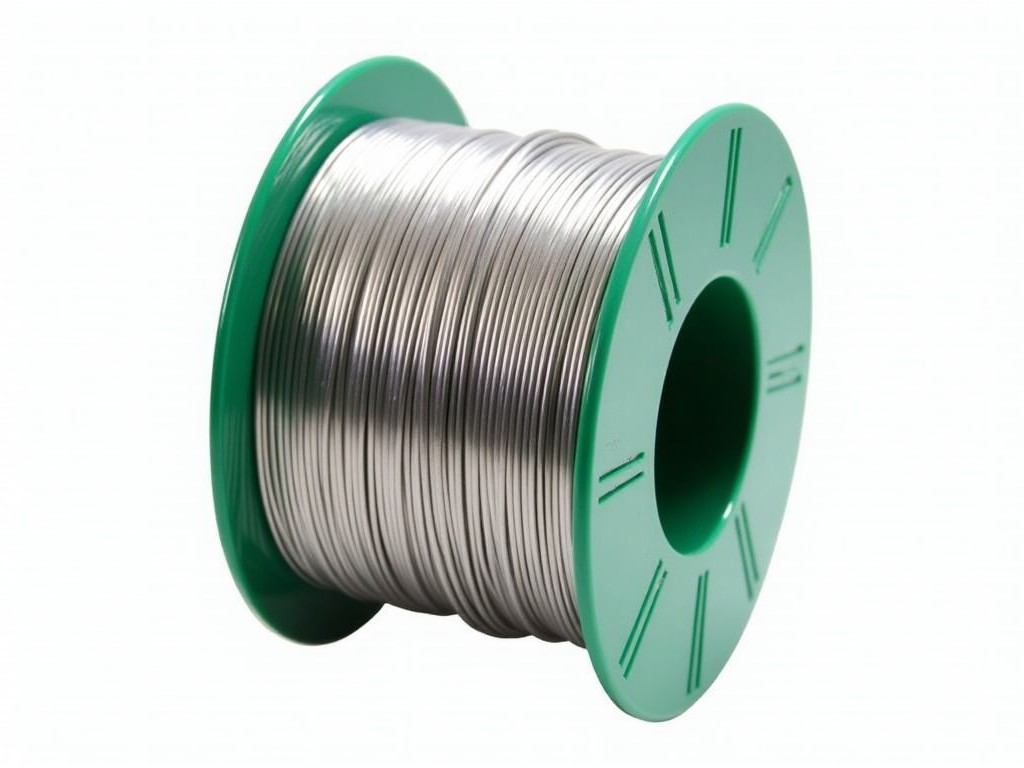
304 Stainless Steel MIG Welding Wire
Selecting the correct MIG welding wire for 304 stainless steel requires understanding its composition, shielding gas compatibility, and performance characteristics under various welding conditions. This product page explains the technical attributes of ER308LSi welding wire, the standard filler material for joining 304 and 304L stainless steel base metals, to support informed procurement decisions.
Material Composition and Classification
ER308LSi welding wire is classified under AWS A5.9 and ISO 14343 standards for solid stainless steel MIG wires. Its nominal chemical composition includes approximately 19-22% chromium, 9-11% nickel, and a maximum carbon content of 0.03% to minimize carbide precipitation during welding. The "Si" designation indicates elevated silicon content (0.65-1.00%), which improves weld pool fluidity and bead appearance during short-circuit transfer. This composition ensures compatibility with 304 and 304L stainless steel while maintaining corrosion resistance in the as-welded condition.
Shielding Gas Requirements and Transfer Modes
ER308LSi wire performs optimally with shielding gas mixtures containing argon and small percentages of oxygen or carbon dioxide. Common blends include 98% Ar / 2% O₂ or 90% He / 7.5% Ar / 2.5% CO₂ for spray transfer, and 90% Ar / 10% CO₂ or 98% Ar / 2% O₂ for short-circuit transfer. The choice of gas affects penetration depth, bead shape, and spatter levels. For thin-gauge applications, short-circuit transfer with argon-rich mixtures provides better control, while thicker sections benefit from spray transfer for higher deposition rates.
Diameter Selection and Current Parameters
Available diameters range from 0.6 mm to 1.2 mm, each suited to specific thickness ranges and welding positions. A 0.8 mm wire typically operates between 14-18V and 80-120A for short-circuit transfer on 1.5-3.0 mm material, while 1.0 mm wire requires 18-22V and 120-180A for similar thicknesses. Proper diameter selection balances deposition rate, penetration control, and ease of feeding through the MIG gun liner. Excessive wire feed speed relative to voltage can cause lack of fusion, while insufficient speed leads to excessive spatter and poor bead shape.
Mechanical Properties of the Weld Deposit
The all-weld metal tensile strength of ER308LSi typically exceeds 550 MPa (80 ksi) with a yield strength above 350 MPa (50 ksi) and elongation greater than 35% in 2 inches. These values meet or exceed the minimum requirements of AWS A5.9 for ER308L classifications. The low carbon content reduces the risk of intergranular corrosion in the heat-affected zone, particularly important for applications exposed to sensitizing temperatures between 425-850°C. Impact toughness at -196°C remains adequate for cryogenic service in many installations.
Surface Finish and Packaging Considerations
The wire surface is finished to a bright, clean condition to ensure consistent electrical contact with the contact tip and smooth feeding through the liner. Surface contaminants such as drawing lubricants or particulates can cause arc instability, porosity, or erratic wire feeding. Standard packaging includes spools weighing 0.5 kg, 1 kg, 5 kg, and 15 kg, sealed in moisture-resistant packaging with desiccant to prevent oxidation during storage. Larger drums or payoff systems are available for high-volume automated welding operations.
Typical Industrial Applications
ER308LSi wire is commonly used in the fabrication of food processing equipment, pharmaceutical machinery, and architectural components where 304 stainless steel is specified for its corrosion resistance and cleanability. In piping systems, it joins thin-wall tubing for condensers, heat exchangers, and sanitary lines. The wire’s low carbon content makes it suitable for welding 304L base metal without requiring post-weld annealing to restore corrosion resistance. Its smooth bead appearance also reduces the need for extensive post-weld cleaning in visible applications.
| Parameter | Typical Value or Range |
|---|---|
| Chromium (Cr) | 19-22% |
| Nickel (Ni) | 9-11% |
| Carbon (C) | ≤ 0.03% |
| Silicon (Si) | 0.65-1.00% |
| Tensile Strength (Weld Metal) | ≥ 550 MPa |
| Elongation (2 in) | ≥ 35% |
| Standard Diameters | 0.6 mm, 0.8 mm, 1.0 mm, 1.2 mm |
| Shielding Gas (Short Circuit) | 98% Ar / 2% O₂ or 90% Ar / 10% CO₂ |
Quality Control and Traceability
Each production lot undergoes chemical analysis to verify compliance with AWS A5.9 limits for key elements. Mechanical properties are tested on all-weld metal tensile samples prepared per standard procedures. Spools are labeled with heat numbers, diameter, classification, and lot number for full traceability. Packaging includes a certificate of conformance upon request. Wire diameter tolerance is typically held to ±0.02 mm to ensure consistent feed performance and avoid contact tip wear or feeding issues.
Storage and Handling Recommendations
To prevent moisture absorption and surface oxidation, store wire in a dry environment with relative humidity below 50%. Once opened, spools should be kept in sealed containers with desiccant or used promptly. Avoid exposure to airborne contaminants such as dust, oils, or solvents that could transfer to the weld surface. For critical applications, consider using wire directly from sealed packaging or implementing a heated wire feeder system to maintain dryness during extended welding operations.
More Products

Send Inquiry
If you are interested in our products, leave your information here and we will be in touch shortly.