Buy Ss 304 Welding Filler Wire
Stainless steel grade 304 welding filler wire is engineered to match the chemical composition and corrosion resistance of base metal 304 austenitic stainless steel. It is primarily used in gas metal
SS 304 Welding Filler Wire: Technical Specifications and Industrial Applications
Stainless steel grade 304 welding filler wire is engineered to match the chemical composition and corrosion resistance of base metal 304 austenitic stainless steel. It is primarily used in gas metal arc welding (GMAW/MIG) and gas tungsten arc welding (GTAW/TIG) processes where maintaining the integrity of the original alloy is critical. The filler wire ensures weld deposits exhibit similar resistance to intergranular corrosion, oxidation, and stress corrosion cracking as the parent material, particularly in environments exposed to moisture, mild chemicals, or atmospheric conditions.
The typical chemical composition of ER308LSi filler wire—commonly used for welding 304 stainless steel—includes 19–22% chromium, 9–11% nickel, and a maximum carbon content of 0.03% to minimize carbide precipitation during welding. Silicon content is elevated to 0.65–1.00% to improve weld pool fluidity and bead appearance. These specifications are defined by AWS A5.9 and EN ISO 14343 standards, ensuring consistency across manufacturers and compatibility with industrial welding procedures.
Mechanical and Metallurgical Properties
Weld deposits made with ER308LSi filler wire typically achieve a tensile strength of 550–750 MPa and a yield strength of 320–450 MPa, depending on heat input and shielding gas mixture. Elongation at break ranges from 35–50%, indicating good ductility suitable for forming and bending operations post-weld. The low carbon variant (L designation) reduces the risk of sensitization, preserving corrosion resistance in the heat-affected zone during prolonged exposure to temperatures between 425–850°C.
Ferrite content in the weld metal is controlled between 3–10 FN (ferrite number) to prevent solidification cracking while maintaining adequate toughness. This balance is achieved through precise alloying of chromium, nickel, and manganese. Shielding gas selection—commonly 98% argon/2% oxygen or ternary mixes like 90% He/7.5% Ar/2.5% CO₂—directly influences bead geometry, spatter levels, and penetration depth, requiring adjustment based on joint design and thickness.
Industrial Applications and Process Compatibility
SS 304 welding filler wire is widely specified in food processing equipment, pharmaceutical machinery, and sanitary piping systems where hygiene and resistance to cleaning agents are essential. The welds must withstand frequent passivation cycles and exposure to chlorides in cleaning solutions without developing pitting or crevice corrosion. In these sectors, traceability of filler wire lot numbers and mill test certificates (MTCs) is often required to comply with FDA, 3-A SSI, or EHEDG standards.
In architectural and structural applications—such as handrails, balconies, and exterior cladding—filler wire must produce welds that resist atmospheric staining and maintain aesthetic appearance over decades. Outdoor exposure necessitates careful control of heat input to avoid distortion and ensure uniform oxide layer formation. For thin-gauge materials (<3 mm), pulsed MIG or TIG processes with ER308LSi wire minimize burn-through while achieving full penetration.
Chemical processing plants utilize this filler wire for reactors, heat exchangers, and storage tanks handling dilute acids, alkalis, and organic solvents. While not suitable for high-chloride or reducing acid environments (where 316L is preferred), ER308LSi provides adequate resistance to nitric acid, phosphoric acid, and sulfate-containing solutions at moderate temperatures. Post-weld cleaning and passivation are standard practices to restore the passive chromium oxide layer disrupted during welding.
Technical Comparison: ER308LSi vs. Alternatives
| Property | ER308LSi | ER309LSi | ER316LSi |
|---|---|---|---|
| Primary Use | Welding 304/304L base metal | Joining 304 to carbon steel or dissimilar metals | Welding 316/316L base metal; improved chloride resistance |
| Cr Content (%) | 19–22 | 23–25 | 18–20 |
| Ni Content (%) | 9–11 | 12–14 | 11–14 |
| Mo Content (%) | ≤0.75 | ≤0.75 | 2–3 |
| C Max (%) | 0.03 | 0.03 | 0.03 |
| Typical Applications | Food equipment, architectural, chemical tanks | Dissimilar joints, repair, cladding | Marine, pulp & paper, high-chloride environments |
ER308LSi is not recommended for welding 316 base metal due to lower molybdenum content, which reduces resistance to pitting in chloride-rich environments. When joining 304 to carbon steel, ER309LSi is preferred to prevent hot cracking and ensure adequate ferrite balance in the weld. For applications requiring enhanced resistance to sulfides or acetic acid, ER316LSi filler wire provides superior performance despite higher cost and slightly lower fluidity.
Quality Control and Certification
Reputable manufacturers provide mill test certificates (MTCs) documenting chemical composition, mechanical properties, and ferrite content for each batch of filler wire. These certificates are traceable to the raw material lot and adhere to EN 10204 3.1 or 3.2 standards. Diameter tolerances are tightly controlled—typically ±0.02 mm for MIG wire and ±0.03 mm for TIG cut lengths—to ensure consistent feeding in automated welding systems and stable arc characteristics.
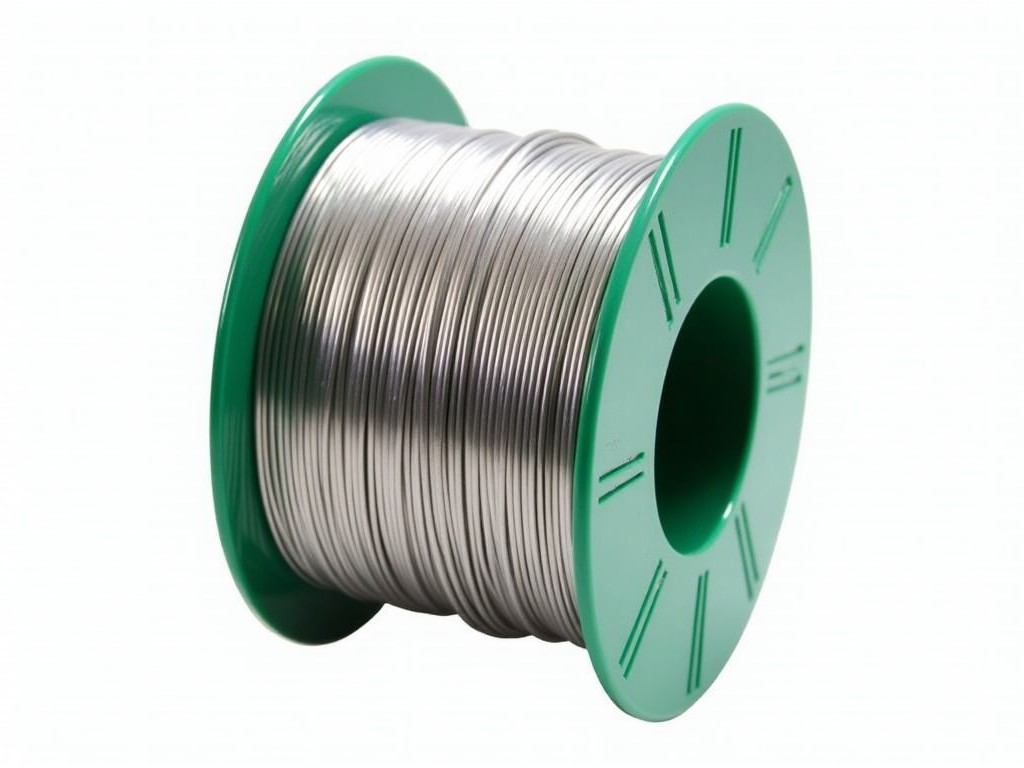
Surface cleanliness is critical; wires undergo alkali cleaning and polishing to remove drawing lubricants and particulates that could cause porosity or hydrogen pickup. Packaging in sealed, desiccant-lined spools or vacuum-sealed TIG rods prevents moisture absorption, which is especially important for low-hydrogen processes. Some suppliers offer laser-etched identification on spools for traceability in regulated industries.
Customization and Procurement Considerations
Filler wire diameter is selected based on welding process, material thickness, and current capacity. Common MIG diameters range from 0.8 mm to 1.2 mm for thin-sheet applications, while 1.6 mm is used for thicker sections in mechanized welding. TIG rods are typically supplied in 1.6–3.2 mm diameters and 1000 mm lengths, though custom lengths are available for automated orbital welding systems. Spools weights vary from 5 kg (for precision work) to 25 kg (for high-volume production).
Shielding gas compatibility must be confirmed during procedure qualification. While argon-based mixtures are standard, some operations use helium additions to increase heat input and travel speed for thick-section welding. Oxygen content in the gas mix should not exceed 2–3% to avoid excessive oxidation of chromium, which can degrade corrosion resistance. Flow rates are typically set between 15–25 L/min depending on nozzle size and draft conditions.
Lead times for standard ER308LSi filler wire are generally 2–4 weeks for stock items, with custom diameters or special packaging extending to 6–8 weeks. Minimum order quantities (MOQs) vary by supplier but often start at 1 spool for MIG wire or 5 kg for TIG rods. Exporters should confirm compliance with REACH, RoHS, and conflict mineral regulations, particularly when shipping to the EU or North America.

More Products

Send Inquiry
If you are interested in our products, leave your information here and we will be in touch shortly.