China Types Of Filler Wire For Tig Welding
Selecting the correct filler wire for TIG welding requires understanding material compatibility, joint design, and service conditions. This guide outlines the primary types of filler wire produced in
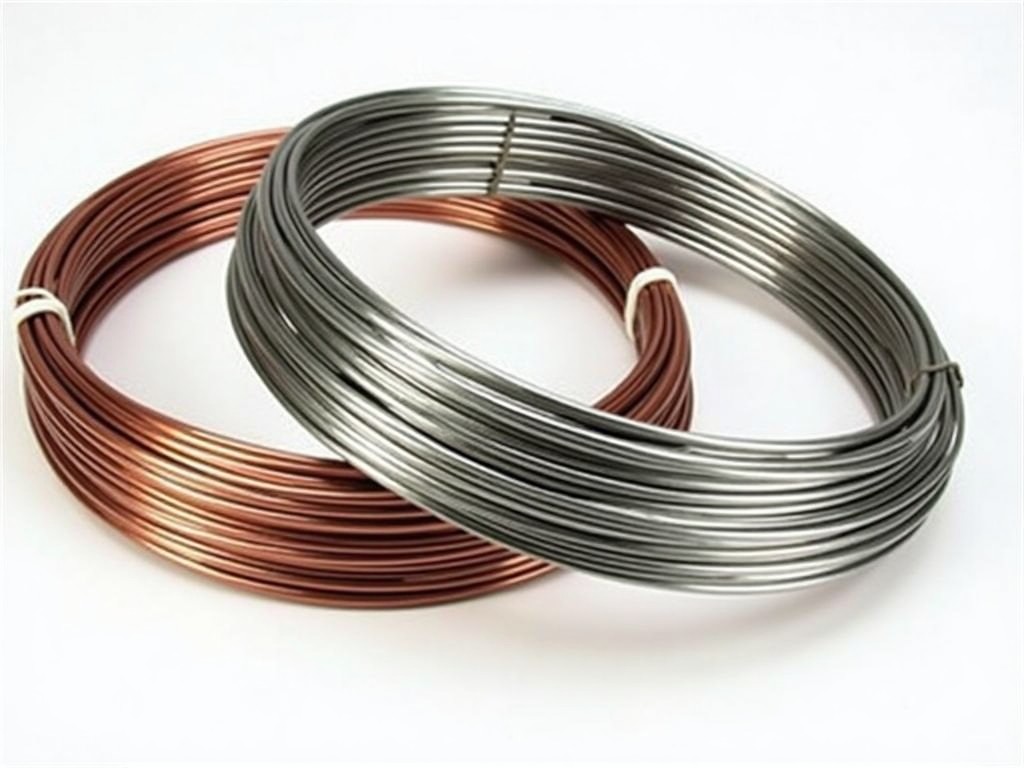
China Types of Filler Wire for TIG Welding
Selecting the correct filler wire for TIG welding requires understanding material compatibility, joint design, and service conditions. This guide outlines the primary types of filler wire produced in China for industrial TIG welding applications, focusing on their metallurgical properties and suitability for specific base metals and operating environments.
Carbon Steel Filler Wires (ER70S-2, ER70S-6)
ER70S-2 and ER70S-6 are the most commonly used filler wires for welding low-carbon and mild steels in structural, pressure vessel, and pipeline applications. ER70S-2 contains deoxidizers (aluminum, titanium, zirconium) that improve weld quality on mildly contaminated surfaces, reducing porosity risk. ER70S-6 has higher manganese and silicon content, providing better wetting and bead appearance on clean, primed surfaces. Both produce welds with minimum tensile strength of 490 MPa (70 ksi) and good impact toughness down to -20°C.
Typical wire diameters range from 0.8 mm to 2.4 mm, selected based on joint thickness and welding position. For root passes in pipe welding, 0.8 mm or 1.0 mm wires are preferred for better control. Fill and cap passes often use 1.2 mm or 1.6 mm wires for higher deposition rates. Shielding gas is typically 100% argon or argon/helium mixtures; argon/CO₂ blends are not recommended for TIG due to tungsten contamination.
Stainless Steel Filler Wires (ER308L, ER309L, ER316L)
Austenitic stainless steel filler wires are selected based on the base metal grade and corrosion resistance requirements. ER308L is used for welding 304 and 304L stainless steels, offering low carbon content (<0.03%) to minimize sensitization and intergranular corrosion risk. ER309L is designed for joining dissimilar metals, such as stainless steel to carbon steel, providing a ferritic-austenitic microstructure that reduces cracking susceptibility. ER316L contains 2-3% molybdenum, enhancing resistance to pitting and crevice corrosion in chloride environments, making it suitable for 316L base metals in chemical processing and marine applications.
These wires are manufactured to AWS A5.9 and ISO 14343 standards, with controlled ferrite numbers (typically 3-10 FN) to ensure crack resistance. Diameters range from 0.6 mm to 2.4 mm, with finer wires (0.6–1.0 mm) used for thin-gauge tubing and precision fabrication. Back purging with argon is often required for root pass quality in pipe welding to prevent oxidation of the weld bead interior.
Aluminum Filler Wires (ER4043, ER5356)
Aluminum filler wires for TIG welding are alloyed to match the base metal and provide adequate fluidity and crack resistance. ER4043 contains 5% silicon, improving weld flow and reducing hot cracking susceptibility in 6xxx series alloys (e.g., 6061, 6063). It is widely used in automotive, architectural, and general fabrication. ER5356 contains 5% magnesium, providing higher tensile strength and better marine corrosion resistance, making it preferred for 5xxx series alloys (e.g., 5052, 5083) in shipbuilding, pressure vessels, and cryogenic tanks.
Wire feeding characteristics are critical due to aluminum’s softness; wires are often supplied with tighter tolerances and smoother surface finishes to prevent birdnesting. Diameters typically range from 0.8 mm to 2.4 mm, with 1.0 mm and 1.2 mm being most common for manual TIG. Pure argon shielding gas is essential; even small amounts of oxygen or moisture cause oxidation and porosity. Pre-cleaning to remove oxide layer and hydrocarbons is mandatory before welding.
Nickel Alloy Filler Wires (ERNiCr-3, ERNiCrMo-3)
Nickel-based filler wires are used for welding high-alloy materials and dissimilar joints involving stainless steels, nickel alloys, and carbon steel. ERNiCr-3 (equivalent to Inconel 82) contains 20% chromium and 3% niobium, providing excellent oxidation resistance and high-temperature strength up to 900°C. It is commonly used for welding Inconel 600, 601, and 690, as well as for overlay cladding on carbon steel. ERNiCrMo-3 (Inconel 625) adds 8-10% molybdenum and 3-4% niobium, offering superior resistance to pitting, crevice corrosion, and stress-corrosion cracking in reducing and oxidizing environments, including seawater and acidic chemicals.
These wires maintain ductility and toughness after welding, with minimum tensile strengths exceeding 690 MPa (100 ksi) and good cryogenic performance. Diameters range from 0.8 mm to 2.4 mm, selected based on joint thickness and welding current. Shielding gas is typically 100% argon or argon/helium mixtures (75%/25%) to improve penetration and weld pool fluidity. Post-weld heat treatment is generally not required, but stress relief may be applied for thick sections.
Comparison of Common Filler Wire Types
| Filler Wire Type | Primary Use | Key Alloying Elements | Typical Tensile Strength (MPa) | Shielding Gas |
|---|---|---|---|---|
| ER70S-2 | Carbon steel, mild steel | Mn, Si, Al, Ti, Zr | 490–550 | 100% Ar, Ar/He |
| ER70S-6 | Carbon steel, clean surfaces | Mn, Si (higher) | 490–550 | 100% Ar, Ar/He |
| ER308L | 304/304L stainless steel | Cr, Ni, low C | 520–620 | 100% Ar |
| ER309L | Dissimilar metals (SS to CS) | Cr, Ni, low C | 520–620 | 100% Ar |
| ER316L | 316/316L stainless steel | Cr, Ni, Mo, low C | 520–620 | 100% Ar |
| ER4043 | 6xxx series aluminum | Si (5%) | 120–180 | 100% Ar |
| ER5356 | 5xxx series aluminum | Mg (5%) | 270–350 | 100% Ar |
| ERNiCr-3 | Ni alloys, dissimilar joints | Cr (20%), Nb (3%) | 690–820 | 100% Ar, Ar/He |
| ERNiCrMo-3 | Ni alloys, corrosive environments | Cr (20–23%), Mo (8–10%), Nb (3–4%) | 690–820 | 100% Ar, Ar/He |
The table above summarizes key characteristics of commonly supplied filler wires from Chinese manufacturers. Values represent typical ranges based on AWS and ISO standards; actual properties depend on specific heat treatment, casting practices, and quality control. For critical applications, mill test reports (MTRs) should be requested to verify chemical composition and mechanical properties. Wire diameter selection should consider joint geometry, welding position, and desired bead profile.
Manufacturing and Quality Considerations
Filler wire production in China follows standardized processes including copper coating (for ferrous wires), drawing, straightening, and spooling. Copper coating on carbon steel wires improves electrical conductivity and prevents rust during storage. Stainless steel and nickel alloy wires are typically bare to avoid contamination. Diameter tolerance is maintained within ±0.02 mm for precision feeding. Spools are commonly supplied in 5 kg, 10 kg, or 15 kg weights, with anti-tangling designs and moisture-resistant packaging.
Quality control includes chemical analysis (spark OES or XRF), tensile testing, bend testing, and porosity evaluation via radiography or ultrasonic methods. For stainless and nickel alloys, ferrite content is measured using a ferritoscope to predict cracking resistance. Surface cleanliness is verified through wipe testing for oils and particulates. Traceability is maintained via batch numbers linked to raw material certificates and test reports.
Application-Specific Selection Guidance
In pressure vessel fabrication, ER70S-2 is often selected for root passes due to its tolerance for slight surface oxidation, while ER70S-6 is used for fill and cap passes on machined bevels. For cryogenic tanks using 9% nickel steel, ERNiCr-3 is preferred to match the base metal’s low-temperature toughness. In food processing equipment made from 316L stainless steel, ER316L ensures corrosion resistance matching the vessel, preventing preferential weld decay. Aluminum boat hulls welded from 5083 plate use ER5356 for its magnesium content, which provides strength and resistance to saltwater corrosion.
When welding dissimilar metals, such as connecting a stainless steel nozzle to a carbon steel vessel, ER309L provides a buffer layer that minimizes thermal stress cracking. For repair welding on worn shafts or valves, ERNiCrMo-3 can build up a corrosion-resistant overlay that outperforms the base material in harsh environments. Always consult the base metal’s material test report and service conditions to determine the appropriate filler wire classification.
More Products

Send Inquiry
If you are interested in our products, leave your information here and we will be in touch shortly.