Coated Rebar Tie Wire For Concrete
Rebar tie wire secures reinforcement cages in concrete structures by binding intersecting bars at lap joints, corners, and intersections. The coating applied to the wire serves a critical function:
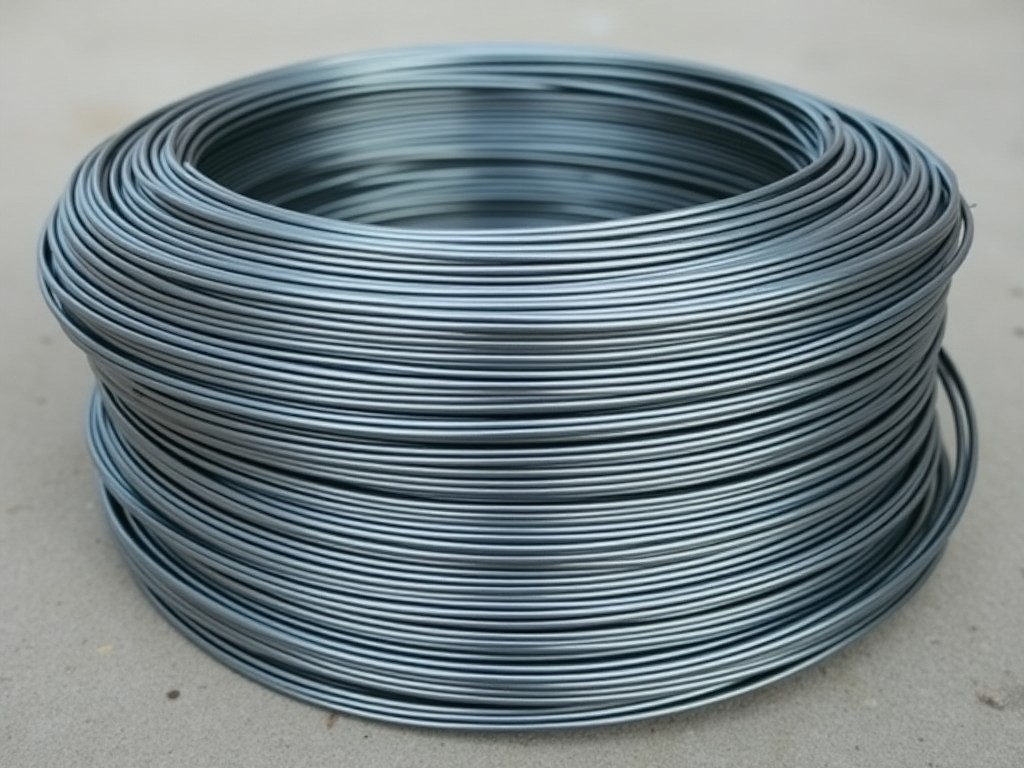
Coated Rebar Tie Wire for Concrete Reinforcement
Rebar tie wire secures reinforcement cages in concrete structures by binding intersecting bars at lap joints, corners, and intersections. The coating applied to the wire serves a critical function: it prevents direct metal-to-concrete contact, reducing the risk of corrosion initiation at tie points where moisture and chlorides can accumulate. This is especially important in environments exposed to deicing salts, marine conditions, or alkaline concrete pore solutions that can accelerate degradation of bare steel.
The coating must maintain integrity during handling, bending, and tying operations while providing long-term barrier protection against ingress of water, oxygen, and aggressive ions. Common coating types include epoxy, polyester, and zinc-based systems, each selected based on exposure conditions, service life requirements, and compatibility with concrete alkalinity. The wire substrate is typically low-carbon steel, chosen for its ductility and ease of twisting by hand or power tools.
Technical Specifications and Performance Characteristics
The performance of coated rebar tie wire depends on three interrelated factors: substrate tensile strength, coating adhesion, and coating barrier properties. Substrate strength typically ranges from 450 to 650 MPa tensile strength, allowing sufficient ductility for manual tying without fracture while maintaining enough rigidity to hold bar positions during concrete placement. Coating adhesion is measured via ASTM D4541 (pull-off strength), with values exceeding 10 MPa indicating robust bond integrity under mechanical stress.
Coating thickness is controlled to balance protection and flexibility. Epoxy coatings typically range from 75 to 150 microns dry film thickness (DFT), providing excellent resistance to chloride penetration and alkaline attack. Zinc-based coatings (galvanized or zinc-aluminum) are applied at 20 to 50 microns, offering sacrificial protection where coating damage may occur. Polyester coatings fall in the 50 to 100 micron range, combining UV stability with moderate chemical resistance.
| Property | Typical Range | Test Method |
|---|---|---|
| Substrate Tensile Strength | 450–650 MPa | ASTM A370 |
| Coating Adhesion | >10 MPa | ASTM D4541 |
| Epoxy Coating Thickness | 75–150 µm | ASTM D1186 |
| Zinc Coating Thickness | 20–50 µm | ASTM A123/A153 |
| Elongation at Break | 10–20% | ASTM A370 |
Application-Specific Selection Criteria
Choosing the appropriate coated tie wire requires matching the coating system to the environmental exposure class defined in standards such as ACI 318 or EN 206. For moderate exposure (e.g., interior structures, low-humidity climates), a standard epoxy-coated wire may suffice. In high-chloride environments—such as bridge decks, parking structures, or coastal facilities—thicker epoxy coatings or duplex systems (zinc primer + epoxy topcoat) are preferred to delay corrosion onset at tie points.
In precast concrete plants where wire is subjected to repeated bending and abrasion during cage fabrication, coating flexibility and adhesion become critical. A coating that cracks during bending creates pathways for corrosion, negating its protective intent. Therefore, manufacturers often specify coatings with proven elongation at break (>15%) and flexibility tested via mandrel bend (ASTM D522) to ensure durability during handling.
For projects requiring electromagnetic neutrality—such as MRI facilities or sensitive electronic environments—non-metallic or specially coated wires may be specified to avoid interference. In such cases, the coating must fully encapsulate the steel substrate to prevent eddy current effects, while maintaining sufficient tensile strength for tying.
Manufacturing and Quality Control Considerations
The coating process begins with wire drawing to the desired diameter (typically 0.8 to 1.6 mm), followed by cleaning and surface preparation to ensure adhesion. The wire then passes through a coating applicator—either dip, spray, or electrostatical—where the coating material is applied uniformly. Curing occurs in ovens at temperatures specific to the coating chemistry (e.g., 180–220°C for epoxy), initiating cross-linking to form a continuous film.
Quality control is integrated at multiple stages: incoming wire diameter and tensile strength are verified; coating thickness is measured via magnetic or eddy current gauges; adhesion is tested via pull-off or knife adhesion (ASTM D6677); and flexibility is assessed via bend tests. Spools are labeled with batch numbers, coating type, diameter, and relevant standards for traceability.
Packaging is designed to prevent coating damage during transit and storage. Wire is typically wound on plastic or cardboard spools, wrapped in protective film, and placed in cartons with moisture barriers. For long-term storage, humidity-controlled environments are recommended to prevent condensation-induced coating degradation, particularly for hygroscopic coating types.
Comparison of Coating Types for Rebar Tie Wire
| Coating Type | Barrier Performance | Adhesion & Flexibility | Typical Use Case |
|---|---|---|---|
| Epoxy | Excellent chloride and alkali resistance | Good adhesion; moderate flexibility | Bridge decks, marine structures, parking garages |
| Zinc (Galvanized) | Sacrificial protection; good for mild exposure | High ductility; self-healing properties | General construction, low-chloride environments |
| Polyester | Good UV stability; moderate chemical resistance | High flexibility; good adhesion | Exterior precast elements, UV-exposed applications |
| Duplex (Zn + Epoxy) | Superior barrier + sacrificial protection | Combines zinc ductility with epoxy toughness | High-risk corrosion zones, extended service life requirements |
The selection process should consider not only initial cost but also lifecycle maintenance expectations. While coated wire may have a higher unit price than bare alternatives, its role in preventing localized corrosion at tie points can significantly extend the service life of the reinforcement system, particularly in harsh environments where repair access is limited or costly.
For technical assistance, sample requests, or project-specific quotations, please contact our engineering team.
Request Information
More Products

Send Inquiry
If you are interested in our products, leave your information here and we will be in touch shortly.