Galvanized Double Loop Rebar Tie Wire
This product page details the technical specifications, manufacturing considerations, and application rationale for galvanized double loop rebar tie wire used in reinforced concrete construction. The
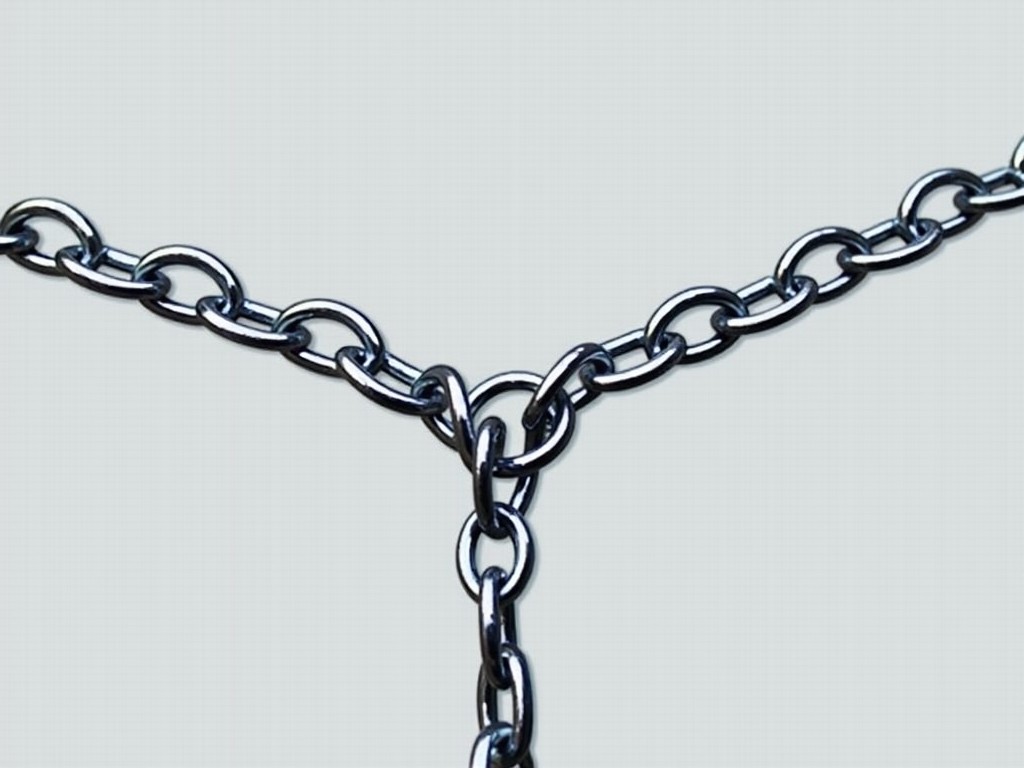
Galvanized Double Loop Rebar Tie Wire
This product page details the technical specifications, manufacturing considerations, and application rationale for galvanized double loop rebar tie wire used in reinforced concrete construction. The information is structured to assist engineers and procurement specialists in evaluating suitability for structural reinforcement projects.
Product Design and Mechanical Function
Galvanized double loop rebar tie wire consists of a low-carbon steel wire formed into a continuous loop with two distinct bends, creating a pre-shaped fastening element. The double loop configuration allows for rapid manual or tool-assisted tying of intersecting rebar without the need for cutting or knotting individual wire lengths. This design reduces installation time by approximately 30–40% compared to single-strand tie wire in high-volume applications such as slab-on-grade, wall, and column reinforcement.
The wire diameter typically ranges from 1.2 mm to 1.6 mm, selected based on rebar size and required tensile retention. After forming, the wire undergoes hot-dip galvanization to a minimum zinc coating weight of 60 g/m² (both sides), providing barrier protection against chloride-induced corrosion in concrete environments. The galvanized layer adheres to ASTM A641/A641M Class 1 standards, ensuring durability during the curing and service life of the structure.
Material Composition and Corrosion Resistance
The base wire is manufactured from cold-drawn low-carbon steel (SAE 1006–1008), chosen for its balance of ductility and tensile strength. This material allows the wire to be bent into the double loop geometry without cracking or spring-back, while maintaining sufficient yield strength (>300 MPa) to resist deformation under rebar displacement during concrete pouring and vibration.
Hot-dip galvanization creates a metallurgical bond between zinc and steel, forming a series of zinc-iron alloy layers topped with pure zinc. This coating provides sacrificial protection: if the concrete cover is compromised and chloride ions reach the steel, the zinc corrodes preferentially, delaying rust formation on the underlying wire. In moderate exposure environments (e.g., interior slabs, protected walls), this system typically maintains integrity for the design life of the structure.
For high-chloride or marine environments, alternative coatings such as epoxy-coated or stainless steel tie wire may be specified. However, galvanized double loop wire remains the most cost-effective solution for general-purpose reinforced concrete where concrete cover depth exceeds 25 mm and chloride exposure is classified as low to moderate per ACI 318.
Manufacturing Process and Quality Control
Production begins with drawing high-grade steel wire rod to the target diameter (1.2–1.6 mm) through a series of dies, achieving consistent tensile properties and surface finish. The wire is then fed into a high-speed forming machine that bends it into the double loop configuration using precision rollers and mandrels. Each loop is formed to an internal diameter of 8–10 mm, allowing easy placement over #3 to #5 rebar (10–16 mm diameter).
After forming, the wire coils are cleaned via alkaline degreasing and acid pickling to remove oxides and lubricants, ensuring optimal zinc adhesion. The hot-dip galvanizing process immerses the wire in molten zinc at approximately 450°C, followed by air cooling and optional passivation. Coating thickness is verified using magnetic induction or gravimetric testing per ASTM A90/A90M.
Final inspection includes visual checks for coating uniformity, bend integrity, and absence of nicks or splits. Coils are wound under controlled tension to prevent deformation and labeled with batch number, diameter, coating class, and length. Traceability is maintained for quality audits and project documentation.
Typical Specifications
| Parameter | Typical Value / Range | Reference Standard |
|---|---|---|
| Wire Diameter | 1.2 mm, 1.4 mm, 1.6 mm | ASTM A641/A641M |
| Tensile Strength | 350–500 MPa | ASTM A370 |
| Zinc Coating Weight | ≥60 g/m² (both sides) | ASTM A641/A641M Class 1 |
| Loop Inner Diameter | 8–10 mm | Manufacturer Standard |
| Coil Weight | 10–25 kg | Customizable |
| Length per Coil (approx.) | 100–250 m (dependent on diameter) | Calculated |
Applications in Reinforced Concrete Construction
The primary function of double loop tie wire is to maintain the positional accuracy of intersecting rebar during concrete placement. Unlike single-strand wire, which requires twisting and cutting, the double loop can be slipped over the rebar intersection and secured with a simple pinch using pliers or a reel-type tier. This minimizes rebar displacement caused by worker movement, concrete flow, or vibratory compaction—factors that can lead to inadequate cover, congestion, or structural weakness.
In wall and column forms, where vertical and horizontal rebar grids are dense, the speed of installation reduces labor exposure to awkward postures and repetitive motion. For slab-on-grade work, the wire’s flexibility allows it to conform to uneven subgrades while maintaining tie integrity. The galvanized coating ensures that the fastener does not become a corrosion initiation point, particularly in environments where concrete carbonation or chloride ingress is a long-term concern.
This product is commonly specified in infrastructure projects including parking structures, bridge decks, retaining walls, and industrial floors. It is also used in precast concrete yards where rebar cages are assembled prior to pouring. The consistent loop geometry supports automation in semi-automatic tying tools, further improving efficiency in high-repeatability scenarios.
Comparison with Alternative Tie Methods
| Tie Method | Installation Speed | Material Waste | Corrosion Protection | Skill Requirement |
|---|---|---|---|---|
| Double Loop Galvanized Wire | High (pre-formed) | Minimal (no cut-off) | Good (zinc coating) | Low (simple pinch) |
| Single Strand Wire | Medium (requires twisting) | High (cut-off tails) | Good (if galvanized) | Medium (technique-dependent) |
| Plastic Zip Ties | High | Low | Poor (UV degradation, no galvanic protection) | Very Low |
| Stainless Steel Wire | Medium | Medium | Excellent | Medium |
While plastic ties offer speed, they lack the mechanical strength to maintain position under high slump concrete or vibration and degrade under UV exposure during storage. Stainless steel wire provides superior corrosion resistance but at a significantly higher cost, making it impractical for general use. The galvanized double loop wire represents an optimized balance of performance, durability, and economy for standard reinforced concrete applications.
Packaging and Handling
The wire is wound onto corrosion-resistant plastic or coated steel spools to prevent surface damage during transit and storage. Spools are designed for smooth payout, reducing tangling and wire fatigue. Each coil is wrapped in stretch film and placed in a corrugated carton labeled with product code, dimensions, coating class, batch number, and quantity. Palletized shipments include stretch wrapping and corner protectors to withstand forklift handling and transport vibration.
Storage recommendations include keeping the wire in a dry, covered environment to prevent moisture accumulation on the spool or carton, which could lead to staining or premature coating degradation. Direct contact with soil, standing water, or acidic substances should be avoided. Under proper conditions, the product maintains its integrity for at least 24 months from date of manufacture.
Quality Assurance and Traceability
Every production batch is accompanied by a mill test report (MTR) documenting chemical composition, mechanical properties, coating weight, and dimensional compliance. These records are retained for a minimum of five years and can be provided upon request for project audits or certification purposes. The manufacturing process follows ISO 9001-aligned quality management principles, with in-process checks at wire drawing, forming, cleaning, galvanizing, and coiling stages.
Non-conforming material is segregated and investigated to prevent recurrence. Common checks include tensile testing of samples, coating adhesion via bend test, and visual inspection for defects such as pitting, peeling, or incomplete coverage. This systematic approach ensures that the product performs as expected in the field, minimizing the risk of installation delays or long-term durability issues.
For projects requiring third-party verification, independent testing laboratories can validate coating thickness, tensile strength, and elongation. Results are compared against the specification sheet to confirm conformity. This level of transparency supports informed decision-making by engineers and reduces uncertainty during procurement.
Environmental and Safety Considerations
The low-carbon steel used in this product is recyclable at end-of-life, and the zinc coating does not impede recovery in standard steel recycling streams. Manufacturing processes are designed to minimize emissions and wastewater, with acid pickling baths treated and zinc fumes captured via scrubber systems. Energy efficiency is prioritized in wire drawing and annealing operations.
From a safety perspective, the wire edges are smoothed during forming to reduce cut hazards. The product does not contain hazardous substances above thresholds defined by REACH or RoHS. Handling requires only standard PPE such as gloves and safety glasses; no special ventilation or containment is needed. The pre-formed loop design also reduces the likelihood of wire ends protruding, lowering snag and puncture risks during installation.
In contrast to plastic ties, which may contribute to microplastic pollution if fragmented, galvanized steel wire presents a lower environmental persistence risk. Its long service life and recyclability align with sustainable construction principles increasingly referenced in green building frameworks such as LEED and BREEAM.
For technical inquiries, customization requests, or project-specific quotations, please contact our engineering team.
Request Information
More Products

Send Inquiry
If you are interested in our products, leave your information here and we will be in touch shortly.