High Tensile Stainless Steel Wire
High tensile stainless steel wire is engineered for applications requiring exceptional strength-to-weight ratios combined with corrosion resistance. This product line encompasses cold-drawn
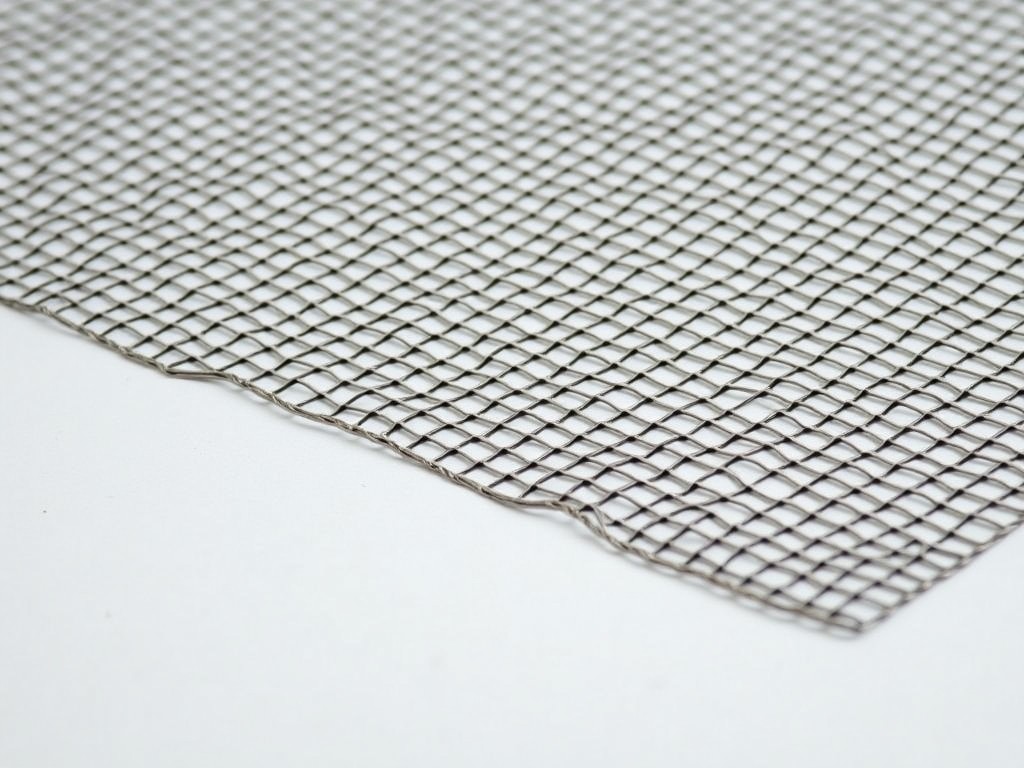
High Tensile Stainless Steel Wire
High tensile stainless steel wire is engineered for applications requiring exceptional strength-to-weight ratios combined with corrosion resistance. This product line encompasses cold-drawn austenitic and precipitation-hardened grades optimized for dynamic loading environments where failure due to fatigue or stress corrosion cracking must be minimized. Tensile strengths typically range from 1800 MPa to over 2300 MPa depending on grade, diameter, and heat treatment condition, enabling use in critical structural and mechanical components.
Material Composition and Metallurgical Properties
The primary grades used include AISI 302, 304, 316, and 17-7 PH stainless steels, each selected based on specific environmental and mechanical demands. Grade 302 offers high tensile strength with good formability, while 316 provides superior chloride resistance for marine or chemical exposure. Precipitation-hardened 17-7 PH achieves the highest strength levels through low-temperature aging treatments, maintaining ductility essential for coiling and forming operations. Chemical compositions are tightly controlled to ensure consistent performance, with carbon content kept low (<0.15%) to prevent sensitization during welding or prolonged heating.
Cold working during drawing increases tensile strength through dislocation density accumulation, while precise annealing cycles between draws restore ductility for further reduction. Final properties depend on the balance between deformation level and thermal history. Surface finish is critical—wire is typically processed to a bright or matte finish depending on subsequent use, with surface defects minimized to below 5 microns to avoid stress concentration points that could initiate fatigue cracks under cyclic loading.
Typical Mechanical Characteristics by Grade
| Grade | Condition | Tensile Strength (MPa) | Elongation at Break (%) | Typical Diameter Range (mm) |
|---|---|---|---|---|
| AISI 302 | Cold drawn | 1800–2100 | 8–12 | 0.20–6.00 |
| AISI 316 | Cold drawn | 1700–2000 | 7–11 | 0.20–5.00 |
| 17-7 PH | Cold drawn + aged | 2000–2300+ | 6–10 | 0.30–4.00 |
Values shown represent typical ranges for standard production lots; actual properties vary with diameter due to the size effect in cold working. Smaller diameters achieve higher strength levels due to greater surface-to-volume ratio and more uniform deformation. Elongation decreases with increasing strength but remains sufficient for most forming and coiling processes. Custom tempers between full hard and spring temper are available upon request to match specific application requirements for load capacity versus flexibility.
Critical Applications Requiring High Strength and Corrosion Resistance
In suspension bridge systems, high tensile stainless steel wire forms the primary load-bearing cables where long-term exposure to moisture, deicing salts, and cyclic wind-induced vibrations demands both fatigue endurance and resistance to stress corrosion cracking. The wire’s ability to maintain tensile integrity over decades reduces inspection frequency and lifecycle costs compared to coated carbon steel alternatives. Similarly, in aerospace control cables, the combination of high strength and minimal diameter allows for lightweight routing through confined airframe spaces while maintaining precise tension under temperature extremes.
Industrial machinery utilizes this wire in valve springs, clutch mechanisms, and conveyor tensioners where repeated loading cycles exceed 106 repetitions. The stable elastic modulus and resistance to creep at elevated temperatures ensure consistent force output over time. In medical devices, guidewires and stent delivery systems rely on the wire’s biocompatibility, torsional stability, and ability to navigate tortuous vascular paths without permanent deformation—properties directly linked to the material’s homogeneous microstructure and controlled surface finish.
Manufacturing Considerations and Quality Assurance
Production begins with precision rod preparation, including surface inspection and centerless grinding to remove imperfections that could propagate during drawing. Drawing dies are manufactured from tungsten carbide or diamond-coated materials to ensure dimensional accuracy and surface integrity. Lubrication systems use synthetic formulations designed to withstand high drawing temperatures while leaving minimal residue. Post-drawing, stress relief or low-temperature aging treatments are applied based on grade to optimize the strength-ductility balance without inducing sensitization or sigma phase formation.
Quality verification includes non-destructive eddy current testing for surface flaws, tensile testing per ASTM A370 or ISO 6932-2, and torsion testing to assess ductility and surface soundness. Chemical analysis confirms compliance with ASTM A240 or EN 10088-2 specifications. Traceability is maintained throughout the process, linking each coil to its raw material lot, drawing parameters, and heat treatment cycle. Packaging employs corrosion-inhibiting materials and controlled humidity environments to prevent oxidation during transit and storage, particularly for marine-grade variants.
Customization Options for Industrial Integration
Diameter tolerances can be held to ±0.005 mm for precision applications such as sensor elements or micro-actuators. Surface finishes range from bright drawn to matte or coated with PTFE or nylon for reduced friction in dynamic assemblies. Lengths are supplied in continuous coils up to 50 kg or cut-to-length pieces with end treatments including welding, swaging, or fitted terminals. Special tempers—such as dual tensile grades along the length or graded hardness profiles—are achievable through controlled drawing schedules and localized heat treatment.
For OEMs requiring embedded functionality, the wire can be supplied with conductive coatings for EMI shielding or hybrid constructions combining stainless steel with shape-memory alloys. Environmental compliance documentation, including REACH, RoHS, and conflict mineral statements, is available upon request. Technical support includes finite element analysis assistance for load simulation and fatigue life prediction based on actual material properties and service conditions.
Engineers and procurement teams seeking to specify high tensile stainless steel wire for critical applications are invited to submit detailed requirements including operating environment, load cycles, dimensional constraints, and regulatory considerations. Our technical team will respond with material recommendations, test data packages, and quotation support tailored to your project’s risk mitigation and long-term value objectives.
Submit Specification Inquiry
More Products
Send Inquiry
If you are interested in our products, leave your information here and we will be in touch shortly.