Stainless Steel Welding Flux
Stainless steel welding flux is a granular or powdered compound applied during submerged arc welding (SAW) or electroslag welding (ESW) to protect the molten weld pool from atmospheric contamination,
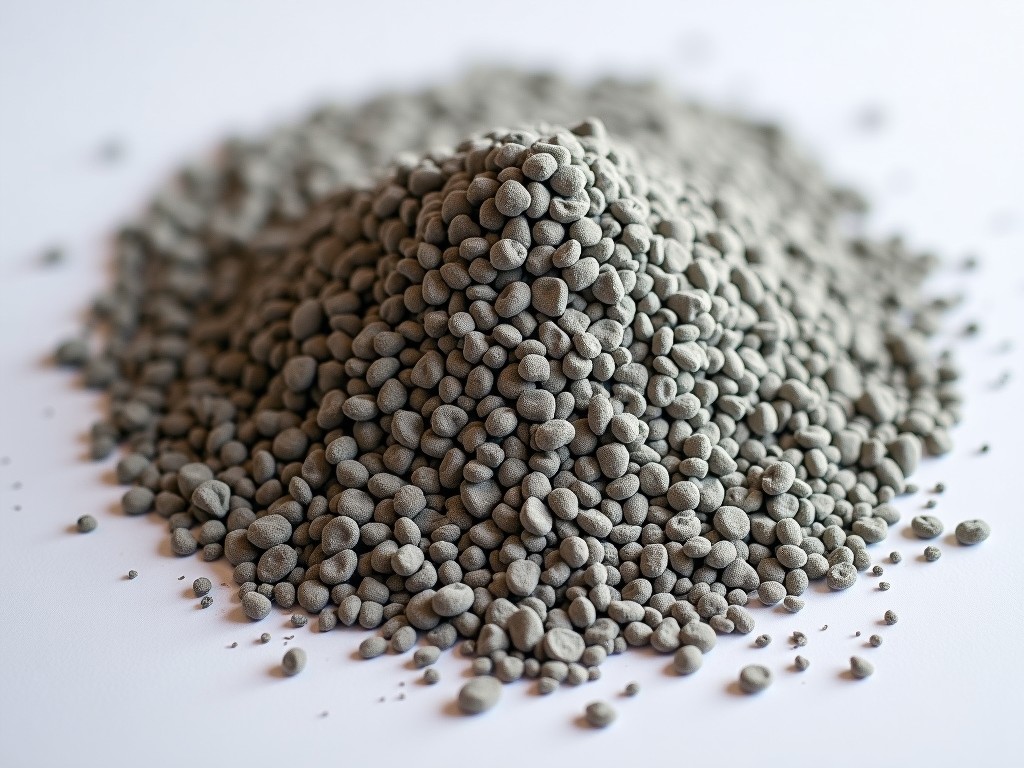
Stainless Steel Welding Flux
Stainless steel welding flux is a granular or powdered compound applied during submerged arc welding (SAW) or electroslag welding (ESW) to protect the molten weld pool from atmospheric contamination, stabilize the arc, and influence the chemical composition and mechanical properties of the weld deposit. Its primary function is to form a protective slag layer that shields the weld from oxygen and nitrogen absorption while enabling controlled deoxidation and alloying.
Unlike fluxes used for carbon steel, stainless steel welding fluxes must maintain a precise chemical balance to prevent chromium loss, avoid excessive silicon pickup, and ensure the weld metal retains its corrosion-resistant microstructure. The flux composition directly affects the weld’s ferrite number, which in turn influences resistance to hot cracking and stress corrosion cracking in service environments.
Chemical Composition and Slag System Characteristics
Typical stainless steel welding fluxes are based on calcium fluoride (CaF₂), calcium carbonate (CaCO₃), and silico-manganese alloys, with controlled additions of nickel, chromium, and molybdenum compounds to compensate for burn-off during welding. The basicity index (CaO+MgO)/(SiO₂+Al₂O₃) is generally maintained between 1.0 and 1.4 to ensure adequate fluidity and sulfur removal without excessive oxidation of alloying elements.
Fluoride content promotes deoxidation and improves weld bead appearance, while carbonate acts as a slag-forming agent and gas shield precursor. The flux must produce a slag that is easily removable after welding yet sufficiently viscous to prevent premature slag entrapment in the weld bead. Residual slag must not contain soluble chlorides or fluorides that could induce pitting or crevice corrosion in chloride-exposed environments.
Weld Metal Composition Control and Ferrite Prediction
The flux contributes to the final weld metal composition through transfer of alloying elements and absorption of others. For example, chromium in the flux may partially transfer to the weld, while manganese and silicon are typically absorbed from the flux into the weld metal. Nickel transfer is limited, so the wire electrode composition must account for this to achieve the target austenitic or duplex balance.
Weld metal ferrite content is predicted using diagrams such as the Schaeffler or DeLong diagram, adjusted for flux-induced changes. A ferrite number between 3 and 10 FN is commonly targeted for 308L and 309L welds to avoid solidification cracking, while duplex grades require tighter control (25–40 FN) to maintain phase balance. Flux manufacturers provide compositional adjustment factors to predict weld metal chemistry based on wire and flux inputs.
Typical Applications in Industrial Fabrication
Submerged arc welding with stainless steel flux is preferred for thick-section components where high deposition rates and consistent weld quality are critical, such as in pressure vessels, chemical storage tanks, and offshore structural joints. The process minimizes weld distortion due to concentrated heat input and enables single-pass welding of sections up to 50 mm thick with proper joint design.
Electroslag welding using stainless steel flux is employed for vertical welding of large ingots, turbine shafts, and thick-walled cylinders where joint access is limited and mechanical properties must match or exceed base material. The flux’s ability to refine the weld microstructure through controlled cooling rates reduces the risk of centerline segregation and improves toughness in the heat-affected zone.
In food processing and pharmaceutical equipment manufacturing, fluxes are selected for low carbon and low sulfur pickup to maintain weld metal corrosion resistance equivalent to 304L or 316L base metals. Post-weld cleaning and passivation procedures are often required to remove residual flux particles that could harbor contaminants or initiate localized corrosion.
Comparison of Flux Types for Common Stainless Steel Grades
| Flux Type | Typical Basicity Index | Suitable Wire Grades | Typical Weld Metal C (% max) | Typical Applications |
|---|---|---|---|---|
| Fluoride-basic | 1.2–1.4 | 308L, 309L, 316L | 0.02–0.04 | Pressure vessels, piping, tanks |
| Fluoride-neutral | 0.8–1.0 | 308, 309, 316 | 0.04–0.06 | Structural components, general fabrication |
| High-basic | 1.5–1.8 | Duplex 2209, Super duplex 2507 | 0.01–0.03 | Offshore, chemical processing, heat exchangers |
Basicity index influences slag viscosity, oxygen pickup, and deoxidation capacity. Higher basicity fluxes reduce oxygen absorption and improve toughness at low temperatures but may increase the risk of hot cracking if not balanced with appropriate wire chemistry. Fluoride-neutral fluxes offer faster freezing slag and are often used in multi-pass welding where slag removal between passes is frequent.
Manufacturing Considerations and Quality Control
Flux manufacturing involves precise blending of raw materials followed by drying, agglomeration, and sieving to achieve consistent particle size distribution (typically 0.2–2.0 mm). Moisture content is controlled below 0.1% to prevent hydrogen-induced cracking, especially in high-strength or thick-section applications. Each batch undergoes chemical analysis to verify oxide and fluoride levels within specified tolerances.
Particle size affects flow characteristics in the welding nozzle and slag formation dynamics. Too fine a flux may lead to excessive consumption and porosity, while coarse flux can cause uneven melting and slag inclusions. Manufacturers use laser diffraction or sieve analysis to confirm compliance with flux particle size standards such as EN 760 or AWS A5.17.
Hygroscopic fluxes require hermetic packaging in moisture-barrier bags with desiccant to maintain stability during storage and transport. For export or long-term storage, vacuum-sealed or nitrogen-packed containers are available upon request. Flux reconditioning (rebaking) is not recommended for stainless steel grades due to the risk of altering volatile components; instead, flux should be used within its shelf life as indicated by the manufacturer.
Environmental and Handling Safety
Stainless steel welding fluorides can release hydrogen fluoride (HF) fumes under intense arc heat, particularly in confined spaces. Adequate local exhaust ventilation is required to keep airborne fluoride levels below occupational exposure limits. Operators must wear appropriate respiratory protection when engineering controls are insufficient.
Spent slag should be collected and disposed of according to local regulations for fluoride-containing waste. Some fluxes are formulated to minimize leachable fluoride content in the slag to reduce environmental impact. Safety data sheets (SDS) provide detailed handling, storage, and disposal guidelines specific to each flux formulation.
Direct skin contact with flux powder may cause irritation due to alkalinity or fluoride content. Protective gloves and safety glasses are recommended during handling. Flux should be stored in a cool, dry place away from acids and incompatible materials to prevent unintended chemical reactions.

More Products

Send Inquiry
If you are interested in our products, leave your information here and we will be in touch shortly.