Stainless Steel Wire 2 5 Mm Suppliers
Stainless steel wire with a nominal diameter of 2.5 mm is commonly specified in industrial applications requiring a balance of tensile strength, corrosion resistance, and formability. This diameter

Stainless Steel Wire 2.5 mm Suppliers
Stainless steel wire with a nominal diameter of 2.5 mm is commonly specified in industrial applications requiring a balance of tensile strength, corrosion resistance, and formability. This diameter falls within the mid-range of cold-drawn wire products and is frequently used where mechanical load-bearing capacity must be maintained without excessive stiffness. Suppliers typically offer this size in various stainless steel grades, each selected based on environmental exposure, stress conditions, and fabrication requirements.
Material Grades and Metallurgical Characteristics
The most frequently supplied grades for 2.5 mm stainless steel wire are AISI 304, 316, and 316L. Grade 304 provides adequate resistance to atmospheric corrosion and mild chemical exposure, making it suitable for indoor structural components or low-moisture environments. Grade 316 incorporates molybdenum, significantly improving resistance to chlorides and acidic conditions, which is essential for marine, chemical processing, or wastewater applications. The low-carbon variant 316L minimizes carbide precipitation during welding, preserving corrosion resistance in heat-affected zones.
Mechanical properties vary by grade and temper. In the annealed condition, 2.5 mm 304 wire typically exhibits a tensile strength of 500–700 MPa and elongation of 40–60%, allowing for bending and forming without cracking. When supplied in spring temper (hard drawn), the same diameter can reach tensile strengths of 1800–2200 MPa, suitable for load-bearing springs or tension elements where minimal deflection is critical. Elongation in spring temper drops to 1–3%, reflecting reduced ductility.
Manufacturing Process and Dimensional Control
Stainless steel wire of this size is produced through cold drawing, where hot-rolled rod is pulled through a series of progressively smaller dies to achieve the final diameter. Each pass reduces the cross-section while increasing tensile strength and surface hardness. For 2.5 mm wire, multiple drawing stages are required, with intermediate annealing sometimes used to restore ductility if further reduction is needed. Final diameter tolerance is typically maintained within ±0.02 mm for precision applications, though commercial tolerances may extend to ±0.05 mm depending on customer specification.
Surface finish is influenced by the drawing process and post-treatment. Standard bright finish results from drawing with lubricants and proper die maintenance, yielding a smooth, reflective surface suitable for visible components. For applications requiring enhanced corrosion resistance or paint adhesion, suppliers may offer pickled and passivated surfaces to remove contaminants and stabilize the chromium oxide layer. Some industrial users specify a matte or brushed finish to reduce glare in lighting-sensitive environments.
Typical Industrial Applications
The 2.5 mm diameter is selected when wire must withstand moderate tensile loads while remaining flexible enough for routing through conduits, frames, or assemblies. In architectural wire rope systems, this size is used for tension cables in balustrades or green walls, where aesthetic appearance and long-term outdoor durability are both important. The wire is often terminated with swaged fittings or tensioners, requiring consistent diameter and surface integrity to ensure proper grip and load transfer.
In industrial filtration, 2.5 mm stainless steel wire forms the warp or weft wire in woven mesh screens used for sieving, separation, or fluid filtration. The diameter provides sufficient open area for flow while maintaining structural integrity under backwash or pressure differentials. Mesh count and opening size are determined by the wire diameter and weave pattern, allowing engineers to tailor filtration efficiency to specific particle sizes.
Another common use is in spring manufacturing, particularly for extension or torsion springs in mechanical devices, valves, or agricultural equipment. Here, the wire is coiled and heat-treated to set the spring rate, with the 2.5 mm size offering a practical balance between force output and spatial constraints. Suppliers often provide wire in coiled form with specific cast and helix characteristics to ensure consistent spring performance.
Quality Assurance and Testing Protocols
Reputable suppliers implement dimensional verification at multiple stages of production. In-line laser gauges monitor diameter during drawing, while final inspection uses micrometers or optical comparators to confirm tolerance compliance. Tensile testing is performed on samples from each batch using calibrated universal testing machines, with results compared against grade-specific minimums. Elongation and reduction of area are measured to assess ductility, particularly important for wire intended for forming or coiling.
Surface quality is evaluated visually and under magnification to detect scratches, pits, or drawing defects that could act as stress concentrators. For critical applications, suppliers may offer eddy current testing to identify subsurface flaws or magnetic particle inspection for ferritic grades. Chemical composition is verified via spectrometer analysis to ensure conformance to ASTM A240 or EN 10088 standards, with mill test reports available upon request.
Packaging is designed to prevent deformation and contamination during transit. Wire is typically wound onto plastic or steel spools with controlled tension to avoid over-winding or loop deformation. Spools are labeled with grade, diameter, heat number, and length, then wrapped in protective film and placed in crush-resistant cartons or wooden crates for shipment. For export, moisture barriers and corrosion inhibitors may be included based on destination climate.
Comparison of Supply Options
| Characteristic | Annealed 304 | Spring Temper 316 | Annealed 316L |
|---|---|---|---|
| Tensile Strength (MPa) | 500–700 | 1800–2200 | 500–650 |
| Elongation (%) | 40–60 | 1–3 | 40–55 |
| Corrosion Resistance | Good (urban/inland) | Excellent (marine/chemical) | Excellent + weld stability |
| Typical Use Cases | Fasteners, brackets, mesh | Springs, tension cables | Welded assemblies, flexible tubing |
Customization and Ordering Considerations
Suppliers commonly offer 2.5 mm stainless steel wire in various conditions to match downstream processing needs. Annealed wire is preferred for applications requiring extensive bending, coiling, or weaving, as it minimizes the risk of cracking during deformation. Spring temper wire is specified when high tensile strength and minimal elongation are critical, such as in load-bearing components or precision springs. Some suppliers also provide intermediate tempers (e.g., quarter-hard, half-hard) for applications requiring a balance between strength and formability.
Length and packaging options vary based on usage. Wire can be supplied in continuous coils ranging from a few kilograms to over 500 kg, depending on spool size and handling equipment. For automated feeding systems, suppliers may offer wire with specific cast (natural curvature) and helix (twist) characteristics to ensure smooth feeding without tangling or snagging. Custom labeling, barcoding, or spool colors are available upon request to support inventory management.
Before quotation, industrial buyers should provide the intended grade, temper, required tolerance, surface finish, and estimated annual volume. Information about the application environment (e.g., exposure to saltwater, chemicals, temperature extremes) helps suppliers recommend the most suitable material and treatment. For regulated industries, certification documents such as EN 10204 3.1 or mill test reports can be requested to confirm compliance with material standards.
Environmental and Lifecycle Factors
Stainless steel wire is fully recyclable, and scrap generated during manufacturing or end-of-life processing can be re-melted without degradation of properties. This characteristic supports circular economy principles in industrial supply chains. The long service life of grades like 316 and 316L in corrosive environments reduces replacement frequency, lowering total cost of ownership compared to coated or less resistant alternatives.
Suppliers increasingly provide data on recycled content and carbon footprint upon request, particularly for projects pursuing sustainability certifications. While the wire itself does not consume energy during use, the production process involves electricity and consumables such as drawing lubricants and pickling acids. Responsible suppliers manage these inputs through closed-loop systems and waste treatment to minimize environmental impact.
For technical consultation, sample requests, or to discuss specific grade, temper, or packaging requirements for 2.5 mm stainless steel wire, contact our engineering team.
Request Technical Specification or Quote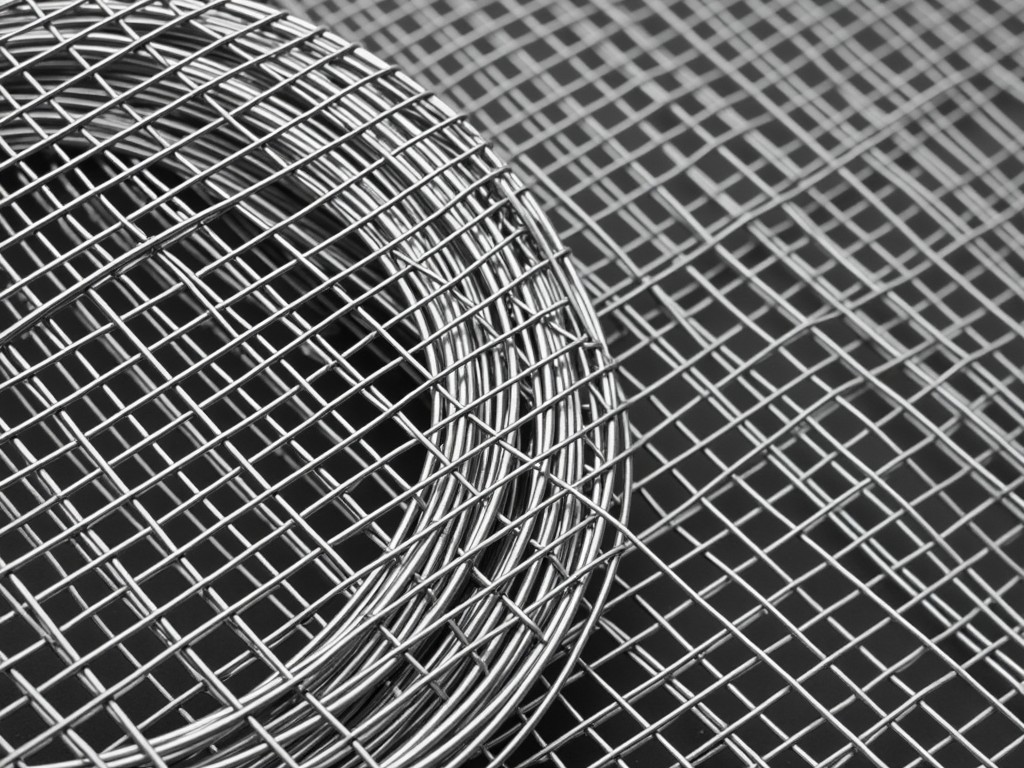
More Products

Send Inquiry
If you are interested in our products, leave your information here and we will be in touch shortly.