Stainless Steel Wire Turnbuckles
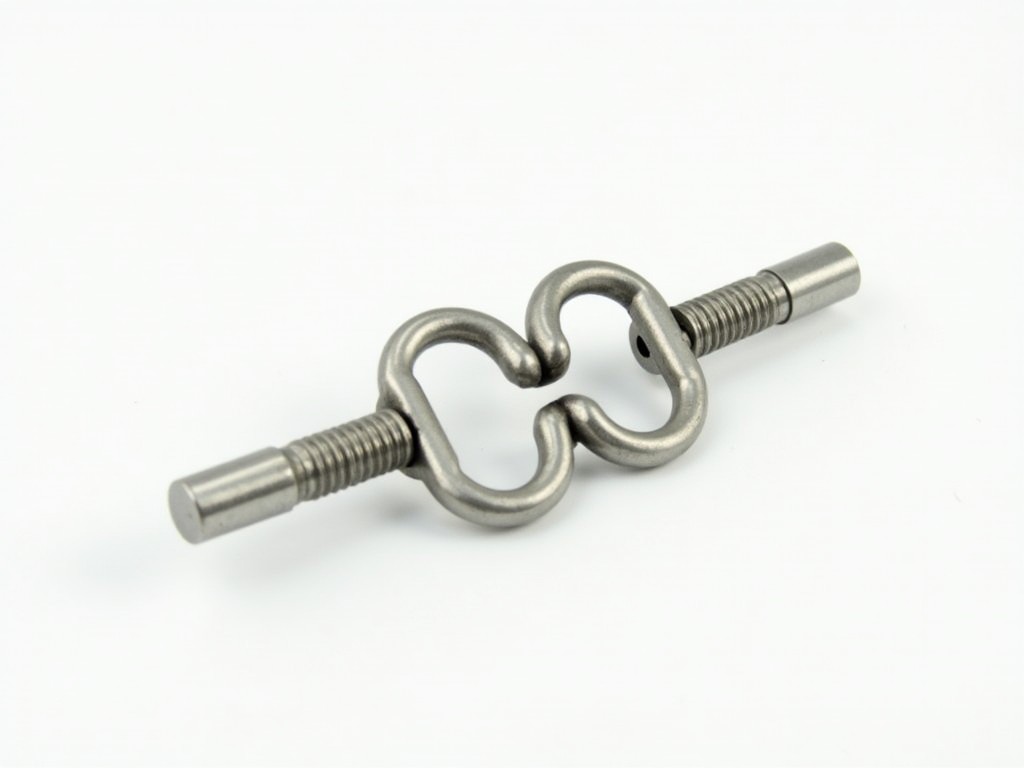
Stainless steel wire turnbuckles are mechanical tensioning devices designed to adjust and maintain precise tension in wire rope, cable, or rod assemblies. They consist of a threaded body with two end
Stainless Steel Wire Turnbuckles
Stainless steel wire turnbuckles are mechanical tensioning devices designed to adjust and maintain precise tension in wire rope, cable, or rod assemblies. They consist of a threaded body with two end fittings—typically eye, jaw, or hook configurations—allowing bidirectional adjustment without removing the assembly from service. These components are critical in applications where controlled tension, corrosion resistance, and long-term reliability are non-negotiable, such as architectural rigging, marine systems, and industrial safety barriers.
Material Composition and Corrosion Resistance
The body and end fittings of these turnbuckles are manufactured from austenitic stainless steel grades, primarily AISI 304 or 316, selected based on environmental exposure. Grade 304 provides adequate resistance to atmospheric corrosion and mild chemical environments, while grade 316 incorporates molybdenum to enhance resistance to chlorides and acidic conditions, making it suitable for marine, coastal, or industrial process settings. The microstructure of these alloys ensures passive oxide layer formation, which self-repairs minor surface damage and prevents pitting or crevice corrosion under typical operating conditions.
Mechanical properties are maintained through cold working and solution annealing processes. Tensile strength typically ranges from 515 to 750 MPa for 304 and 550 to 800 MPa for 316, with yield strength between 205 and 310 MPa depending on temper and diameter. Elongation at break exceeds 40%, ensuring ductility under overload scenarios without brittle failure. These values are consistent with ASTM A240 and A479 standards for stainless steel bar and wire products used in tension hardware.
Design Configuration and Adjustment Mechanism
The turnbuckle body features right-hand and left-hand internal threads machined to precise tolerances, enabling simultaneous adjustment of both ends when rotated. This dual-thread design allows tension to be increased or decreased without disconnecting the assembly, a critical advantage in installed systems where access is limited or disassembly would require re-certification. Thread pitch is standardized per ASME B1.1 for unified national coarse (UNC) or fine (UNF) series, ensuring compatibility with mating components and predictable adjustment rates—typically 1.5 to 3.0 mm of axial movement per full turn, depending on diameter.
End fittings are forged or machined to match the intended connection type. Eye ends provide a closed loop for shackles or thimbles, jaw ends incorporate a clevis and pin for direct attachment to lugs or brackets, and hook ends allow quick attachment where permanent fastening is not required. All end fittings are designed with a minimum 5:1 ultimate tensile strength ratio relative to the working load limit, accounting for stress concentrations at thread roots and bend radii. The body is often hex- or round-shaped to facilitate wrench or spanner adjustment, with wrench flats sized to standard tooling (e.g., 10 mm, 13 mm, 17 mm) for field installation.
Load Ratings and Performance Characteristics
Working load limits (WLL) are determined by the smallest cross-sectional area in the load path—typically the thread root diameter—and are calculated using a design factor of 5:1 for static loads in non-cyclic applications. For example, a 6 mm diameter turnbuckle in 316 stainless steel has a typical WLL of approximately 450 kgf (4.4 kN), while a 12 mm variant may reach 1,800 kgf (17.6 kN). These values assume axial loading only; off-axis or bending loads significantly reduce capacity and must be avoided through proper alignment during installation.
Fatigue resistance is influenced by surface finish, thread quality, and stress concentration factors. Turnbuckles intended for cyclic loading—such as in wind bracing or vibration-prone structures—should undergo shot peening or polished surface treatment to mitigate crack initiation. In dynamic environments, the allowable alternating stress is typically limited to 20–30% of the ultimate tensile strength, depending on load ratio and expected cycle count. Manufacturers provide S-N curves or fatigue life estimates upon request for critical applications.
Standard Sizes and Dimensional Parameters
| Thread Diameter (mm) | Body Length (mm) | Take-Up Range (mm) | Typical WLL (kgf) | Hex Flat Size (mm) |
|---|---|---|---|---|
| 6 | 50 | 25 | 450 | 10 |
| 8 | 65 | 35 | 800 | 13 |
| 10 | 80 | 40 | 1,250 | 17 |
| 12 | 100 | 50 | 1,800 | 19 |
| 16 | 130 | 65 | 3,200 | 24 |
Dimensions listed represent common stock configurations; body length and take-up range are adjustable per project requirements. Thread engagement length is designed to exceed 1.5 times the nominal diameter to prevent thread stripping under maximum load. All dimensions conform to ASME B18.2.1 for hardware tolerances, ensuring interchangeability with standard fittings and tools. Custom lengths, thread types (e.g., metric, left-hand only), or end fitting combinations are available upon request.
Applications Across Industrial Sectors
In architectural tensioning systems, stainless steel wire turnbuckles are used to stabilize facade panels, cable net structures, and suspended canopies where aesthetic integration and long-term corrosion resistance are essential. The ability to fine-tune tension after installation accommodates thermal expansion, settlement, and wind-induced load variations without requiring access to concealed connections. Marine applications include lifeline rigging, davit systems, and tensioned sailboat shrouds, where exposure to salt spray demands grade 316 material and smooth surface finishes to minimize salt accumulation and crevice corrosion.
Industrial safety systems rely on these turnbuckles for fall arrest cable tensioning, machine guarding barriers, and overhead crane rail alignment. Precise load control ensures that safety cables remain within elastic limits during normal operation while providing adequate slack absorption during dynamic events. In process industries, they secure piping supports, heat exchanger restraints, and vibration isolators in corrosive environments such as chemical plants or wastewater treatment facilities, where carbon steel alternatives would degrade rapidly.
Quality Control and Manufacturing Considerations
Manufacturing begins with certified stainless steel bar stock, traceable to mill test reports confirming chemical composition and mechanical properties. Cold heading or CNC machining forms the body and end fittings, followed by thread rolling—preferred over cutting—for improved fatigue strength and surface integrity. Thread rolling induces compressive residual stresses at the flank, increasing resistance to fatigue and galling. Each turnbuckle undergoes dimensional verification using calibrated gauges, with particular attention to thread pitch diameter, flank angle, and end fitting concentricity.
Surface finish is evaluated visually and via profilometry; a Ra value below 0.8 μm is standard for marine-grade components to inhibit biofilm adhesion and salt retention. Load testing is performed on a sampling basis, applying 2× WLL for 30 seconds to confirm elastic recovery and absence of permanent deformation. Magnetic particle inspection may be applied to critical sections in high-risk applications to detect subsurface flaws. All units are marked with size, material grade, and manufacturer identifier for traceability, and packaged with corrosion-inhibiting vapor emitters and desiccant to prevent staining during transit and storage.
For technical inquiries, custom specifications, or to request a quotation based on your project’s load requirements, environmental conditions, and dimensional constraints, please contact our engineering team.

More Products

Send Inquiry
If you are interested in our products, leave your information here and we will be in touch shortly.