Stainless Tig Wire Welding Factory
TIG welding of stainless steel requires filler wire that matches the base metal’s composition, minimizes heat-affected zone distortion, and produces welds with consistent corrosion resistance and
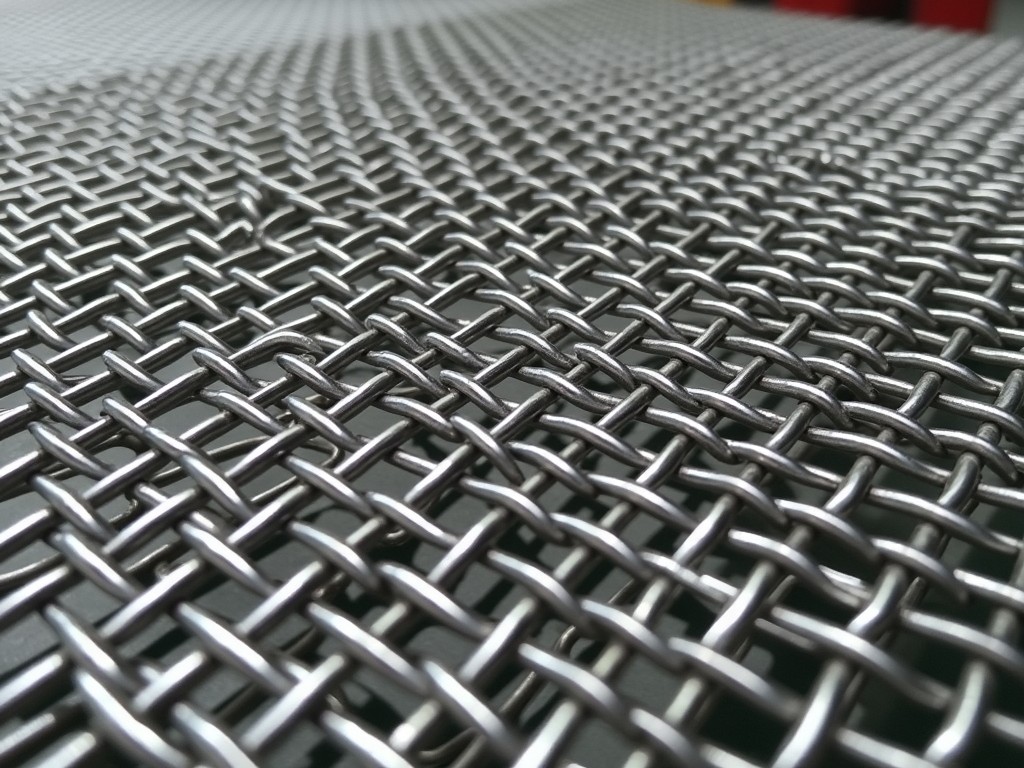
Stainless TIG Wire for Precision Welding Applications
TIG welding of stainless steel requires filler wire that matches the base metal’s composition, minimizes heat-affected zone distortion, and produces welds with consistent corrosion resistance and mechanical properties. The selection of tungsten inert gas (TIG) wire directly influences weld bead appearance, penetration depth, and resistance to sensitization in austenitic grades. Industrial users prioritize wire that maintains tight dimensional tolerances, low oxygen content, and stable arc characteristics under varying amperage and shielding gas conditions.
This page details the technical specifications, manufacturing controls, and application considerations for stainless TIG welding wire produced in a dedicated factory environment, focusing on how material purity, wire drawing precision, and spool design contribute to repeatable welding outcomes in demanding sectors such as pressure vessel fabrication, food processing equipment, and aerospace component assembly.
Material Composition and Metallurgical Control
Stainless TIG wire is manufactured from specific alloy grades to ensure compatibility with common base metals like 304, 304L, 316, and 316L. The wire’s chemical composition is tightly controlled during melting and casting to maintain low carbon content (typically ≤0.03% for L-grades), controlled chromium (16–18%), nickel (10–14%), and molybdenum (2–3% for 316 variants) to prevent carbide formation and preserve austenitic structure.
Oxygen and nitrogen levels are monitored via spectrometer analysis during ingot production, with target oxygen content below 50 ppm to reduce porosity risk in the weld pool. Trace elements such as sulfur and phosphorus are kept below 0.02% each to avoid hot cracking during solidification. These controls are critical for achieving welds that meet ASME Section IX and ASTM A240/A240M requirements for corrosion resistance and tensile strength.
Each heat is assigned a unique traceability number, and chemical test reports are generated per lot, enabling users to verify composition consistency across multiple spools for large-scale fabrication projects where batch-to-batch variation could compromise weld uniformity.
Wire Diameter Tolerance and Surface Finish
Dimensional precision affects arc stability, feed consistency, and deposition rate. Stainless TIG wire is drawn through a series of dies with incremental reductions, followed by intermediate annealing to relieve work hardening and maintain ductility. Final diameter tolerances are held to ±0.02 mm for standard sizes (0.6 mm, 0.8 mm, 1.0 mm, 1.2 mm), ensuring smooth passage through welding torch liners and consistent stick-out.
Surface finish is achieved via electrolytic polishing or dry drawing with specialized lubricants, resulting in a Ra value typically below 0.4 μm. This minimizes wire feed friction, prevents liner wear, and reduces the risk of particulate contamination entering the weld zone. A uniform surface also promotes even melting and reduces spatter during arc initiation.
Diameter and ovality are checked using laser micrometers at 1-meter intervals during spooling. Any deviation beyond tolerance triggers automatic rejection, ensuring that only wire meeting strict geometric standards is packaged for shipment.
Spool Design and Packaging for Contamination Control
Wire is wound onto precision-engineered spools made from corrosion-resistant materials such as zinc-coated steel or engineered plastic to prevent rust transfer. Spool hub dimensions and arbor hole size are standardized (typically 50 mm hub, 200 mm flange, 16 mm arbor) to ensure compatibility with common wire feeders and robotic welding systems.
Each spool is sealed in a low-density polyethylene (LDPE) bag with desiccant packs to limit moisture absorption during storage and transit. The outer packaging uses corrugated cardboard with edge protection and humidity indicators to alert users if exposure limits have been exceeded. Labels include lot number, wire grade, diameter, net weight, and date of manufacture.
For high-purity applications such as semiconductor or pharmaceutical equipment, spools can be supplied in nitrogen-purged, vacuum-sealed packaging with particle counts certified to ISO 14644-1 Class 6 upon request, minimizing the risk of airborne contamination during wire feeding.
Shielding Gas Compatibility and Welding Parameters
Stainless TIG wire performs optimally with argon-based shielding gases, though mixtures containing 2–5% hydrogen or helium are used to increase penetration or travel speed in thicker sections. Pure argon is standard for thin-gauge materials (<3 mm) to prevent oxidation and maintain bead geometry. The wire’s deoxidizer content (typically silicon and manganese in controlled amounts) helps stabilize the arc and reduce porosity when shielding gas coverage is marginal.
Recommended amperage ranges vary by diameter: 0.6 mm wire typically operates between 20–60 A, 0.8 mm between 40–90 A, 1.0 mm between 60–120 A, and 1.2 mm between 80–150 A, assuming 10–15 mm stick-out and 10–15 L/min argon flow. Voltage remains relatively constant (10–14 V) due to the constant-current nature of TIG power sources.
Travel speed and heat input are adjusted based on joint design and base metal thickness to avoid sensitization in the heat-affected zone, particularly for 304/316 grades where prolonged exposure between 425–850°C can lead to chromium carbide precipitation. Pulse TIG modes are often employed to reduce average heat input while maintaining adequate penetration.
Quality Assurance and Traceability
Quality control begins at raw material inspection, where incoming alloy rods are verified for chemistry and surface integrity. In-process checks include diameter monitoring, tensile testing of drawn wire (typically yielding 500–700 MPa ultimate tensile strength and 35–45% elongation), and bend tests to assess ductility without cracking. Final inspection includes spool weight verification, surface cleanliness audits, and packaging integrity checks.
Each lot undergoes chemical re-analysis and mechanical property validation per ASTM A493/A493M standards. Test coupons are welded using standardized procedures (e.g., ASME Section IX) to evaluate bend resistance, tensile strength, and corrosion resistance via ferric chloride or copper sulfate testing where applicable. Results are archived and linked to the lot number for retrieval.
Non-conforming material is isolated and investigated to determine root cause—whether from melting inconsistencies, drawing defects, or contamination during handling. Corrective actions are documented and reviewed in monthly quality meetings to prevent recurrence. This systematic approach ensures that users receive wire with predictable performance, reducing the likelihood of weld rework or field failure.
Typical Applications in Industrial Fabrication
In pressure vessel manufacturing, stainless TIG wire is used for longitudinal and circumferential seams in 304L and 316L shells, where weld integrity directly impacts hydrostatic test pass rates and long-term resistance to stress corrosion cracking in chloride environments. The low carbon content of L-grade wire minimizes sensitization risk during multi-pass welding, preserving the corrosion-resistant passive layer.
Food and beverage processing equipment—such as mixing tanks, piping systems, and heat exchangers—requires welds that are smooth, crevice-free, and compliant with 3-A Sanitary Standards or EHEDG guidelines. TIG wire with consistent surface finish and low spatter enables automated welding systems to produce sanitary joints that withstand frequent CIP (clean-in-place) cycles without harboring contaminants.
Aerospace applications include welding of hydraulic tubing, exhaust manifolds, and structural brackets made from 321 or 347 stainless steel, where stabilized grades resist intergranular corrosion after exposure to elevated temperatures. The wire’s ability to produce narrow, deep-penetration welds with minimal distortion is critical for maintaining tight tolerances in lightweight assemblies.
Customization Options and Technical Support
Wire diameter can be customized between 0.4 mm and 2.4 mm upon request, with corresponding adjustments to spool weight and packaging. For robotic welding cells, precision layer winding ensures consistent feed angle and minimizes torsional stress on the wire during high-speed deployment. Spools can be supplied with anti-static coatings or special lubricants for use in high-humidity environments or with specific torch designs.
Chemical composition adjustments are available for specialized grades such as 309L (for dissimilar metal joining), 310S (for high-temperature service), or 347 (for tantalum-stabilized welds requiring post-weld heat treatment). These modifications require a minimum order quantity and are supported by material test reports and welding procedure qualification records (WPQR) upon request.
Technical support includes assistance with weld parameter development, shielding gas selection, and troubleshooting common issues such as porosity, cracking, or bead inconsistency. Fabricators can request sample spools for trial welding before committing to full production orders, allowing validation under actual process conditions.
| Property | Typical Value / Range | Test Standard |
|---|---|---|
| Wire Diameter (mm) | 0.6, 0.8, 1.0, 1.2 (custom: 0.4–2.4) | ISO 544 |
| Diameter Tolerance (mm) | ±0.02 | ISO 544 |
| Oxygen Content (ppm) | ≤50 | ASTM E1019 |
| Tensile Strength (MPa) | 500–700 | ASTM A370 |
| Elongation (% in 50mm) | 35–45 | ASTM A370 |
| Surface Roughness (Ra, μm) | ≤0.4 | ISO 4287 |
| Spool Weight (kg) | 0.5, 1.0, 5.0 (customizable) | Internal |

More Products

Send Inquiry
If you are interested in our products, leave your information here and we will be in touch shortly.