Stranded Stainless Steel Wire
Stranded stainless steel wire is manufactured by twisting multiple individual stainless steel filaments into a helical configuration, creating a flexible yet strong conductor suitable for dynamic
Stranded Stainless Steel Wire
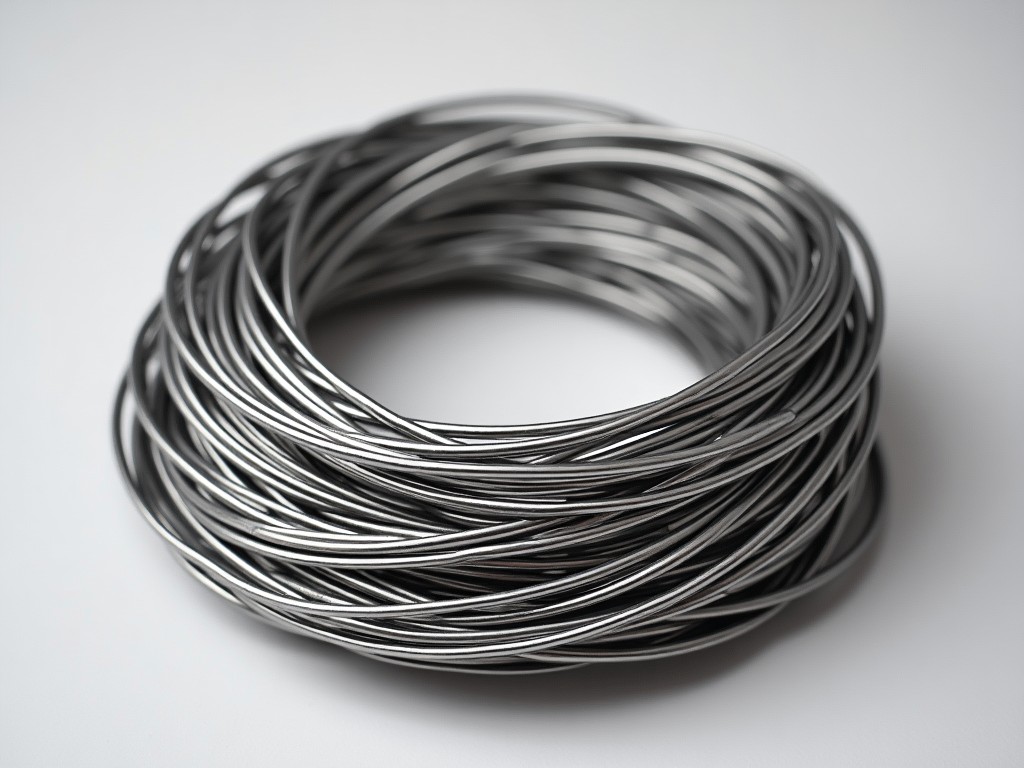
Stranded stainless steel wire is manufactured by twisting multiple individual stainless steel filaments into a helical configuration, creating a flexible yet strong conductor suitable for dynamic load applications. Unlike solid wire, stranded construction distributes mechanical stress across numerous filaments, reducing fatigue failure points when subjected to repeated bending or vibration. The stainless steel alloy composition provides inherent corrosion resistance through passive chromium oxide layer formation, making it suitable for environments exposed to moisture, chemicals, or elevated temperatures. This combination of mechanical flexibility and environmental durability makes stranded stainless steel wire a preferred choice in applications requiring both tensile strength and long-term reliability under cyclic loading.
Core Construction and Material Properties
The wire’s mechanical behavior is primarily determined by the number of strands, individual filament diameter, lay length, and helical pitch. Common configurations include 7x7 (seven strands of seven filaments each) and 7x19 (seven strands of nineteen filaments each), where higher strand counts increase flexibility but slightly reduce tensile efficiency due to increased internal friction. Stainless steel grades such as 304 and 316 are selected based on environmental exposure: 304 offers adequate resistance in mildly corrosive settings, while 316 contains molybdenum to enhance pitting and crevice corrosion resistance in chloride-rich environments like marine or chemical processing applications. Tensile strength typically ranges from 800 to 1800 MPa depending on grade, cold work level, and strand geometry, with elongation at break between 10% and 25%, allowing energy absorption during overload events.
Surface finish options include bright (as-drawn), annealed (softened for improved formability), or coated variants such as nylon or PVC for electrical insulation or abrasion protection. The lay direction—either regular lay (strands twisted opposite to the core) or lang lay (same direction)—affects torque balance and resistance to rotation under load, with regular lay preferred in lifting applications to minimize twisting. Diameter tolerances follow ASTM A492 or EN 10264 standards, typically ±0.02mm for fine wires and ±0.05mm for larger diameters, ensuring consistent performance in precision mechanisms like cable actuators or tension sensors.
| Property | Typical Range (304 Grade) | Typical Range (316 Grade) |
|---|---|---|
| Tensile Strength | 800–1600 MPa | 850–1800 MPa |
| Elongation at Break | 12–25% | 10–20% |
| Density | 7.9 g/cm³ | 8.0 g/cm³ |
| Electrical Resistivity | 72 μΩ·cm | 74 μΩ·cm |
| Modulus of Elasticity | 193 GPa | 190 GPa |
Application-Specific Design Considerations
In marine rigging and sailboat standing rigging, stranded stainless steel wire is selected for its ability to withstand constant cyclic loading from wave action while resisting saltwater corrosion; 316 grade is typically required due to prolonged chloride exposure, and pre-stretching during manufacturing reduces initial elongation under service loads. For aircraft control cables, the wire must meet strict fatigue life requirements under reversed bending stresses, where 7x19 construction in 302 or 304 grade provides the necessary flexibility over pulleys, with lubrication and periodic inspection critical to detecting wire breakage before failure. In architectural tension systems such as facade support or cable railing, the wire’s aesthetic consistency and low maintenance needs are balanced against structural demands, often using polished 316 strands with swaged fittings to maintain visual uniformity while ensuring load path integrity.
Medical devices such as orthodontic archwires or surgical guidewires utilize finer stranded constructions (e.g., 7x7) with diameters below 0.5mm, where biocompatibility and surface smoothness are paramount—electropolishing or passivation treatments remove contaminants and reduce bacterial adhesion. Industrial applications like conveyor belt lacing or paper machine threading rely on the wire’s resistance to abrasion and fatigue in high-cycle environments, where stranded designs outperform solid wire by delaying crack propagation across multiple filaments. Electrical grounding straps in substations or lightning protection systems use large-diameter stranded wire (e.g., 19x19) to maximize surface area for current dissipation while maintaining flexibility for thermal expansion accommodation.
Manufacturing Process and Quality Control
Production begins with drawing individual stainless steel filaments to precise diameters through a series of dies, reducing cross-sectional area while increasing length and inducing controlled cold work to enhance strength. These filaments are then stranded using precision bunching machines that maintain consistent lay length and tension to avoid strand distortion or uneven stress distribution. Post-stranding, the wire may undergo additional processes such as thermal annealing to relieve internal stresses, electrochemical cleaning to remove surface contaminants, or coating application via extrusion or dip methods for insulation or friction modification.
Quality verification includes dimensional inspection via laser micrometers to confirm diameter and ovality, tensile testing on sample lengths to validate strength and elongation, and bend fatigue testing using cyclic flexing machines to simulate service conditions. Surface cleanliness is assessed through water break tests or non-volatile residue analysis, particularly for medical or electronic applications. For critical applications, non-destructive methods such as magnetic particle inspection or eddy current testing detect surface-breaking defects without damaging the wire. All processes are traceable via lot numbers, with material test reports (MTRs) available upon request to confirm chemical composition and mechanical properties per applicable ASTM or EN standards.
Customization and Supply Options
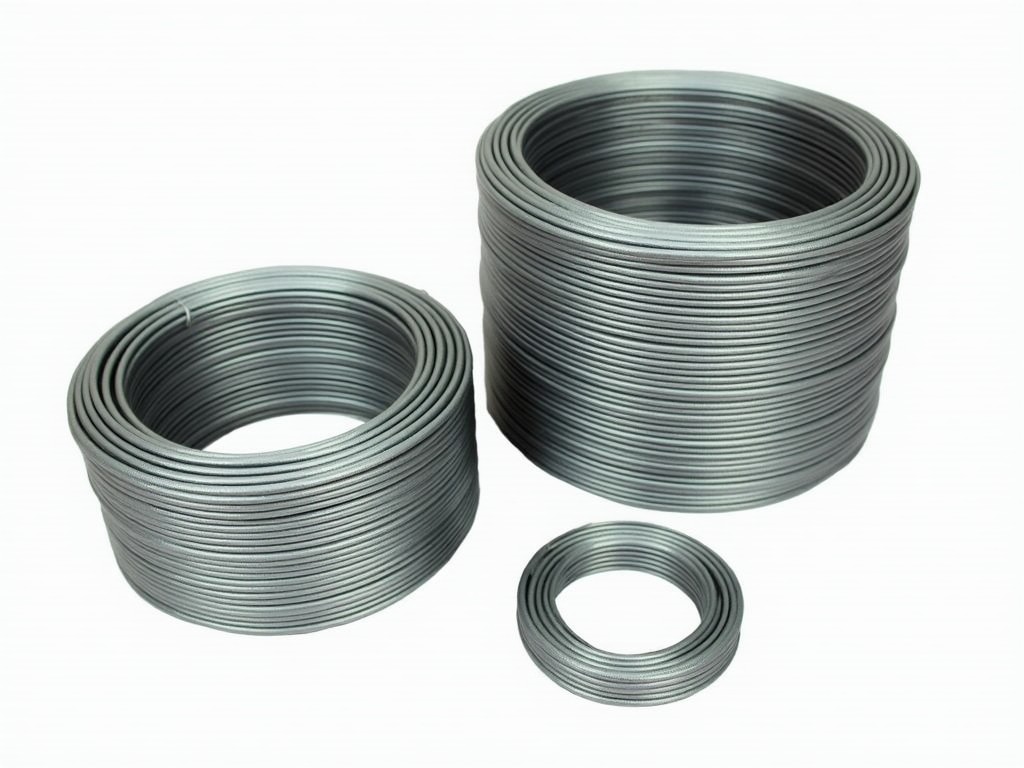
Stranded stainless steel wire can be customized across multiple parameters to meet specific engineering requirements: filament count and diameter are adjusted to target flexibility versus stiffness, lay length is modified to influence torque characteristics and fatigue life, and tensile strength is tuned through controlled cold work levels or annealing schedules. Surface treatments include passivation for enhanced corrosion resistance, electropolishing for smoothness in medical devices, or application of polymer coatings (nylon, PVC, PTFE) for insulation, abrasion protection, or chemical resistance. Spooling options range from small coils (e.g., 0.5–5 kg) for laboratory use to large reels (up to 500 kg) for industrial deployment, with packaging designed to prevent tangling and surface damage during transit—common methods include paper-interleaved coils, plastic spools with end caps, or vacuum-sealed bags for contamination-sensitive applications.
Lead times typically range from 2 to 4 weeks for standard grades and configurations, depending on strand complexity and coating requirements, with expedited options available for critical projects. Minimum order quantities vary by diameter and construction, often starting at 1 kg for fine wires and 10 kg for larger diameters, though trial lengths can be arranged for evaluation. Technical support includes assistance with selecting appropriate grade and construction based on environmental exposure, load cycles, and termination methods, with engineering data such as fatigue curves, modulus values, and corrosion rates available upon request to support design validation.
For technical inquiries, custom specifications, or to request a material test report, contact our engineering team to discuss your application requirements.
Contact Engineering Team
More Products

Send Inquiry
If you are interested in our products, leave your information here and we will be in touch shortly.