Tie Wire For Steel Reinforcement Suppliers
Tie wire used in reinforced concrete construction must meet specific mechanical and dimensional requirements to ensure structural integrity. Suppliers serving industrial and infrastructure projects
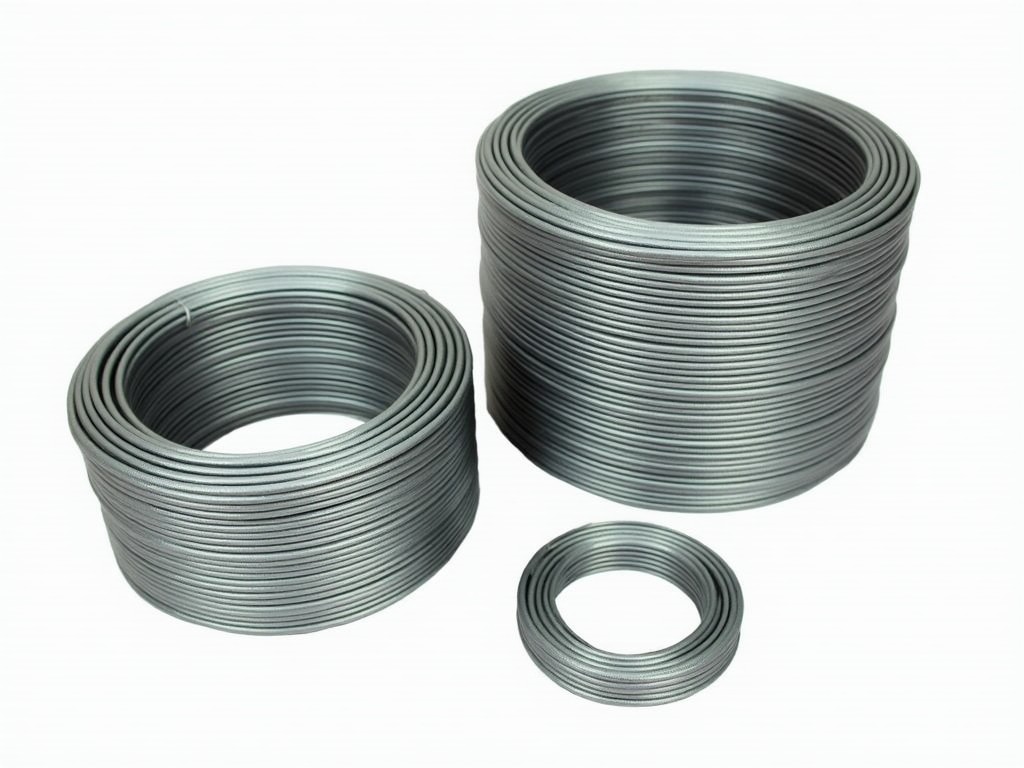
Tie Wire for Steel Reinforcement Suppliers
Tie wire used in reinforced concrete construction must meet specific mechanical and dimensional requirements to ensure structural integrity. Suppliers serving industrial and infrastructure projects provide annealed steel wire designed to secure rebar grids without damaging the reinforcement or compromising concrete cover. The wire’s tensile strength, elongation, and corrosion resistance are selected based on exposure conditions, rebar size, and placement method—whether manual tying or mechanical tying systems are used.
Material Composition and Mechanical Properties
The base material is typically low-carbon steel wire, annealed to achieve a balance between ductility and strength. Annealing reduces hardness to allow tight, secure knots without wire fracture during installation. Typical tensile strength ranges from 350 to 550 MPa, with elongation at break between 15% and 25%, enabling the wire to deform plastically under load without sudden failure. Diameter tolerances are tightly controlled, commonly ±0.02 mm for sizes ranging from 0.8 mm to 1.6 mm, ensuring consistent performance in automated tying tools.
For environments with moderate corrosion exposure, such as indoor structural elements or temporary formwork, bare annealed wire is standard. In higher-risk settings—like marine structures, underground utilities, or bridges—suppliers offer galvanized or polymer-coated variants. Hot-dip galvanizing applies a zinc coating typically between 20 and 50 g/m², providing sacrificial protection. Polymer coatings, such as nylon or PVC, add a barrier layer with thickness ranging from 0.1 to 0.3 mm, improving resistance to chlorides and abrasion during handling.
Diameter Selection and Application Logic
Wire diameter is selected based on rebar size, spacing, and tying method. For #3 to #5 rebar (10–16 mm), 0.8 mm or 1.0 mm wire is commonly used manually. Larger rebar (#6 to #11, 19–36 mm) typically requires 1.2 mm or 1.6 mm wire to achieve sufficient knot strength and resist slippage under vibration or concrete pour pressure. Mechanical tying tools often specify 1.0 mm or 1.2 mm wire for optimal feed and twist consistency, reducing operator fatigue and improving tie uniformity across large pours.
Using wire that is too thin risks knot failure during concrete placement, leading to rebar displacement and inadequate cover. Excessively thick wire increases material cost, requires higher tool torque, and may damage rebar coating or create stress concentrations. Suppliers provide technical data sheets specifying minimum knot tensile strength—for example, a 1.2 mm annealed wire typically achieves a knot strength of 180–220 N when tied with a standard double-wrap knot, sufficient for most vertical wall and column applications.
Packaging and Handling Considerations
Packaging affects both field usability and material protection. Wire is commonly supplied in coils ranging from 1 to 5 kg for manual tying, or in larger spools (10–25 kg) for use with power tier spools attached to belts or carts. Coil design prevents tangling—common methods include plastic cores with internal baffles or offset winding patterns. For galvanized or coated wire, packaging includes moisture-barrier liners and UV-stable outer wraps to prevent coating degradation during storage.
Labeling includes wire diameter, material type, coating specification, coil weight, and batch number for traceability. Some suppliers offer color-coded sleeves or tags to differentiate diameters on-site, reducing selection errors in high-volume pours. For projects requiring just-in-time delivery, wire can be packaged in recyclable cardboard boxes with internal dividers or reusable plastic containers, supporting lean construction logistics.
Quality Control and Conformance
Reputable suppliers implement inline quality checks during drawing and annealing, including diameter monitoring via laser gauges, tensile testing of samples per coil, and elongation verification. Coating thickness is measured using magnetic or eddy current probes for galvanized wire, while adhesion and continuity tests assess polymer coatings. Batch records include chemical composition (carbon, manganese, phosphorous, sulfur), mechanical test results, and coating weight, available upon request for project QA/QC.
Compliance with regional standards is verified through third-party testing when required. Common references include ASTM A641 for zinc-coated wire, EN 10263-4 for steel rod and wire for cold extrusion, or local equivalents like JIS G3506 or BS EN 10218-2. Suppliers do not claim certifications unless audited; instead, they state that products are manufactured to meet standard specifications, with test reports available for customer verification.
Comparison of Wire Types by Use Case
| Use Case | Recommended Wire Type | Typical Diameter (mm) | Key Reason |
|---|---|---|---|
| Indoor residential slabs, walls | Bare annealed | 0.8–1.0 | Low cost, sufficient for dry, protected environments |
| Basement foundations, parking garages | Hot-dip galvanized | 1.0–1.2 | Resists moisture ingress and chloride diffusion from soil |
| Marine piers, wastewater tanks | Polymer-coated (nylon/PVC) | 1.2–1.6 | Barrier protection against sustained wet/dry cycles and chemical exposure |
| High-rise cores, bridge decks | Bare or galvanized, high-tensile annealed | 1.2–1.6 | Withstands vibration, high rebar density, and mechanical tying demands |
Customization and Ordering Information
Suppliers offer customization based on project specifications: wire diameter (0.8 mm to 2.0 mm), coating type (bare, galvanized, polymer), coil weight (0.5 kg to 30 kg), spool dimensions for mechanical tiers, and packaging format (plastic-wrapped coils, boxed spools, palletized units). Lead times vary from stock availability (3–5 days) to custom production (10–20 days), depending on coating process and volume. For export shipments, wire is packed in seaworthy cartons with desiccant and corner protection to prevent corrosion and deformation during transit.
To receive a quotation or technical data sheet, provide: required diameter, coating preference, estimated quantity, delivery location, and any applicable project standards (e.g., ASTM, EN, ISO). Samples are available upon request for evaluation of feed performance in mechanical tools or knot strength in field conditions.
Contact our technical team to discuss your reinforcement tie wire requirements
More Products

Send Inquiry
If you are interested in our products, leave your information here and we will be in touch shortly.