16 Gauge Perforated Stainless Steel Sheet
16 gauge perforated stainless steel sheet refers to a flat metal panel with a nominal thickness of approximately 1.5 mm (0.060 in), featuring a regular pattern of holes punched or laser-cut through
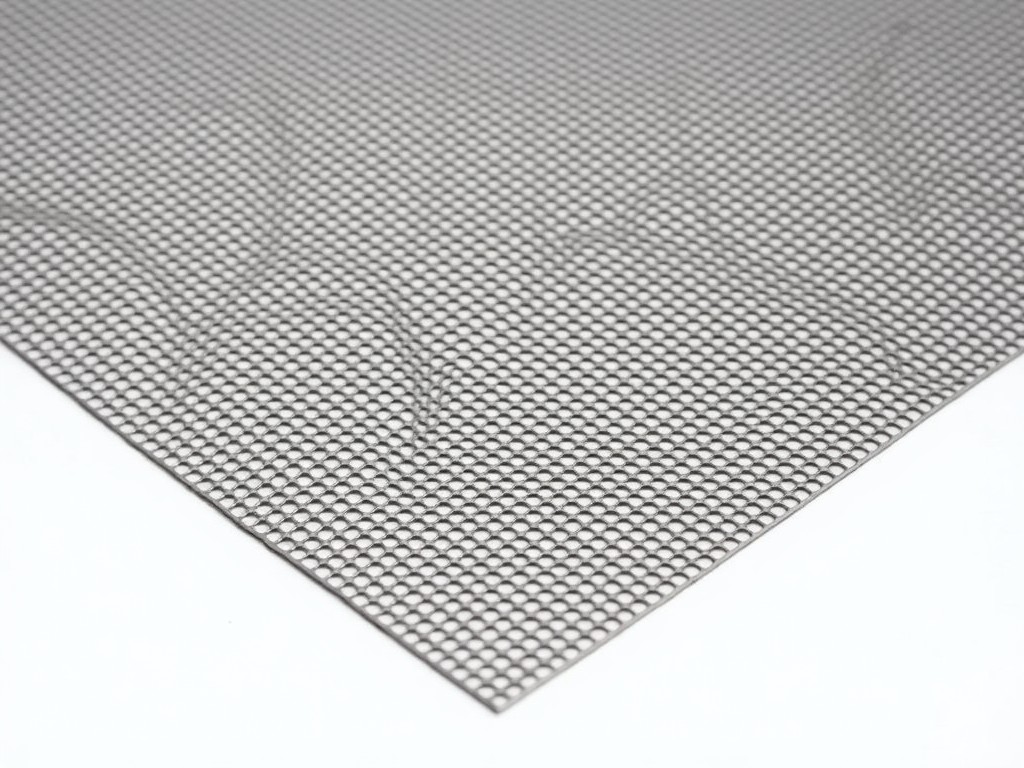
16 Gauge Perforated Stainless Steel Sheet
16 gauge perforated stainless steel sheet refers to a flat metal panel with a nominal thickness of approximately 1.5 mm (0.060 in), featuring a regular pattern of holes punched or laser-cut through the material. This product combines the corrosion resistance and mechanical strength of stainless steel with the functional benefits of perforation, such as controlled airflow, light transmission, sound attenuation, and filtration capability. Engineers and procurement teams select this material when a balance of structural integrity, durability, and functional openness is required in demanding environments.
Material Composition and Mechanical Properties
The base material is typically austenitic stainless steel, most commonly Grade 304 or Grade 316, chosen for their resistance to oxidation and chemical attack. Grade 304 offers adequate performance in mild indoor and outdoor environments, while Grade 316, with added molybdenum, provides superior resistance to chlorides and acids, making it suitable for marine, chemical processing, or food-grade applications. The 16 gauge thickness ensures sufficient rigidity to resist deformation under typical mechanical loads, with a typical tensile strength ranging from 500 to 700 MPa and a yield strength between 200 and 300 MPa, depending on the specific alloy and temper.
The perforation process does not significantly alter the bulk material properties, but edge effects around holes may introduce localized stress concentrations. Therefore, design considerations should account for hole diameter, pitch, and margin dimensions to ensure structural adequacy. The material remains non-magnetic in its annealed state (for Grades 304/316), which can be advantageous in applications requiring electromagnetic neutrality.
Perforation Patterns and Open Area
Perforation is defined by hole shape, size, arrangement, and pitch—the distance between hole centers. Common hole shapes include round, square, slotted, and hexagonal, with round being the most prevalent due to manufacturing efficiency and uniform stress distribution. Open area, expressed as a percentage, indicates the proportion of the sheet that is void and directly influences airflow, visibility, and acoustic performance. Typical open areas for 16 gauge perforated stainless steel range from 15% to 50%, depending on hole size and spacing.
For example, a 3 mm diameter round hole on a 6 mm pitch yields approximately 25% open area, while a 5 mm hole on a 10 mm pitch results in about 20%. Smaller holes with tighter pitches increase open area but may reduce structural rigidity and increase manufacturing cost due to higher tooling wear. Larger holes decrease open area but improve flow characteristics for viscous fluids or particulate-laden air. Selection depends on the functional requirement—filtration favors smaller holes; ventilation or sound diffusion may benefit from larger, more open patterns.
Functional Advantages in Industrial Applications
The combination of stainless steel durability and controlled perforation enables specific performance benefits across industries. In HVAC systems, these sheets serve as diffuser faces or protective guards where uniform air distribution and resistance to corrosion from condensation or cleaning agents are essential. In food processing, perforated 316 stainless steel sheets are used in drying trays, washing stations, and separation screens, where resistance to acidic food products and frequent washdowns is critical, and the perforation allows liquid drainage while retaining product.
Acoustic applications utilize the material as a facing for sound-absorbing cores; the perforations allow sound waves to penetrate the absorbent backing while the metal surface protects the underlying material from impact and environmental exposure. In architectural contexts, perforated panels function as sunshades, facades, or interior screens, providing visual interest, glare reduction, and ventilation while maintaining longevity in exterior conditions. Industrial filtration systems employ these sheets as pre-filters or support meshes, where the stainless construction withstands pressure differentials and chemical exposure better than alternatives like carbon steel or aluminum.
Manufacturing Considerations and Tolerances
Perforation is typically achieved via CNC punch presses or laser cutting. Punching is cost-effective for high-volume production of standard patterns but may cause minor burring or deformation around holes, especially in thicker gauges. Laser cutting offers greater flexibility for complex shapes, variable hole sizes, and minimal mechanical stress, though at higher operational cost. For 16 gauge material, both methods are viable, with punching being more common for repetitive patterns due to throughput advantages.
Dimensional tolerances follow industry standards such as ASTM A480 for stainless steel sheet and perforator-specific guidelines. Hole diameter tolerance is typically ±0.1 mm for punched holes and ±0.05 mm for laser-cut. Pitch tolerance is generally ±0.2 mm, and overall sheet flatness is controlled to prevent warping, which can be exacerbated by uneven perforation distribution. Margins—the unperforated border around the sheet edge—are usually maintained between 10 mm and 25 mm to aid handling, framing, and installation, though custom margin widths are available upon request.
Surface Finish and Customization Options
Surface finish affects both appearance and performance. Common finishes include No. 2B (cold-rolled, annealed, pickled), which provides a smooth, matte surface suitable for most industrial uses, and No. 4 (brushed), which offers a directional satin finish often selected for architectural or visible applications where aesthetics matter. Finish choice influences reflectivity, scratch visibility, and ease of cleaning—important in hygienic environments. Post-perforation treatments such as passivation can enhance corrosion resistance by removing free iron from the surface, particularly beneficial after welding or machining.
Customization extends beyond hole pattern to include sheet size, edge treatment, and secondary operations. Standard sheet dimensions often range from 1000 mm x 2000 mm to 1250 mm x 2500 mm, but custom lengths and widths are available to minimize waste in downstream fabrication. Edges can be left mill, deburred, hemmed, or flanged depending on installation requirements. Additional processes such as bending, rolling, or welding may be performed after perforation, though care must be taken to avoid distorting the hole pattern—sequencing operations appropriately is essential for maintaining dimensional accuracy.
Quality Assurance and Inspection
Quality control begins with material verification, typically via mill test reports confirming chemical composition and mechanical properties of the base stainless steel coil or sheet. During production, in-process checks monitor hole size, pitch consistency, and burr height using gauges or optical systems. Final inspection includes visual assessment for surface defects, dimensional verification of hole pattern and overall dimensions, and flatness measurement. For critical applications, additional tests such as salt spray corrosion resistance (per ASTM B117) or airflow uniformity testing may be conducted.
Documentation is provided upon request, including material certification, perforation layout diagrams, and inspection reports. Traceability is maintained through batch or lot numbering, enabling users to trace the product back to raw material source and production run. This level of traceability supports compliance with industry standards in sectors such as pharmaceuticals, aerospace, or food safety, where material history is part of quality audits.
Comparison with Alternative Materials
Compared to perforated carbon steel, 16 gauge stainless steel offers significantly better corrosion resistance, eliminating the need for painting or coating in most environments and reducing long-term maintenance. While carbon steel is lower in initial cost, the total cost of ownership often favors stainless steel in humid, chemical, or washdown-prone settings due to extended service life. Perforated aluminum provides lighter weight and good corrosion resistance but lacks the tensile strength and hardness of stainless steel, making it less suitable for high-impact or structural applications. Aluminum also has lower melting point, limiting use in high-temperature environments.
Perforated plastics or composites may be considered for non-structural, lightweight needs but generally cannot match the fire resistance, UV stability, or mechanical durability of stainless steel. In applications requiring both strength and longevity—such as industrial machinery guards, process equipment enclosures, or exterior architectural panels—16 gauge perforated stainless steel sheet remains a preferred choice due to its proven performance across decades of use in demanding conditions.
| Property | Typical Value (16 Gauge Perforated Stainless Steel) | Relevance to Application |
|---|---|---|
| Thickness | 1.5 mm (0.060 in) | Determines rigidity and load-bearing capacity |
| Material Grade | 304 or 316 stainless steel | Select based on environmental exposure |
| Tensile Strength | 500–700 MPa | Indicates resistance to pulling forces |
| Open Area Range | 15%–50% | Affects airflow, visibility, and filtration |
| Standard Finish | No. 2B or No. 4 | Influences appearance and cleanability |
| Corrosion Resistance | Excellent (Grade 316 superior in chlorides) | Reduces maintenance and extends service life |
For engineers specifying this material, key considerations include matching hole pattern to functional demand (e.g., flow rate, sound transmission loss), selecting the appropriate stainless grade for the environment, and verifying that edge treatments and flatness meet installation requirements. Engaging with the supplier early in the design phase allows for optimization of perforation layout to balance performance, cost, and manufacturability. Custom samples are typically available for evaluation before full-scale procurement.
More Products

Send Inquiry
If you are interested in our products, leave your information here and we will be in touch shortly.