3Mm Thick Stainless Steel Perforated Sheet
Perforated sheets made from 3mm thick stainless steel combine structural integrity with controlled permeability, serving functional roles in filtration, ventilation, shielding, and architectural
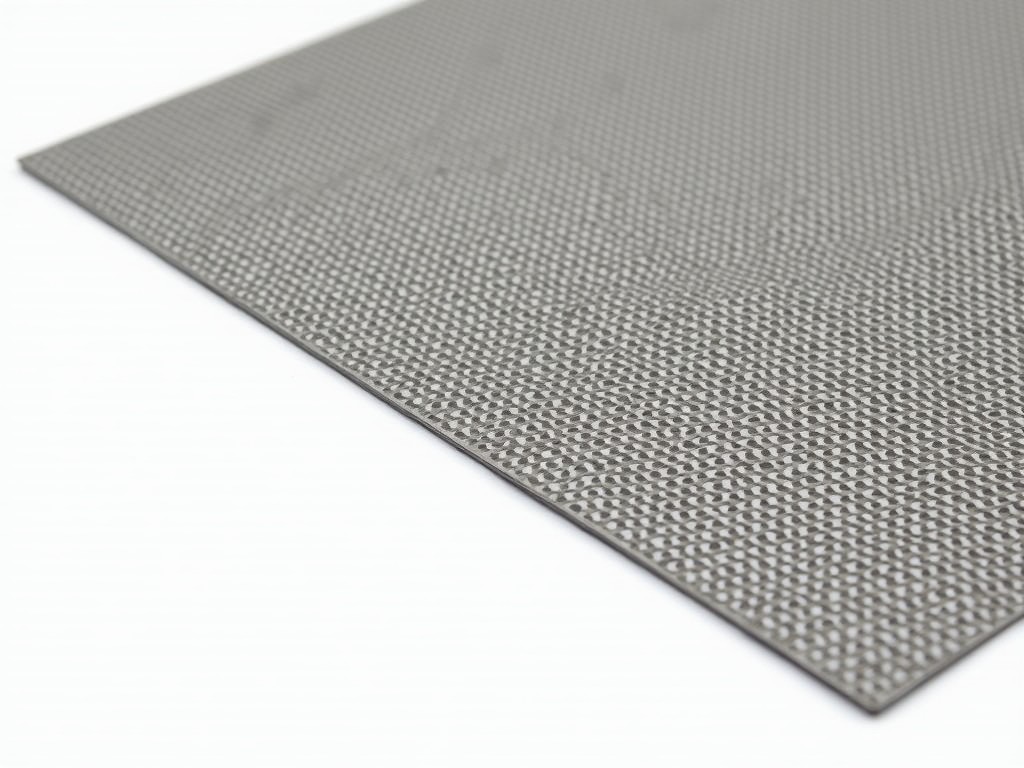
3mm Thick Stainless Steel Perforated Sheet
Perforated sheets made from 3mm thick stainless steel combine structural integrity with controlled permeability, serving functional roles in filtration, ventilation, shielding, and architectural screening. The 3mm thickness provides sufficient rigidity for self-supporting spans in many industrial layouts while allowing precise hole patterns to be manufactured without excessive tool wear or deformation. Material selection focuses on austenitic grades like 304 and 316L due to their balance of formability, corrosion resistance, and weldability, which are critical when the sheet undergoes punching or laser perforation processes. Unlike thinner gauges, 3mm stock resists buckling during handling and installation, reducing the need for additional framing in standalone applications such as machine guards or acoustic baffles. Engineers specify this thickness when load-bearing capacity, impact resistance, or long-term dimensional stability under thermal cycling are design considerations.
Material Properties and Grade Selection
Stainless steel perforated sheets derive their performance from the base alloy’s microstructure and surface characteristics. Grade 304 offers adequate resistance to atmospheric corrosion and mild chemical exposure, making it suitable for indoor environments or sheltered outdoor use. Grade 316L, with added molybdenum, provides enhanced protection against chlorides and acidic compounds, which is essential in marine, chemical processing, or food-grade environments where pitting resistance is a design requirement. The 3mm thickness ensures that after perforation, the remaining ligament strength between holes maintains sufficient tensile capacity for dynamic loads. Typical yield strength for 304 at this gauge is approximately 215 MPa, while 316L ranges from 205 to 240 MPa depending on cold work introduced during perforation. Elongation at break remains above 40% for both grades, allowing forming operations without cracking.
Perforation Patterns and Open Area Calculations
The functional performance of a perforated sheet depends on hole geometry, arrangement, and resulting open area percentage. Common patterns include round, square, slotted, and hexagonal holes, each influencing flow dynamics, sound attenuation, and visual transparency differently. For 3mm thick stock, minimum hole diameter is typically constrained to 1.5x material thickness to prevent tool breakage during punching, meaning holes below 4.5mm diameter may require laser or waterjet cutting. Staggered 60° round hole patterns are frequently used for balanced flow distribution and structural efficiency. Open area is calculated as the ratio of hole surface to total sheet area; a 5mm round hole on 8mm staggered centers yields approximately 38% open area, which affects pressure drop across the sheet in airflow or liquid filtration applications. Designers use open area charts to match permeability needs with structural constraints.
Typical Industrial Applications
In chemical processing plants, 3mm stainless perforated sheets serve as distributor plates in packed towers, where uniform liquid or gas distribution across the cross-section prevents channeling and maximizes contact efficiency. The 3mm thickness allows the plate to withstand differential pressure without deflection, maintaining consistent flow distribution over extended service intervals. In power generation facilities, these sheets are used as inlet screens for cooling water systems, where resistance to debris impact and corrosion from chlorinated water is critical. The perforations prevent large particulates from entering pump casings while allowing sufficient flow velocity to avoid sedimentation. Architectural applications include sunshades and facade panels, where the 3mm gauge provides rigidity for cantilevered installations, and the perforation pattern modulates solar gain and visibility based on designed open area and angle of incidence.
Manufacturing Considerations and Tolerances
Producing 3mm thick perforated stainless steel requires careful control of tooling, feed rates, and lubrication to minimize burr formation and thermal distortion. Mechanical punching uses hardened tool steel dies with clearance typically set between 10-15% of material thickness to reduce rollover and fracture zones. For intricate patterns or non-standard shapes, CNC laser or plasma cutting offers greater flexibility, though edge roughness and heat-affected zone depth must be evaluated for post-processing needs. Dimensional tolerances for hole placement usually follow ISO 2768-m or medium precision standards, meaning positional accuracy of ±0.5mm is achievable over standard sheet sizes. Flatness after perforation is managed through stress-relieving annealing or leveling rolls, particularly important when the sheet is used in precision alignment applications such as sensor arrays or optical benches.
Quality Control and Testing
Verification of perforated sheets involves multiple inspection stages to ensure conformance to functional and dimensional requirements. Raw material is verified via mill test reports confirming chemical composition and mechanical properties of the 3mm coil or plate. During production, in-process checks monitor hole diameter consistency using optical comparators or vision systems, especially for patterns affecting flow calibration. Final inspection includes open area verification through point-count methods or image analysis, flatness measurement using height gauges across a reference plane, and edge quality assessment for burr height and micro-cracks. Non-destructive testing such as dye penetrant may be applied to perforation zones in high-integrity applications like pressure vessels or food processing equipment where crack initiation risk must be minimized. Surface finish is typically preserved as 2B or BA unless otherwise specified, with post-perforation cleaning to remove lubricants and particulates.
Customization Options
Beyond standard hole patterns, 3mm stainless perforated sheets can be tailored to specific engineering requirements through variations in hole size, shape, spacing, and layout. Custom patterns are developed when standard open area percentages do not meet hydraulic resistance, acoustic transmission, or particle retention targets. For example, variable density perforations—where hole density increases toward the outlet—can compensate for pressure drop gradients in catalytic converters or spray dryers. Additional features include secondary operations such as bending, rolling, or edge flanging to create trays, ducts, or enclosures without compromising perforation integrity. Surface treatments like electropolishing or passivation may be specified to enhance corrosion resistance in hygienic or aggressive environments. Sheet dimensions are commonly available up to 1500mm width and 3000mm length, with larger formats achievable through welding or lapping joints under controlled conditions.
Comparison with Alternative Thicknesses
| Property | 1.5mm Thick | 3mm Thick | 6mm Thick |
|---|---|---|---|
| Typical Open Area (5mm holes, 8mm stag.) | 38% | 38% | 38% |
| Minimum Hole Diameter (Punching) | 2.3mm | 4.5mm | 9mm |
| Unsupported Span Capacity | Limited to <300mm | Up to 600-800mm | Suitable for >1000mm |
| Weight per m² (304) | ~12 kg | ~24 kg | ~48 kg |
| Typical Use Case | Decorative screens, light filtration | Machine guards, distributor plates | Heavy-duty impact barriers, structural cores |
*Note: Values are typical and subject to variation based on grade, hole pattern, and manufacturing process. Actual performance should be validated for critical applications.
Environmental and Safety Considerations
Stainless steel is fully recyclable, and offcuts or end-of-life perforated sheets can be reintegrated into the metallurgical supply chain without degradation of properties, supporting circular material use in industrial projects. During fabrication, dust and fumes from cutting or welding require appropriate extraction, particularly when working with alloys containing nickel or chromium, to meet workplace exposure limits. The inert nature of the passive oxide layer on stainless steel prevents leaching of metallic ions in most environments, making it suitable for food contact and pharmaceutical applications when proper surface finish and cleaning protocols are followed. Fire resistance is inherent; stainless steel does not burn and maintains structural integrity at elevated temperatures better than many polymers or coated metals, which is relevant in thermal shielding or furnace applications.
Ordering Information and Lead Times
Procurement of 3mm thick stainless perforated sheets requires specification of grade, hole pattern, open area, sheet dimensions, edge condition, and surface finish. Standard lead times for stock patterns range from 2-4 weeks, while custom tooling or laser-programmed designs may extend to 6-8 weeks depending on complexity and material availability. Minimum order quantities vary: standard patterns often allow single-sheet purchases, whereas custom perforations may require a minimum of 50-100 square meters to justify setup costs. Packaging typically involves horizontal stacking on pallets with corner protectors and moisture-resistant wrapping to prevent surface damage during transit. Export shipments include additional bracing and sealing for long-haul transport. Certifications such as EN 10204 3.1 material certificates or conformity to specific industry standards (e.g., ASME, PED, FDA) are available upon request at quotation stage.

More Products

Send Inquiry
If you are interested in our products, leave your information here and we will be in touch shortly.