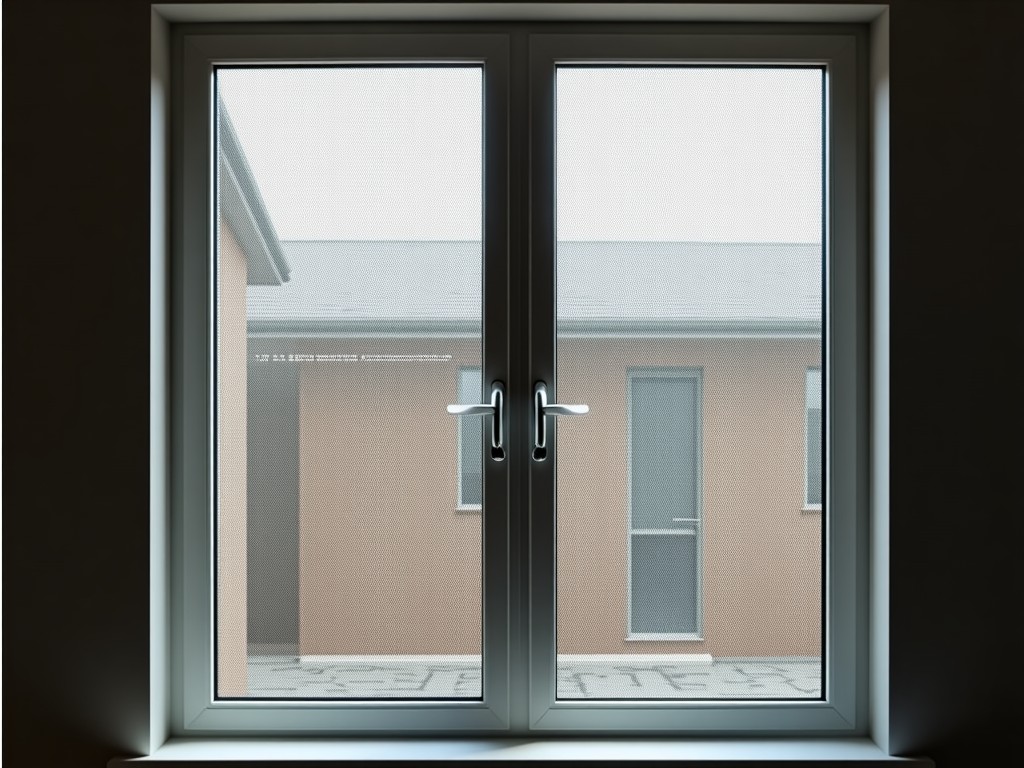
Alarmed Burglar Proof Window Security Screens
Window security screens with integrated alarm systems provide a physical barrier against forced entry while triggering audible and/or silent alerts upon tampering. This dual-function approach
Alarmed Burglar Proof Window Security Screens
Window security screens with integrated alarm systems provide a physical barrier against forced entry while triggering audible and/or silent alerts upon tampering. This dual-function approach combines mechanical resistance with electronic detection to address both intrusion prevention and immediate response requirements in commercial and industrial facilities.
Unlike standard security screens that rely solely on material strength, alarmed systems incorporate sensors that detect cutting, lifting, or frame distortion. When activated, these sensors initiate a local alarm, notify a monitoring service, or trigger building management systems—reducing reliance on passive deterrence alone.
The effectiveness of such systems depends on sensor type, integration method, screen material properties, and installation precision. Buyers must evaluate not only the screen’s resistance to attack but also the reliability, false alarm rate, and environmental durability of the alarm components.
Technical Construction and Material Specifications
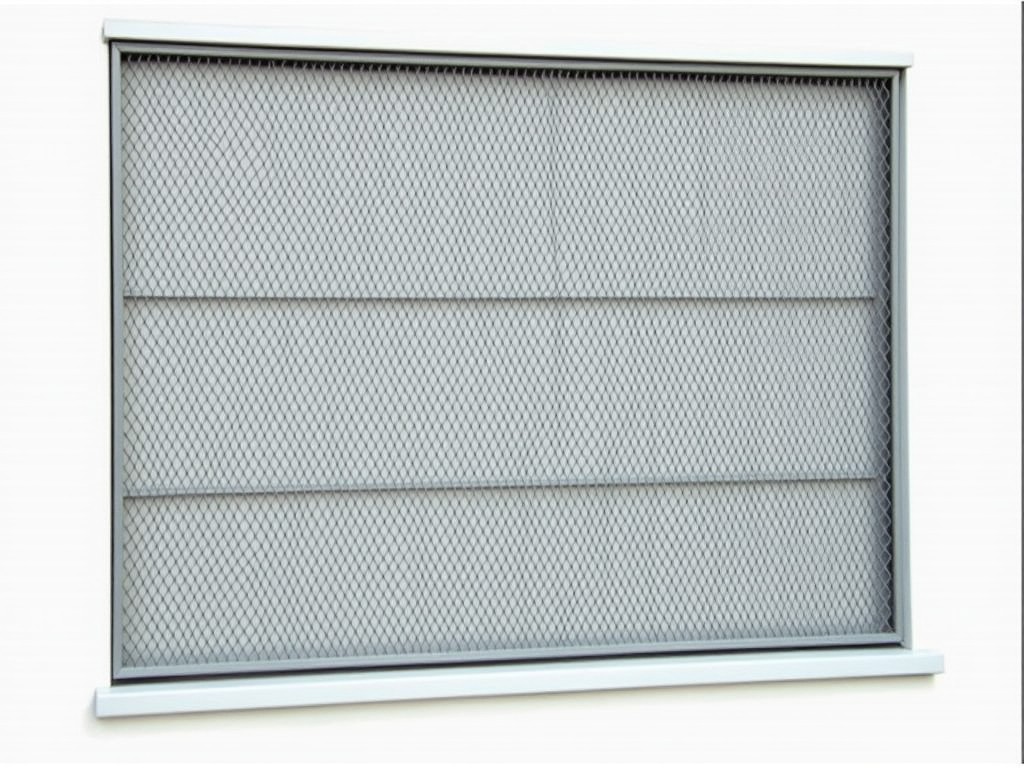
The screen mesh is typically fabricated from 304 or 316 stainless steel wire, woven in a 12x12 or 14x14 pattern with wire diameters ranging from 0.8mm to 1.2mm. This configuration achieves a tensile strength exceeding 1,200 N per strand and resists cutting with common hand tools such as bolt cutters or hacksaws.
Frame members are constructed from extruded aluminum alloy 6063-T5, with wall thicknesses between 1.8mm and 2.5mm. Corners are reinforced with internal gussets or welded joints to prevent racking under lateral load. The frame is powder-coated in standard RAL colors (e.g., 9005 black, 9010 white) or available in custom finishes to match architectural specifications.
Alarm integration varies by model: magnetic reed switches monitor frame closure status; vibration sensors (piezoelectric or MEMS-based) detect mechanical disturbance; strain gauges bonded to the frame measure deformation exceeding 0.5mm. Wiring is routed through concealed channels in the frame profile to prevent tampering, with terminations rated for IP65 environmental protection.
Alarm System Types and Response Characteristics
Three primary alarm configurations are available: local audible only, local audible with silent dial-out, and fully integrated building management system (BMS) input. Audible alarms produce 95–105 dB at 1 meter, meeting OSHA attention thresholds for immediate occupant awareness. Silent options transmit signals via cellular, Ethernet, or RS-485 to central monitoring stations.
Vibration sensors are tuned to ignore environmental noise (e.g., wind, traffic) below 0.3g acceleration while triggering on impacts exceeding 1.5g—equivalent to a hammer strike on the mesh. Reed switches activate if the frame is displaced more than 3mm from its seated position, indicating lifting or prying attempts. Strain-based systems detect cumulative deformation, useful for identifying slow-force attacks like jacking.
False alarm mitigation includes dual-technology verification (e.g., requiring both vibration and magnetic breach) and adjustable sensitivity settings via potentiometer or software. Response time from trigger to alarm output is typically under 150 milliseconds, ensuring near-instantaneous alerting.
Installation Requirements and Structural Integration
Proper installation is critical to system performance. Screens must be mounted within the window opening using stainless steel fasteners (grade 316) at intervals not exceeding 150mm. Shims are used to ensure planar alignment within ±0.5mm to prevent binding or stress concentrations that could impair sensor function.
Electrical conduit must be routed from the screen to the nearest junction box, following local fire and electrical codes (e.g., NEC Article 725 for Class 2 circuits). For retrofit applications, surface-mounted raceways are available; new construction often utilizes concealed chases in mullions or sills. All penetrations through weather barriers must be sealed with compatible urethane or silicone sealants to maintain envelope integrity.
Load testing confirms that correctly installed screens resist static loads of up to 1,500 N applied at the center of the mesh without permanent deformation. Dynamic impact testing (50J pendulum) shows no sensor false triggers when impacted below the alarm threshold.
Environmental Durability and Maintenance
Components are rated for continuous operation in temperatures from -30°C to +70°C and relative humidity up to 95% non-condensing. Stainless steel mesh exhibits <0.01mm/year corrosion rate in marine environments when properly passivated. Aluminum frames undergo salt spray testing (ASTM B117) for 1,000 hours with <5% blistering or adhesion loss.
Alarm electronics are conformal-coated to resist moisture and particulate ingress. Battery-backed systems (for silent dial-out) use lithium-thionyl chloride cells with 10-year shelf life and low-battery reporting at 20% capacity. Solar-assisted variants include photovoltaic trickle-charge systems for remote installations.
Maintenance intervals recommend quarterly visual inspection of mesh integrity, fastener tightness, and seal condition. Functional testing of alarm circuits should be performed semi-annually using manufacturer-approved test magnets or vibration simulators. No lubrication is required; cleaning with pH-neutral detergent and water is sufficient for surface debris.
Applications in Industrial and Commercial Facilities
Ground-floor windows in warehouses, distribution centers, and manufacturing plants benefit from alarmed screens due to high exposure to vehicle traffic and after-hours vulnerability. The alarm component reduces reliance on patrols or CCTV monitoring by providing immediate breach notification, allowing security personnel to respond before intruders gain interior access.
In data centers and utility substations, where window openings may serve as ventilation or emergency egress points, alarmed screens maintain security without compromising airflow or code-compliant egress. The silent alarm option enables covert notification to off-site monitoring centers, avoiding alerting potential intruders during an active incident.
Retail pharmacies, liquor stores, and high-value inventory facilities use these systems to deter smash-and-grab attempts. The combination of visible resistance (deterrent) and audible alarm (attraction of attention) increases the perceived risk to offenders, aligning with crime prevention through environmental design (CPTED) principles.
| Parameter | Typical Value | Notes |
|---|---|---|
| Mesh Material | 304 or 316 Stainless Steel | 0.8–1.2mm wire diameter |
| Frame Material | 6063-T5 Aluminum | 1.8–2.5mm wall thickness |
| Alarm Trigger (Vibration) | >1.5g acceleration | Adjustable sensitivity |
| Audible Alarm Output | 95–105 dB @ 1m | OSHA attention threshold |
| Operating Temperature | -30°C to +70°C | Continuous duty |
| IP Rating (Electronics) | IP65 | Dust and water jet protected |
Customization Options and Project-Specific Adaptation
Screen dimensions are customizable to fit non-standard openings, with maximum single-panel widths up to 1,800mm and heights up to 2,400mm. Larger openings require mullioned configurations using intermediate posts that maintain alarm continuity across sections. Custom shapes (e.g., arched, triangular) are available upon engineering review to ensure structural integrity and sensor coverage.
Mesh aperture and wire diameter can be adjusted based on threat level and visibility requirements. Finer mesh (18x16) increases resistance to small-tool penetration but reduces airflow by approximately 15% compared to standard 12x12. Coarser mesh (8x12) is used where maximum ventilation is prioritized, though it requires closer sensor spacing to maintain detection reliability.
Alarm output protocols are configurable: dry contact relay (NO/NC), 12V/24V DC signal, Ethernet/IP, Modbus TCP, or wireless (LoRaWAN, NB-IoT) for integration with legacy or modern security platforms. Power options include hardwired 24V DC, PoE, or battery/solar hybrids for off-grid applications.
Quality Control and Manufacturing Considerations
Each screen undergoes tensile testing on three random mesh samples per batch to verify minimum breaking strength. Frame corners are inspected for weld penetration or mechanical fastener torque using calibrated tools. Alarm circuits are subjected to 100% functional testing, including false alarm immunity checks under simulated wind and vibration profiles.
Finished units receive a 72-hour soak test at 40°C/93% RH to accelerate moisture-related failure modes. Final inspection includes verification of labeling, wiring continuity, and operational response to standardized test stimuli. Non-conforming units are segregated for rework or scrapping based on defect classification.
Traceability is maintained via batch numbers on frame extrusion tags and sensor serial numbers. Documentation includes material certificates (EN 10204 3.1 for stainless steel), powder coat thickness reports, and alarm calibration records. These documents are available upon request for project audits or compliance verification.
For technical specifications, customization requests, or quotation assistance, contact our engineering team to discuss your facility’s security requirements.
Request Technical Consultation
More Products

Send Inquiry
If you are interested in our products, leave your information here and we will be in touch shortly.