Buy Perforated Basket For Kitchen
A perforated basket for kitchen use is a precision-engineered component designed for food processing, commercial washing, and industrial kitchen environments where drainage, airflow, and structural
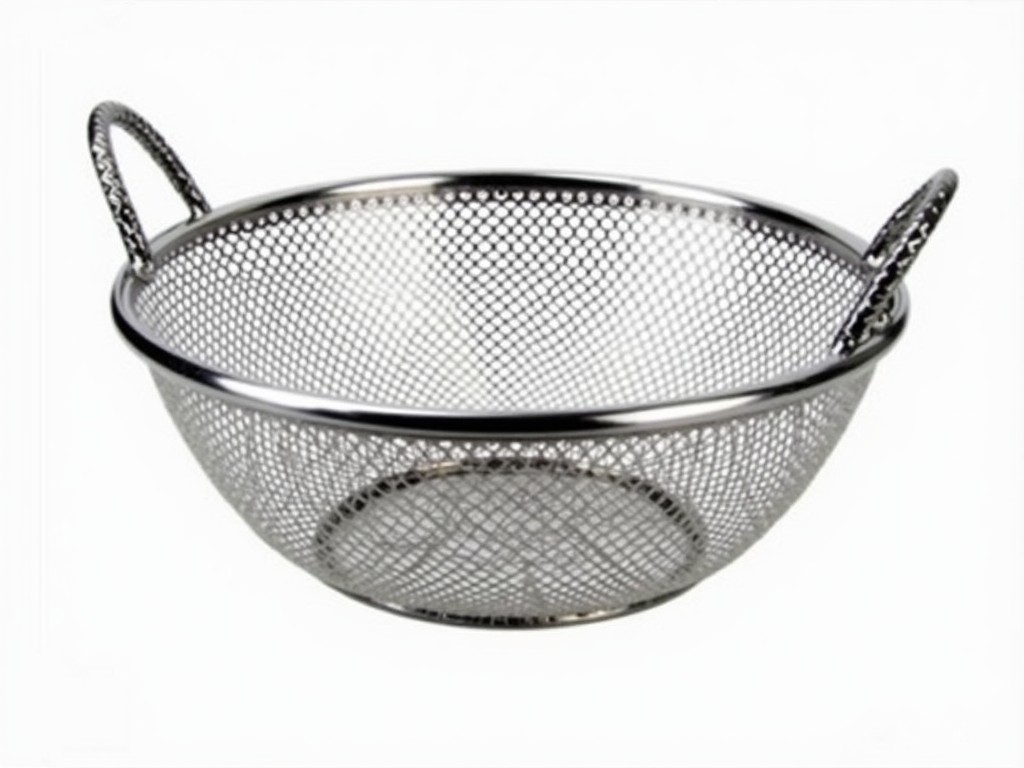
Perforated Basket for Kitchen: Technical Specifications and Applications
A perforated basket for kitchen use is a precision-engineered component designed for food processing, commercial washing, and industrial kitchen environments where drainage, airflow, and structural integrity are critical. These baskets are not generic strainers but purpose-built solutions fabricated to meet specific operational demands such as high-temperature exposure, chemical resistance, and repeated mechanical loading. Selection depends on understanding the interplay between hole geometry, material thickness, edge treatment, and load-bearing capacity—factors that directly impact hygiene compliance, process efficiency, and equipment lifespan.
Unlike consumer-grade colanders, industrial perforated baskets are manufactured to tight tolerances using certified food-contact materials. The perforation pattern—whether round, slotted, or hexagonal—is calculated to optimize drainage rate while minimizing product loss or clogging. Surface finish, edge rolling, and handle integration are designed to prevent bacterial harborage and facilitate automated cleaning cycles. Engineers specify these components based on flow dynamics, particulate size retention, and compatibility with existing conveyor or immersion systems.
Material Selection and Performance Characteristics
The most common materials for industrial kitchen perforated baskets are AISI 304 and AISI 316L stainless steel, selected for their corrosion resistance in acidic, alkaline, and chloride-rich environments. AISI 304 suffices for general food washing and blanching applications with intermittent exposure to cleaning agents. AISI 316L, with its molybdenum content, is preferred for prolonged contact with salts, citrus juices, or harsh sanitizers where pitting resistance is essential. Material thickness typically ranges from 0.8 mm to 2.0 mm, balancing rigidity with weight and thermal responsiveness.
Perforation diameter and open area percentage are key performance variables. Standard round holes range from 1.5 mm to 6.0 mm diameter, with open areas between 20% and 45% depending on the pattern and pitch. Slotted perforations offer higher flow rates for fibrous materials but require careful orientation to prevent entanglement. Hexagonal patterns provide enhanced stiffness-to-weight ratios, reducing deflection under load. All edges are mechanically rolled or welded smooth to eliminate sharp points and ensure compliance with FDA 21 CFR §174.5 and EU 1935/2004 standards.
Design Considerations for Integration
Proper integration requires evaluating the basket’s interaction with support structures, agitation mechanisms, and drainage systems. Load distribution must be analyzed to prevent permanent deformation under expected product weight, especially when wet. Handles, if present, are designed for ergonomic lifting or mechanical attachment, with load ratings verified through finite element analysis in critical applications. Nesting capability and stack height are standardized where applicable to optimize storage and automated handling.
Thermal expansion coefficients must be accounted for in systems operating between -40°C and +120°C. Differential expansion between the basket and its frame can induce stress if not accommodated through slotted mounting holes or spring-loaded contacts. Ventilation baskets for drying or cooling applications may incorporate additional surface perforations or raised bases to enhance airflow. Custom baffles or internal dividers are available to segregate product batches or prevent cross-contamination in multi-stage processes.
Typical Applications in Food Processing
Perforated baskets are extensively used in vegetable washing lines where they facilitate immersion, agitation, and drainage of leafy greens, root vegetables, and cut produce. The perforation size is selected to retain fine sediments while allowing efficient water exchange, reducing microbial load without damaging delicate tissue. In blanching operations, baskets withstand rapid temperature cycling and enable uniform steam or hot water contact, critical for enzyme inactivation and color preservation.
In seafood processing, baskets support rinsing, glazing, and ice-water shocking of fish fillets and shellfish. Corrosion resistance is paramount here due to constant salt exposure. For bakery applications, perforated baskets proof dough under controlled humidity, allowing moisture escape while maintaining shape. Dairy facilities use them for curd washing and cheese molding, where smooth interiors and precise hole alignment prevent texture defects. Each application demands validation of flow rate, cleaning efficacy, and material compatibility under actual process conditions.
Quality Assurance and Inspection Protocols
Dimensional verification includes hole diameter tolerance (±0.1 mm for precision patterns), pitch consistency, and overall flatness (<0.5 mm deviation over 300 mm length). Surface roughness is measured to ensure Ra ≤ 0.8 μm for food-contact areas, minimizing adhesion points for biofilms. Edge integrity is confirmed via tactile and visual inspection to detect burrs, cracks, or incomplete rolling. Material certification (EN 10204 3.1) is provided for all stainless steel grades, confirming chemical composition and mechanical properties.
Load testing simulates real-world conditions: baskets are subjected to static and dynamic loads equivalent to maximum expected product weight, including water saturation. Deflection is measured at multiple points to ensure it remains below elastic limits. Salt spray testing (ASTM B117) validates corrosion resistance claims for 316L variants, typically exceeding 200 hours without red rust. All inspection data is traceable to batch numbers and retained for quality audits.
Customization Options and Engineering Support
Custom perforated baskets are developed through a collaborative engineering process. Clients provide process parameters: product type, temperature range, chemical exposure, cycle frequency, and required throughput. Our team models drainage dynamics using computational fluid dynamics (CFD) to optimize hole size, pattern, and open area. Prototypes are fabricated for physical validation before full-scale production. Tooling is designed for repeatability, ensuring consistent perforation quality across batches.
Available customizations include non-standard perforation shapes (square, clover, tapered), variable hole density zones, integrated handles or lifting lugs, electropolished surfaces for enhanced cleanability, and passivation treatments. Baskets can be designed to fit specific conveyor widths, basket washers, or autoclaves. For OEMs, we supply CAD models, FEA reports, and material test certificates to support integration into larger machinery assemblies. Lead times depend on complexity but typically range from 3–6 weeks for standard modifications.
For technical inquiries, specification requests, or to discuss your kitchen processing requirements, contact our engineering team. Provide details on your application, material preferences, and dimensional constraints to receive a tailored quotation and lead time estimate.
More Products

Send Inquiry
If you are interested in our products, leave your information here and we will be in touch shortly.