Buy Perforated Metal Sheet Hole Size
Selecting the correct hole size in perforated metal sheet is a critical engineering decision that affects airflow, filtration efficiency, structural integrity, and aesthetic outcome. This guide
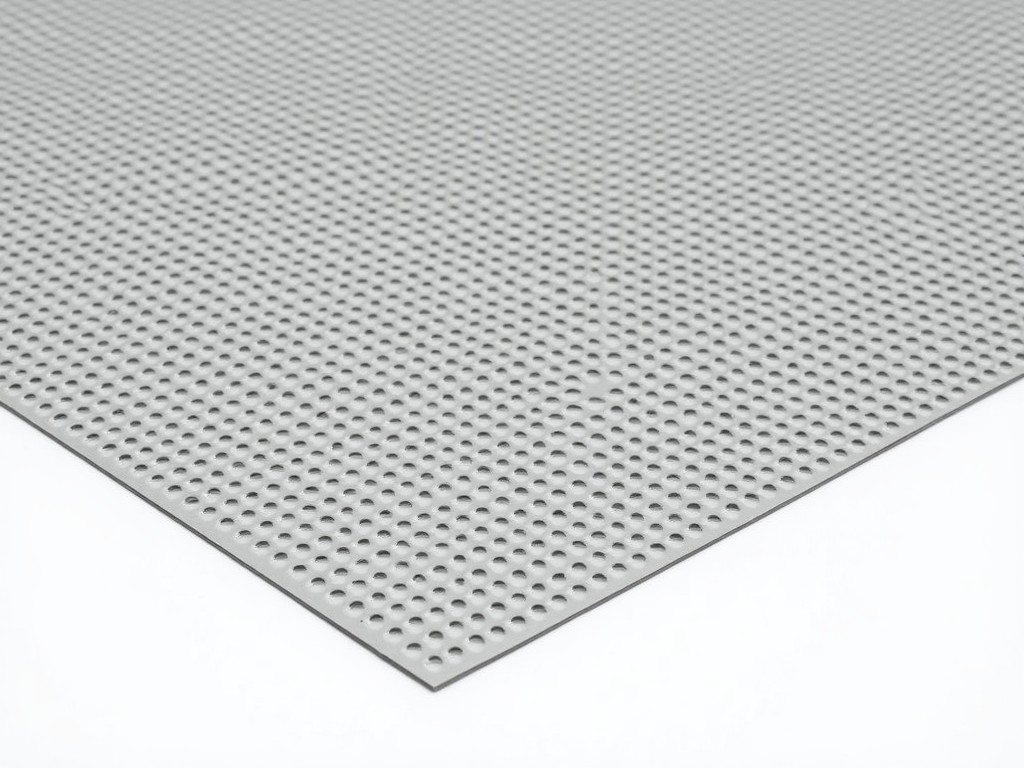
Perforated Metal Sheet: Hole Size Selection Guide
Selecting the correct hole size in perforated metal sheet is a critical engineering decision that affects airflow, filtration efficiency, structural integrity, and aesthetic outcome. This guide explains the key parameters, material considerations, and application-specific trade-offs to help procurement engineers specify the right product for industrial use.
Understanding Hole Size Metrics
Hole size in perforated metal is defined by the diameter of the opening (for round holes) or the width and length (for shaped openings), measured in millimeters. It is distinct from pitch—the center-to-center distance between adjacent holes—which determines the open area percentage. For example, a 5 mm hole with a 10 mm pitch yields approximately 19.6% open area in a staggered pattern, while the same hole size with a 6 mm pitch increases open area to over 50%. These values directly influence pressure drop, flow rate, and sound attenuation in ventilation or acoustic applications.
Material Selection and Hole Size Limitations
The minimum achievable hole size depends on material thickness and type. Thinner materials allow smaller holes without excessive deformation during punching. For instance, 0.5 mm thick stainless steel can typically accommodate holes as small as 0.8 mm in diameter, whereas 3 mm thick carbon steel usually requires a minimum hole size of 2.5 mm to prevent tool breakage or material tearing. Aluminum, due to its lower tensile strength, permits smaller holes relative to thickness compared to steel but is more prone to burring. Always verify hole-to-thickness ratios with the manufacturer, as exceeding recommended limits compromises dimensional accuracy and edge quality.
Application-Driven Hole Size Recommendations
Different industries prioritize different performance criteria. In HVAC systems, hole sizes between 3 mm and 8 mm with 40–60% open area are common to balance airflow and noise reduction. Filtration applications often require smaller holes—1 mm to 3 mm—to capture particulates while maintaining sufficient flow. Architectural facades may use larger decorative openings (10 mm–25 mm) for visual effect, where structural load is minimal. In industrial guarding or machine safety, hole sizes are restricted to prevent finger or tool entry, typically adhering to ISO 13857 standards (e.g., holes <4 mm for arm reach protection).
Standard vs. Custom Hole Configurations
Standard hole sizes (round, square, slotted) are available in common increments—1 mm, 1.5 mm, 2 mm, 3 mm, 4 mm, 5 mm, 6 mm, 8 mm, 10 mm—based on widely used tooling. These reduce lead time and cost. Custom hole sizes, patterns, or combinations (e.g., mixed round and square) require specialized punches and may involve setup fees and longer lead times. However, they are necessary when optimizing for specific flow dynamics, acoustic tuning, or unique aesthetic requirements. Engineers should submit detailed drawings specifying hole diameter, pattern (straight or staggered), pitch, and material thickness for accurate quoting.
| Parameter | Typical Range | Notes |
|---|---|---|
| Minimum Hole Diameter (Round) | 0.8 mm – 3.0 mm | Dependent on material thickness and type |
| Maximum Hole Diameter | Up to 50% of sheet width | Limited by sheet stability and punch capacity |
| Standard Pitch Increments | 1 mm – 20 mm | Affects open area and structural strength |
| Common Materials | Carbon steel, stainless steel (304/316), aluminum, galvanized | Each has different punchability and corrosion resistance |
Quality Control and Dimensional Tolerances
Hole size consistency is critical for performance-critical applications. Reputable manufacturers maintain tolerances of ±0.1 mm for holes under 5 mm and ±0.2 mm for larger openings, measured across multiple points per sheet. Edge condition—whether burr-free, slightly rolled, or deburred—should be specified, as it affects fluid dynamics, safety, and secondary processing. Inspection methods include optical comparators, digital gauges, or statistical sampling per batch. Request inspection reports or certification (e.g., ISO 9001 alignment) when purchasing for regulated industries such as food processing, pharmaceuticals, or aerospace.
Ordering Information Required
To receive an accurate quote and avoid production delays, provide the following: material type and grade, sheet thickness, overall dimensions (width × length), hole shape and size, pitch and pattern (straight or staggered), open area requirement (if known), edge condition, quantity, and any secondary operations (e.g., bending, cutting to size, surface finish). Indicate whether the part is for indoor or outdoor use, as this influences material selection and coating needs. For large projects, consider requesting a sample panel to validate hole size, flatness, and appearance before full production.

More Products

Send Inquiry
If you are interested in our products, leave your information here and we will be in touch shortly.