Buy Perforated Sheet Square Hole
Perforated sheets with square hole patterns are engineered components used across industrial sectors where controlled fluid flow, structural support, or particulate separation is required. Unlike
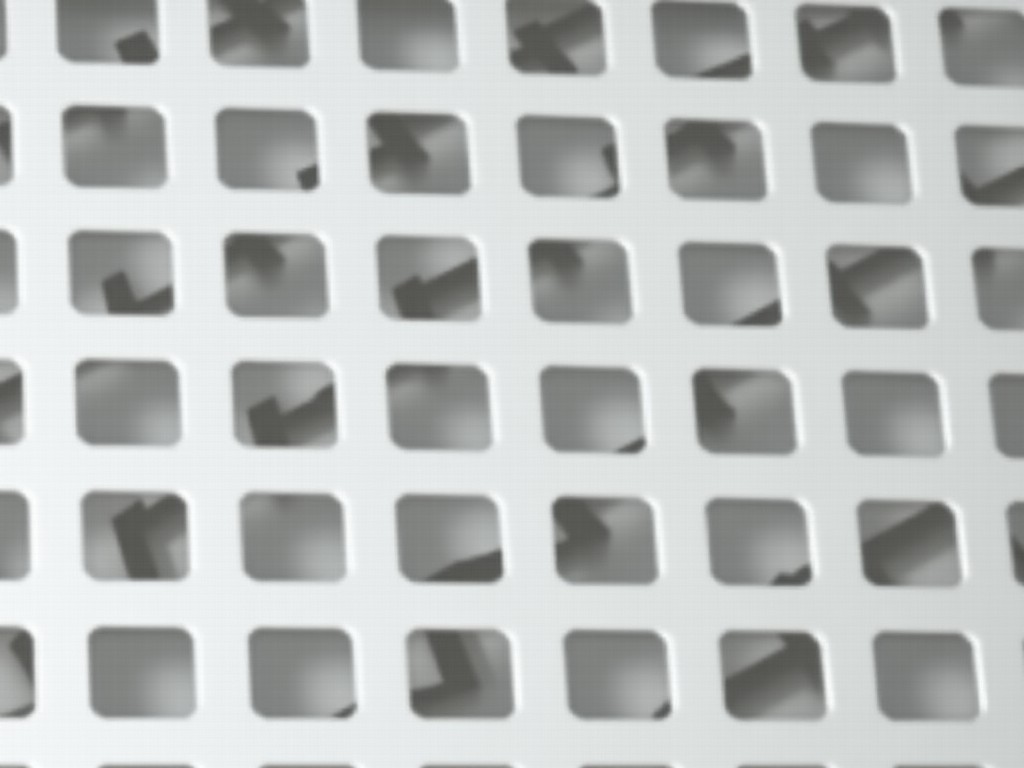
Perforated Sheet with Square Holes: Technical Specifications and Applications
Perforated sheets with square hole patterns are engineered components used across industrial sectors where controlled fluid flow, structural support, or particulate separation is required. Unlike random or slotted perforations, square hole arrays provide predictable open area, uniform stress distribution, and consistent particle retention characteristics. These properties make them suitable for applications demanding repeatable performance under mechanical, thermal, or chemical load.
The open area percentage in square hole perforations is determined by the hole size, pitch (center-to-center distance), and sheet thickness. For example, a 5 mm square hole with a 10 mm pitch yields an open area of 25%, calculated as (hole area / unit cell area) × 100. This metric directly influences pressure drop in filtration systems, airflow in ventilation panels, and light transmission in shielding applications. Engineers select hole size and pitch based on the required balance between permeability and structural integrity.
Material selection affects corrosion resistance, strength-to-weight ratio, and formability. Commonly used materials include cold-rolled steel (SPCC), hot-rolled steel (SS400), stainless steel grades 304 and 316, aluminum alloys (3003, 5052), and galvanized steel. Stainless steel 316 is preferred in marine or chemical processing environments due to its molybdenum content, which enhances resistance to pitting and crevice corrosion. Aluminum offers weight savings where structural load is secondary, while galvanized steel provides cost-effective protection in outdoor atmospheric conditions.
Sheet thickness influences rigidity, hole edge durability, and manufacturability. Thinner gauges (0.5–1.5 mm) are typically used in decorative or low-pressure filtration roles, while thicker sheets (2.0–6.0 mm) support load-bearing functions in machine guards, walkway gratings, or hopper liners. Hole edge quality depends on the punching process; sharp burrs may require secondary deburring for safety-sensitive applications like food processing or pharmaceutical equipment.
Square hole perforations are frequently specified in industrial screening, where consistent aperture size prevents blinding and ensures accurate particle classification. In heat exchanger baffles, the geometric regularity promotes even fluid distribution and reduces vortex-induced vibration. Architectural applications utilize these sheets for sun shading, where the uniform pattern provides predictable solar gain reduction while maintaining visibility. Acoustic panels benefit from the controlled porosity, which allows sound absorption when backed with absorbent material.
| Parameter | Typical Range | Notes |
|---|---|---|
| Hole Size | 2 mm – 25 mm | Custom sizes available per drawing |
| Pitch (Center-to-Center) | 3 mm – 50 mm | Determines open area and structural strength |
| Sheet Thickness | 0.5 mm – 6.0 mm | Depends on material and application load |
| Width | Up to 1500 mm | Limited by press bed size |
| Length | Up to 3000 mm | Coil-fed processing enables longer lengths |
Secondary operations such as bending, welding, or framing are commonly performed to integrate perforated sheets into assemblies. Laser cutting or CNC punching allows for custom shapes, mounting holes, or edge treatments without compromising the perforation pattern. Surface treatments like powder coating, anodizing (for aluminum), or passivation (for stainless steel) enhance durability and appearance. These processes must be planned to avoid deformation of the hole pattern or edge cracking.
Quality verification includes dimensional inspection of hole size and pitch, open area validation via image analysis, and edge quality assessment. Material test certificates (MTCs) confirm alloy composition and mechanical properties. For regulated industries, traceability documentation and conformance to standards such as ASTM E116 (for perforated metal) or ISO 9012 may be required. Buyers should specify inspection criteria early in the quotation process to avoid rework or rejection.
Lead times vary based on material availability, tooling requirements, and order volume. Standard stock materials in common gauges and hole sizes may ship within 5–10 business days. Custom materials, non-standard pitches, or thicknesses exceeding 4 mm typically require 2–4 weeks for production. Sample provision is available upon request to validate fit, finish, and performance before full-scale ordering.
To initiate a quotation, provide the following details: material grade, sheet dimensions (width × length), hole size, pitch, thickness, quantity, and any required secondary operations (e.g., bending, coating, edge finishing). Including a sketch or CAD file accelerates the review process. Environmental exposure, expected load, and fluid type (if applicable) help the manufacturer recommend optimal material and perforation parameters.
For technical consultation or to request a quote for perforated sheet with square holes, contact our engineering team. We review each inquiry for manufacturability, material suitability, and compliance with application requirements before providing a detailed response.
Request Quote or Technical Support
More Products

Send Inquiry
If you are interested in our products, leave your information here and we will be in touch shortly.