Buy Stainless Steel Wire Mesh Baskets
Stainless steel wire mesh baskets are engineered components used to contain, transport, and process materials in environments requiring corrosion resistance, thermal stability, and mechanical
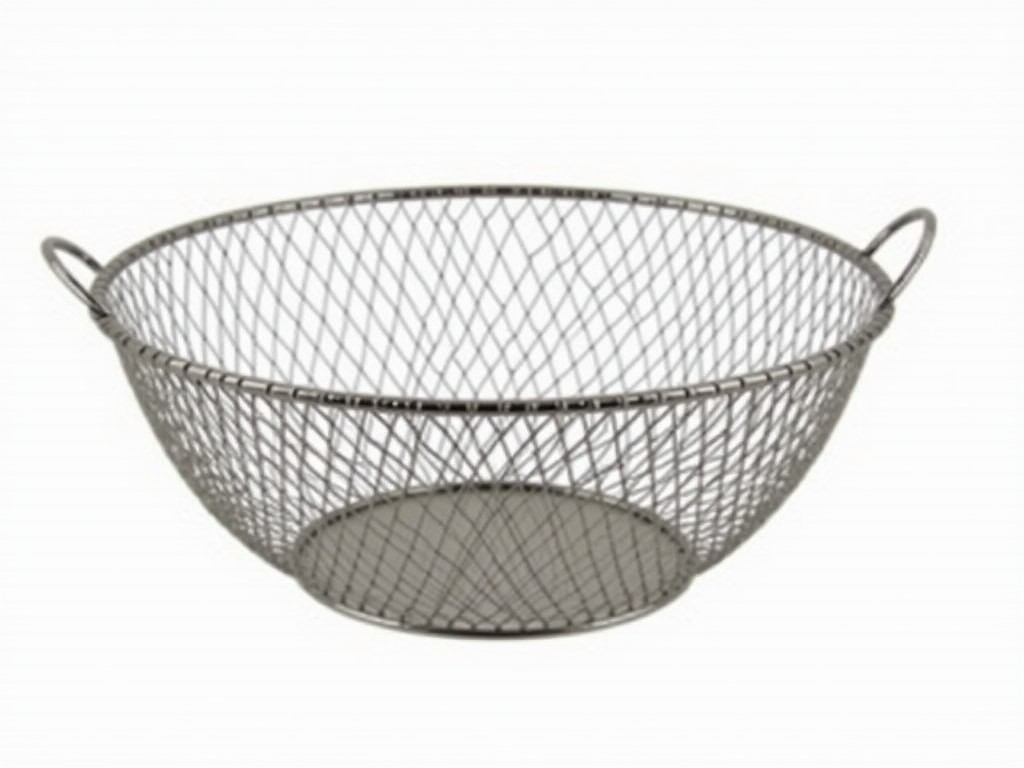
Stainless Steel Wire Mesh Baskets for Industrial Processing
Stainless steel wire mesh baskets are engineered components used to contain, transport, and process materials in environments requiring corrosion resistance, thermal stability, and mechanical integrity. Unlike solid containers, their open mesh design allows fluid flow, gas exchange, and particulate drainage while maintaining structural support for the contents. These baskets are selected based on wire diameter, mesh opening size, alloy grade, and fabrication method to match specific process conditions such as chemical exposure, temperature cycling, or mechanical loading.
Material Selection and Corrosion Performance
The most common alloys for industrial wire mesh baskets are AISI 304 and 316L stainless steel. Grade 304 offers adequate resistance to atmospheric oxidation, mild acids, and alkaline solutions up to approximately 400°C in intermittent service. Grade 316L, with 2-3% molybdenum addition, provides superior resistance to chlorides, sulfur compounds, and reducing acids, making it suitable for marine environments, chemical processing, and pharmaceutical applications where pitting or crevice corrosion must be avoided. Wire diameter typically ranges from 0.5 mm to 3.0 mm, influencing both open area percentage and tensile strength.
Mesh Configuration and Open Area Characteristics
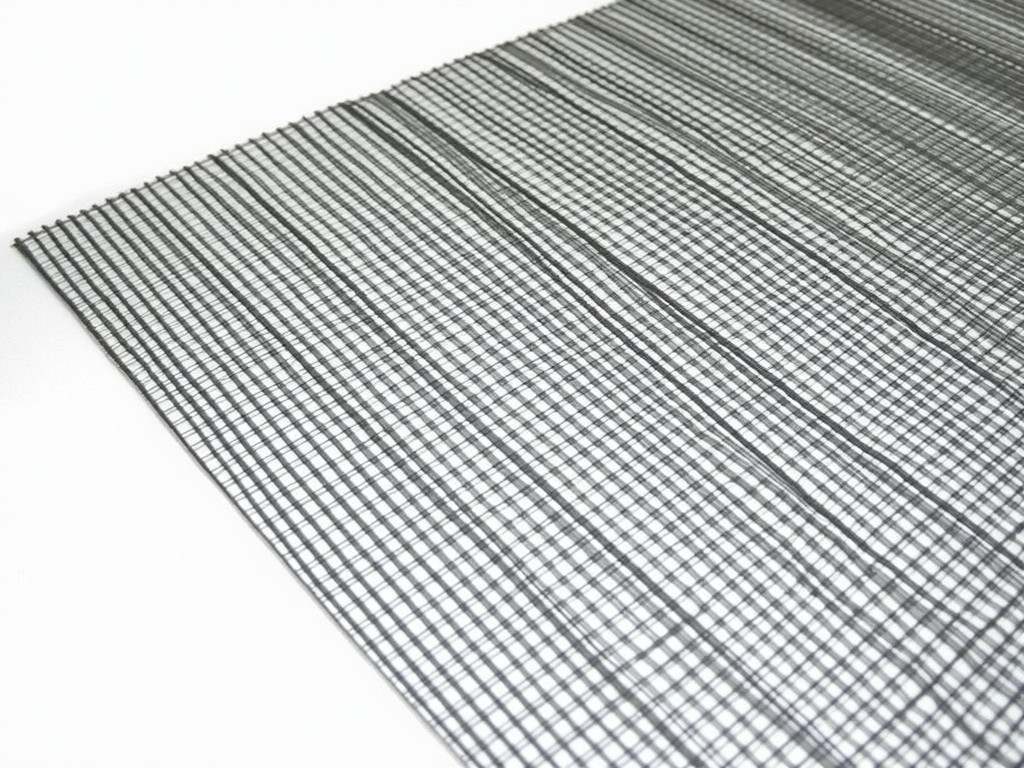
Mesh count (wires per linear inch) and wire diameter determine the open area ratio, which directly affects flow resistance, drainage rate, and particle retention. A 4 mesh x 0.8 mm wire configuration yields approximately 63% open area, while a 20 mesh x 0.5 mm wire reduces open area to about 36% but increases fine particle retention. Industrial buyers specify mesh based on the smallest particle size to be retained or the maximum allowable pressure drop across the basket during filtration, washing, or drying cycles. Square mesh is standard; Dutch weave or twill options are available for enhanced strength or filtration precision.
Structural Design and Load-Bearing Considerations
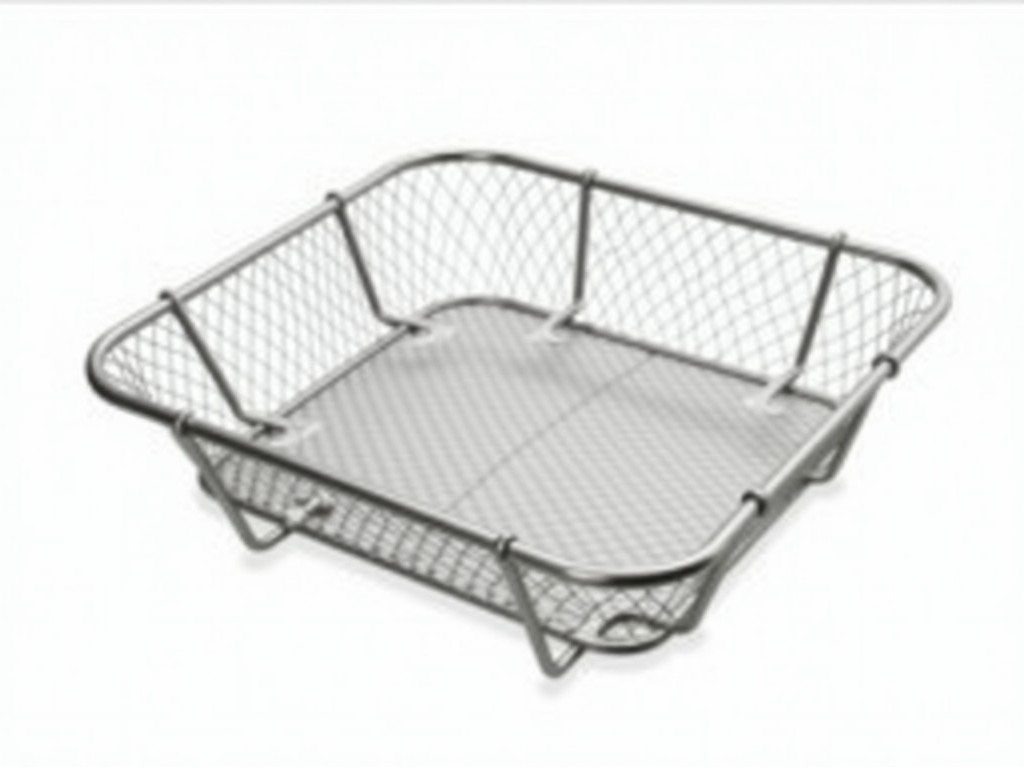
Basket walls and bases are formed by welding or crimping wire edges to create rigid frames. Base designs vary: flat welded mesh for even support, raised feet for drainage underneath, or conical bottoms for directed discharge. Sidewalls may be straight, tapered, or include reinforced rims to resist deformation under load. Load capacity depends on wire diameter, mesh spacing, and support structure—typically ranging from 5 kg for small laboratory baskets to over 50 kg for heavy-duty industrial units handling wet aggregates or metal parts. Deflection under load is minimized by incorporating peripheral frames or external stiffeners where required.
Surface Finish and Contamination Control
Surface finish impacts cleanliness, adhesion resistance, and passivation effectiveness. Baskets intended for food, pharmaceutical, or semiconductor use undergo electropolishing to remove surface impurities and achieve a smooth, non-stick surface with roughness average (Ra) below 0.4 μm. For general industrial applications, a cleaned and passivated finish (Ra 0.8–1.6 μm) is standard. Residual oils, particulates, or heat tint from welding are removed via alkaline cleaning, acid pickling, and passivation baths to meet ASTM A967 or AMS 2700 requirements where applicable.
Customization Options for Process Integration
Standard baskets are available in common sizes, but industrial processes often require tailored dimensions to fit specific tanks, conveyors, or centrifuges. Customization includes length, width, height, handle placement, lid integration, and mesh zoning—such as finer mesh at the bottom for particle capture and coarser mesh on sides for drainage. Handles are typically formed from thicker wire or bar stock and welded to withstand repeated lifting. Optional features include drain plugs, quick-release latches, or stacking lugs for automated systems. All customizations are engineered to maintain structural integrity and corrosion resistance.
Quality Assurance and Inspection Protocols
Dimensional verification is performed using calibrated gauges and CMMs to confirm length, width, height, and mesh alignment within tolerances of ±1.5 mm for overall dimensions and ±0.2 mm for wire spacing. Visual inspection under 10x magnification checks for weld defects, wire breaks, or surface contamination. Pull-off tests validate weld strength, while open area verification is conducted via bubble point or air permeability testing when required. Material test reports (MTRs) for stainless steel lots are provided upon request, and baskets may be labeled with heat numbers for traceability. Final inspection includes functional testing under simulated process conditions when specified.
Typical Applications Across Industries
In chemical processing, these baskets hold catalysts during reactor loading/unloading or support membranes in filtration systems, where corrosion resistance and open flow are critical. In metal finishing, they immerse parts in etching, plating, or cleaning tanks, allowing solution circulation while preventing part loss. Food processors use them for blanching, washing, or cooling vegetables and pasta, relying on FDA-compliant materials and easy cleaning. Pharmaceutical manufacturers employ them in lyophilizers or powder dryers where containment without moisture retention is essential. Wastewater treatment facilities use coarse mesh baskets to screen debris from influent flows, protecting pumps and downstream equipment.
Comparison of Common Specifications
| Specification | Typical Range | Impact on Performance |
|---|---|---|
| Wire Diameter | 0.5 mm – 3.0 mm | Affects strength, open area, and flow resistance |
| Mesh Count | 2 mesh – 50 mesh | Determines particle retention and drainage rate |
| Alloy Grade | 304, 316L, 321 | Determines corrosion resistance in specific environments |
| Open Area | 20% – 70% | Influences pressure drop and drying/washing efficiency |
| Maximum Operating Temp | Up to 870°C (304), 925°C (316L) | Limits use in high-temp furnaces or drying ovens |
Engineers select baskets by matching mesh and material to process demands: high-open-area designs for rapid drainage in washing lines, fine mesh for catalyst retention in reactors, and reinforced bases for abrasive media. The table above illustrates how wire diameter, mesh count, and alloy choice interact to define performance boundaries—enabling informed decisions without guesswork.
Inquiry and Technical Support
To receive a quotation or technical review, provide the intended operating environment (chemicals, temperature range, cycle frequency), required dimensions (internal or external), mesh specification (opening size or wire diameter), and any special features such as handles, lids, or drainage features. Include the expected quantity and delivery timeline. Our engineering team will review the inputs for feasibility, confirm material suitability, and return a detailed response with CAD-ready drawings if needed. Standard lead times range from 2 to 4 weeks for stock configurations and 4 to 6 weeks for custom designs, depending on complexity and material availability.
More Products

Send Inquiry
If you are interested in our products, leave your information here and we will be in touch shortly.