Buy Stainless Steel Wire Sink Basket
A stainless steel wire sink basket is a drainage and containment component engineered for industrial sinks, wash stations, and processing troughs where corrosion resistance, structural integrity, and
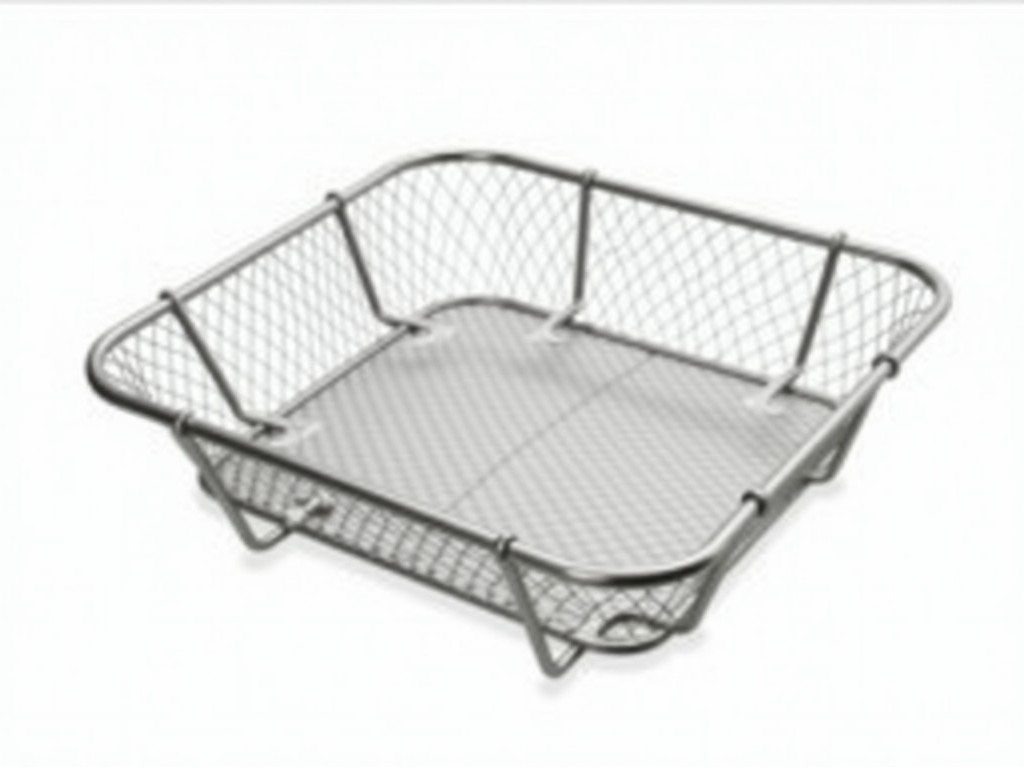
Stainless Steel Wire Sink Basket
A stainless steel wire sink basket is a drainage and containment component engineered for industrial sinks, wash stations, and processing troughs where corrosion resistance, structural integrity, and hygiene are critical. Constructed from austenitic stainless steel wire mesh or perforated sheet, it provides reliable particle retention while allowing unimpeded liquid flow. These baskets are commonly specified in food processing, pharmaceutical manufacturing, chemical handling, and metal finishing operations where exposure to moisture, cleaning agents, and particulate buildup demands durable, non-reactive materials.
Unlike plastic or coated alternatives, stainless steel wire baskets maintain dimensional stability across wide temperature ranges and resist degradation from repeated sanitization cycles. Their open-area design minimizes clogging while supporting efficient drainage, reducing downtime in continuous processing environments. Selection depends on wire gauge, mesh aperture, overall dimensions, and edge treatment—each influencing flow rate, load capacity, and cleaning accessibility.
Material Composition and Corrosion Resistance
Standard construction uses 304 stainless steel (UNS S30400), offering balanced resistance to atmospheric corrosion, freshwater exposure, and mild chemical agents. For environments involving chlorides, acidic cleaners, or elevated temperatures, 316 stainless steel (UNS S31600) is recommended due to its molybdenum content, which enhances pitting and crevice corrosion resistance. Wire diameters typically range from 0.8 mm to 2.0 mm, with tensile strength between 500–750 MPa depending on cold work level and alloy grade.
Surface finish options include mill finish, brushed (#4), or electropolished. Electropolishing reduces surface roughness to Ra < 0.4 μm, minimizing particle adhesion and improving cleanability in sanitary applications. Passivation treatments (per ASTM A967) are standard to remove free iron and restore the passive chromium oxide layer after fabrication. These processes collectively extend service life in aggressive washdown environments where lower-grade materials would suffer pitting or stress corrosion cracking.
Design Parameters and Performance Characteristics
Key design variables include mesh aperture (opening size), wire diameter, basket depth, flange width, and handle configuration. Aperture sizes range from 0.5 mm for fine particle retention to 6.0 mm for coarse debris filtration in pre-wash stages. Open area percentage—calculated as the ratio of void space to total area—directly impacts drainage velocity; typical values range from 40% for 1.0 mm mesh to over 70% for 3.0 mm grid patterns. Deeper baskets (up to 150 mm) increase volume capacity but may require reinforced sidewalls to prevent deformation under load.
Load capacity depends on wire gauge, mesh spacing, and support structure. A 1.2 mm wire, 2.0 mm aperture basket with peripheral flange reinforcement can uniformly support 15–20 kg without permanent deflection. Edge treatments vary: rolled edges improve safety and stiffness, while folded flanges facilitate secure mounting into sink frames or cradles. Handles, when present, are typically TIG-welded or mechanically crimped to withstand repeated lifting cycles without fatigue failure.
Applications in Industrial Processing
In food processing lines, these baskets are used to wash, blanch, or cool vegetables, fruits, and seafood, where fine mesh prevents product loss while allowing water and steam to permeate. The non-toxic, non-reactive nature of stainless steel ensures compliance with FDA 21 CFR §174 and EU Regulation 10/2011 for food contact surfaces. In poultry processing, 1.0–1.5 mm mesh baskets retain small parts during defeathering or chilling, reducing contamination risks in downstream equipment.
Pharmaceutical manufacturers specify electropolished 316L wire baskets for cleaning and drying glassware or small components in automated washers. The smooth surface inhibits biofilm formation and supports validation under cGMP requirements. In metal finishing, baskets hold small parts during degreasing, pickling, or passivation baths; here, chemical resistance to acids and alkalis is essential, and basket design must allow solution exchange while preventing part entanglement or loss.
Chemical plants use these baskets in solvent recovery units or catalyst handling systems, where thermal stability and resistance to organic solvents are required. Unlike polymeric alternatives that may swell or degrade, stainless steel maintains integrity across -196°C to 800°C operational ranges, making it suitable for cryogenic or high-temperature rinse stages. The ability to withstand autoclaving or steam-in-place (SIP) cycles further extends utility in sterilization-dependent workflows.
Customization Options and Engineering Considerations
Baskets are frequently customized to match existing sink geometries or process flow requirements. Common modifications include tapered profiles for nesting, perforated bases instead of woven mesh for higher flow rates, and integrated baffles to control internal fluid dynamics. Dimension tolerances are typically held to ±1.5 mm for length and width, and ±2.0 mm for depth, unless tighter precision is specified for automated handling systems.
Wire type can be adjusted based on application: plain weave for general use, twill weave for increased strength and finer filtration, or Dutch weave for superior particle retention at lower pressure drop. For high-vibration environments, additional stiffening rings or internal ribs may be added to resist resonant fatigue. Surface treatments such as passivation, electropolishing, or coatings (e.g., PTFE for non-stick release) are available upon request based on process chemical exposure.
Mounting configurations vary: drop-in styles rely on gravity and flange fit, while suspended designs use hooks or brackets attached to overhead rails. Some models include quick-release mechanisms for tool-free removal during cleaning cycles. When integration with conveyor systems is required, baskets may feature alignment guides or low-friction wear strips to prevent jamming. All customizations are evaluated for impact on drainage efficiency, structural load path, and cleanability.
Quality Control and Manufacturing Standards
Production follows ISO 9001:2015 quality management principles, with material traceability maintained from mill certificate to final inspection. Wire diameter and tensile strength are verified per ASTM A313/A313M for stainless steel spring wire. Mesh aperture is tested using calibrated pin gauges or optical comparators to ensure conformity to specified open area. Weld integrity—where applicable—is assessed via visual inspection (per ASTM E570) and dye penetrant testing for critical joints.
Dimensional inspection uses coordinate measuring machines (CMM) or calibrated gauges to validate flange angles, depth, and overall squareness. Surface finish is measured with profilometers to confirm Ra values meet electropolishing or brushing specifications. Passivation effectiveness is verified through copper sulfate testing (ASTM A380) or ferroxyl testing to detect residual free iron. Each batch includes a first-article inspection report and periodic in-process checks to detect deviations early.
Load testing is conducted on representative samples to confirm deflection limits under specified weights. Baskets are subjected to cyclic loading (e.g., 1,000 lift-lower cycles) to evaluate fatigue resistance at stress concentrations. For sanitary applications, final cleaning and packaging occur in controlled environments to prevent particulate contamination. Products are typically packed in polyethylene-lined cartons with corrugated dividers to prevent abrasion during transit.
| Parameter | Typical Range / Option | Notes |
|---|---|---|
| Wire Diameter | 0.8 mm – 2.0 mm | Affects strength, stiffness, and open area |
| Mesh Aperture | 0.5 mm – 6.0 mm | Selected based on particle size to retain |
| Material Grade | 304, 304L, 316, 316L | 316L preferred for chloride or sanitary exposure |
| Basket Depth | 50 mm – 150 mm | Deeper designs may require sidewall reinforcement |
| Surface Finish | Mill, Brushed (#4), Electropolished | Electropolished for Ra < 0.4 μm in clean-in-place systems |
| Edge Treatment | Rolled, Folded Flange, Wire Reinforced | Flange width typically 10–20 mm for mounting stability |
| Load Capacity (Uniform) | 10–25 kg | Depends on wire gauge, mesh, and support geometry |
| Temperature Range | -196°C to 800°C | Limited by oxidation resistance in air at high temps |
Ordering Information and Technical Support
To request a quotation or discuss custom specifications, provide the following details: required dimensions (length × width × depth), preferred mesh aperture and wire diameter, material grade (304 or 316L), surface finish, edge treatment, and any mounting or handle requirements. Indicate the intended application (e.g., food washing, chemical soaking, part drying) to assist in validating drainage efficiency and material suitability. Quantities, delivery timelines, and packaging preferences should also be included.
Engineering support is available to review compatibility with existing sink frames, agitator systems, or automated washers. We can provide step files or 2D drawings for integration into CAD assemblies upon request. For replacement parts, matching the original basket’s open area and flow characteristics is critical to avoid process disruption—our team can reverse-engineer specifications from a sample or detailed measurements. All inquiries receive a technical response within one business day.
Samples are available for validation testing, typically shipped within 5–7 business days after drawing approval. Test units may be subjected to flow rate analysis, load deflection, or chemical immersion trials to confirm performance under actual process conditions. Feedback from sample evaluation is used to finalize production tooling and inspection criteria. Minimum order quantities vary by complexity but are often flexible for prototyping or pilot programs.
For technical inquiries, customization requests, or to initiate a purchase, contact our engineering team directly. We provide detailed documentation, including material certifications, inspection reports, and CAD models, to support your procurement and validation processes.
Contact Engineering Team
More Products

Send Inquiry
If you are interested in our products, leave your information here and we will be in touch shortly.