Buy Wire Mesh Strainer Basket
A wire mesh strainer basket is a critical component in industrial fluid systems designed to capture solid contaminants while maintaining flow efficiency. Unlike disposable filters, these baskets are
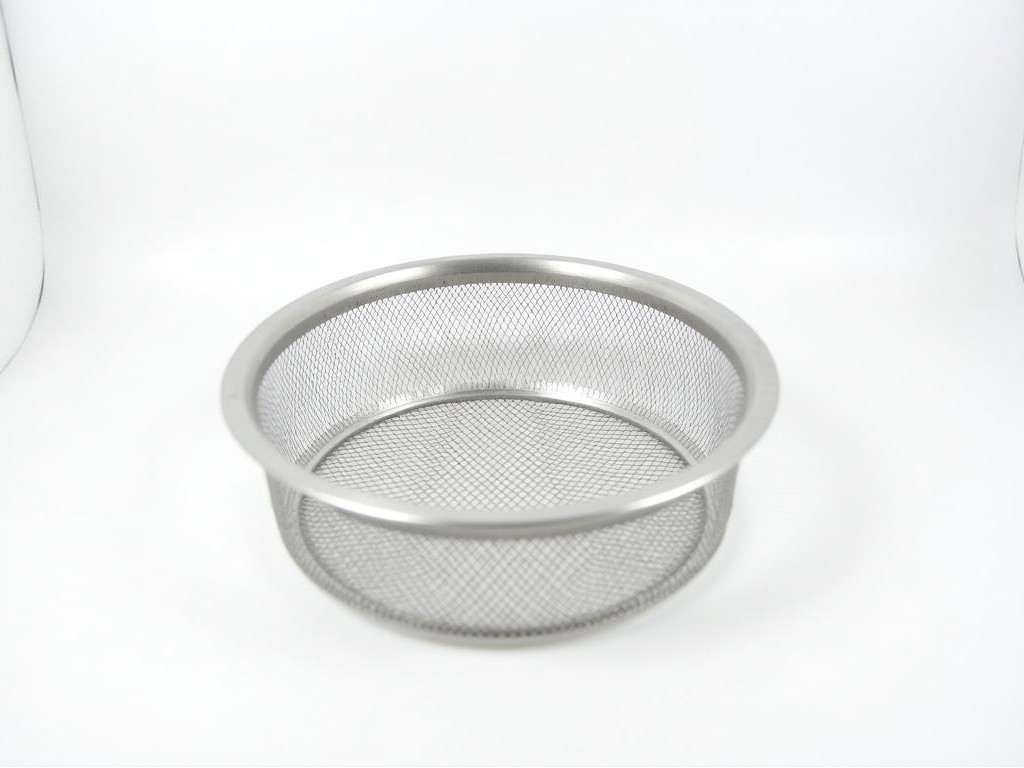
Wire Mesh Strainer Baskets: Industrial Filtration Solutions
A wire mesh strainer basket is a critical component in industrial fluid systems designed to capture solid contaminants while maintaining flow efficiency. Unlike disposable filters, these baskets are engineered for repeated cleaning cycles, making them suitable for continuous operation in processes where particulate buildup must be managed without frequent downtime. The core function relies on precise aperture sizing to retain target particle sizes while allowing desired fluids or gases to pass through with minimal pressure drop.
Selection begins with understanding the nature of the contaminant—whether it's metallic swarf from machining, polymer pellets in extrusion, or sediment in water treatment. Each application demands specific mesh geometry: square weave offers uniform flow distribution, Dutch weave provides higher strength for high-pressure differentials, and twill weave balances durability with flow rate. The open area percentage directly impacts system efficiency; for example, a 40-mesh square weave typically provides 36% open area, while a comparable Dutch weave may offer 30% but with superior tensile strength.
Material Selection Based on Process Conditions
Material choice determines compatibility with temperature, chemical exposure, and mechanical stress. Stainless steel 304 is commonly used in food-grade and general industrial water systems due to its corrosion resistance up to 400°F and ease of sanitation. For higher temperatures or chlorinated environments, 316L stainless steel adds molybdenum resistance to pitting, extending service life in marine or chemical processing applications. In abrasive slurries, hardened alloys like 17-4 PH or nickel-based options such as Monel 400 may be specified to resist erosion from hard particles.
Non-metallic options exist for specialized cases: polypropylene baskets handle temperatures up to 180°F and resist most acids and alkalis, making them suitable for electroplating or wastewater pretreatment. PEEK variants operate continuously to 480°F and resist hydrocarbons, often selected in oil and gas separation systems. However, polymeric materials generally have lower tensile strength and higher thermal expansion than metals, requiring design adjustments for high-vibration or high-pressure environments.
Design Parameters Affecting Performance
Basket geometry influences both hydraulic performance and maintenance accessibility. Cylindrical baskets with uniform wall thickness distribute stress evenly and are standard in pipeline strainers. Conical or tapered designs improve self-cleaning action in vertical installations by guiding debris toward the discharge point. The handle or lifting mechanism must be engineered to support the full weight of the basket when loaded with retained solids—typically calculated as (void volume × solids density) plus tare weight—to prevent deformation during removal.
Mesh retention method is another critical factor. Welded edges provide the strongest bond but may create crevices difficult to clean in sanitary applications. Mechanical crimping or locking seams avoid heat-affected zones and are preferred in food and pharmaceutical systems where crevice corrosion or bacterial harborage is a concern. Some designs incorporate a supporting perforated metal sheet behind the mesh to prevent deformation under high differential pressure, especially when filtering viscous fluids or fine particulates.
Typical Specifications and Customization Options
| Parameter | Typical Range | Notes |
|---|---|---|
| Mesh Opening | 25 microns to 6.35 mm | Custom weaves available; specified by micron rating or mesh count |
| Basket Diameter | 50 mm to 600 mm | Larger sizes require internal support rings to prevent collapse |
| Basket Height | 75 mm to 900 mm | Aspect ratio affects flow distribution; typically 1:1 to 1:3 diameter-to-height |
| Material | SS304, SS316L, 17-4 PH, Monel, PP, PEEK | Lining options available for abrasive or sticky media |
| Connection Type | Flanged, threaded, quick-release, lift-lug | Handle rated for full load; lift points designed per ASME BTH-1 |
Customization extends beyond standard dimensions. Internal baffles can be added to reduce fluid turbulence and improve settling in applications with fluctuating flow rates. Magnetic inserts are integrated into stainless baskets to capture ferrous particles that would otherwise pass through the mesh, extending the effective filtration range without increasing pressure drop. For high-cycle applications, electropolishing or passivation treatments reduce surface roughness, minimizing particle adhesion and simplifying cleaning-in-place (CIP) procedures.
Industrial Applications and Operational Considerations
In hydraulic systems, strainer baskets protect pumps and valves from wear caused by ingested debris. A 100-mesh basket is commonly installed upstream of servo valves to prevent spool sticking, where even 75-micron particles can cause malfunction. The basket must withstand pressure pulses without deforming—typically validated through finite element analysis simulating 150% of system surge pressure. Regular inspection intervals are based on differential pressure rise; a 15% increase from baseline often indicates 50% solids loading, triggering maintenance.
Food and beverage processors use strainer baskets to remove agglomerates, seeds, or metal fragments from liquids like juices, syrups, or dairy products. Here, surface finish is critical: electropolished 316L with Ra < 0.8 μm minimizes bacterial retention and allows effective CIP with alkaline detergents. The basket must withstand repeated thermal cycling during steam-in-place (SIP) procedures without loss of mesh tension or gasket integrity. Compliance with 3-A Sanitary Standards or FDA 21 CFR 177.1520 is often required for direct food contact.
In chemical processing, baskets handle catalysts, polymer resins, or crystalline byproducts. For example, in polyethylene production, a 200-mesh basket removes gel particles that could cause die lines in extrusion. The material must resist both the polymer melt (often >250°C) and any solvents used in cleaning. Nickel alloys are frequently selected here due to their resistance to organic acids and thermal stability. Vibration from nearby pumps necessitates designs with reinforced sidewalls and dampened mounting to prevent fatigue failure.
Quality Control and Validation
Each basket undergoes dimensional verification against CAD models, with critical features like mesh alignment and handle attachment points inspected using calibrated gauges or CMM. Mesh integrity is verified through bubble point testing or glass bead retention tests to confirm the rated micron specification. For sanitary applications, surface roughness is measured with profilometers, and passivation is validated via copper sulfate or ferroxyl testing to ensure free iron is removed from the surface.
Hydrostatic testing confirms the basket can withstand design pressure without leakage or permanent deformation. Cycle testing simulates repeated installation and removal to assess handle and latch durability—typically 500 cycles minimum for industrial units. Documentation includes material certifications (EN 10204 3.1), inspection reports, and, where applicable, compliance declarations for food safety or pressure equipment directives. Traceability is maintained via laser etching or tagging with batch numbers and material codes.
Inquiry and Procurement Guidance
To receive an accurate quotation, provide the operating temperature range, fluid composition (including pH and particulate characteristics), required mesh size, maximum allowable pressure drop, and installation orientation (horizontal or vertical). Specify whether the basket will be subjected to backwashing, ultrasonic cleaning, or manual scraping, as this affects material and surface treatment selection. For retrofit applications, include flange dimensions, bolt patterns, and clearance constraints to ensure compatibility with existing housings.
Lead times vary based on material availability and complexity: standard SS304 baskets in common sizes typically ship within 2–3 weeks, while exotic alloys or custom geometries may require 6–8 weeks. Samples are available for validation upon request, usually supplied as a single unit with full inspection data. Packaging is designed to prevent deformation during transit—baskets are nested in custom foam inserts or corrugated dividers within crush-rated containers, with desiccant included for corrosion-sensitive alloys.
More Products

Send Inquiry
If you are interested in our products, leave your information here and we will be in touch shortly.