Ceiling Fan Safety Cage Guard Cover Suppliers
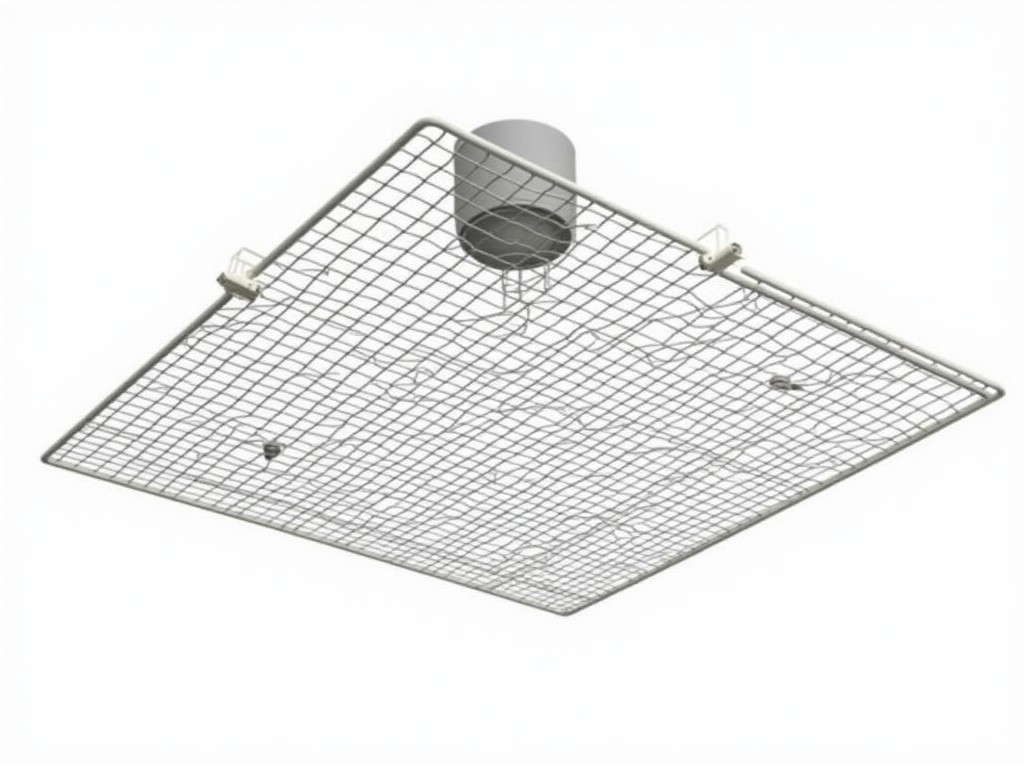
Ceiling fan safety cage guard covers are protective enclosures designed to prevent accidental contact with rotating fan blades in industrial, commercial, and public environments. These components are
Ceiling Fan Safety Cage Guard Cover Suppliers
Ceiling fan safety cage guard covers are protective enclosures designed to prevent accidental contact with rotating fan blades in industrial, commercial, and public environments. These components are essential in settings where fan installation occurs at or below 2.1 meters (7 feet) from the floor, such as warehouses, gymnasiums, manufacturing floors, and transportation hubs, to comply with occupational safety standards like OSHA 1910.212 and EN ISO 13857.
The primary function of a safety cage guard is to create a physical barrier that maintains a safe distance between personnel and moving blades while allowing adequate airflow for ventilation performance. Effective designs balance obstruction minimization with structural integrity, ensuring that the guard does not reduce fan efficiency by more than 5–10% under normal operating conditions, as validated through AMCA 210 testing protocols.
Material Selection and Structural Design
Safety cage guards are typically constructed from either powder-coated steel wire mesh or UV-stabilized polypropylene, depending on environmental exposure and impact requirements. Steel variants use galvanized or cold-rolled wire with diameters ranging from 3mm to 5mm, welded into a grid pattern with opening sizes not exceeding 12mm to prevent finger penetration per ISO 13857:2019.
For corrosive or high-moisture environments such as food processing plants or coastal facilities, stainless steel grades 304 or 316 are specified, offering resistance to chloride-induced pitting and chemical washdowns. Polymer-based guards utilize glass-filled nylon or polycarbonate blends, providing non-conductive properties and resistance to UV degradation, with tensile strengths exceeding 40 MPa and operational temperature ranges from -20°C to +80°C.
The mounting system is critical to safety and longevity. Guards are designed with either bolt-on flanges, spring-loaded clips, or tension-mounted rings that attach directly to the fan motor housing or downrod, ensuring no loosening occurs under vibration frequencies up to 50Hz. Torque specifications for fasteners are typically set between 8–12 Nm to prevent over-tightening while maintaining secure attachment.
Performance and Compliance Considerations
Airflow restriction is a key performance metric evaluated during guard selection. Manufacturers conduct wind tunnel testing in accordance with AMCA 210-07 to measure the pressure drop across the guard at various fan speeds. A well-designed cage guard should exhibit a static pressure increase of less than 15 Pa at 80% of maximum airflow, ensuring minimal impact on ventilation efficiency.
Vibration resistance is another critical factor, particularly in industrial settings where fans operate continuously. Guards undergo sinusoidal vibration testing from 5–500 Hz at 2g acceleration to verify that welds, fasteners, and mesh joints do not fatigue or fracture over time. Products intended for 24/7 operation are often validated for a minimum of 10,000 hours of continuous service without degradation.
Compliance with regional safety standards influences design choices. In the European market, guards must meet the Machinery Directive 2006/42/EC and undergo risk assessment per EN ISO 12100. In North America, compliance with ANSI/AMCA 99-009-08 is commonly referenced for industrial air mover safety. Suppliers should provide documentation such as Declaration of Conformity or test reports upon request.
Customization and Application-Specific Solutions
Off-the-shelf guards are available for standard fan diameters ranging from 900mm to 1400mm, but many industrial applications require tailored solutions. Customization options include non-standard opening patterns for high-static-pressure environments, reinforced frames for high-vibration zones, and special coatings such as epoxy or zinc-nickel for enhanced durability in chemical processing areas.
For fans installed in confined spaces or low-ceiling applications, low-profile guards with reduced radial depth (as low as 50mm) are engineered to maintain safety clearance without interfering with surrounding equipment. In food and beverage facilities, guards are designed with smooth, crevice-free surfaces and rounded edges to facilitate cleaning and prevent bacterial harborage, aligning with EHEDG guidelines.
Some suppliers offer integrated solutions where the safety cage is combined with a motor cover or ingress protection (IP54-rated) housing to protect against dust and moisture while maintaining blade safety. These hybrid designs are particularly useful in outdoor semi-covered installations such as loading docks or agricultural buildings.
Quality Control and Supply Chain Reliability
Reputable suppliers implement incoming material inspection for wire diameter, tensile strength, and coating thickness using calibrated micrometers and adhesion testers. During production, each guard undergoes dimensional verification against CAD models, with critical dimensions such as ring diameter, strand spacing, and flange flatness checked using coordinate measuring machines (CMM) or optical comparators.
Final inspection includes a 100% visual check for weld defects, sharp edges, and coating uniformity, followed by functional testing where the guard is assembled onto a sample fan to verify clearance, stability, and ease of installation. Batch traceability is maintained through laser-etched or stamped part numbers linking to material certificates and test logs.
Packaging is designed to prevent deformation during transit. Guards are typically nested in stackable configurations with corrugated dividers or placed in individual thermoformed trays within double-wall cartons. For export shipments, moisture-barrier bags and corner protectors are used to guard against humidity and impact damage, with ISTA 3A performance testing often referenced for validation.
| Parameter | Typical Range | Notes |
|---|---|---|
| Wire Diameter (Steel) | 3.0–5.0 mm | Depends on fan size and impact requirements |
| Mesh Opening Size | ≤12 mm | Per ISO 13857:2019 for finger safety |
| Coating Thickness (Powder) | 60–100 μm | Measured via magnetic induction |
| Static Pressure Drop | <15 Pa at 80% airflow | AMCA 210-07 test condition |
| Operating Temperature (Polymer) | -20°C to +80°C | UV-stabilized grades |
When evaluating ceiling fan safety cage guard suppliers, industrial buyers should prioritize those who provide clear documentation of material certifications, test reports, and compliance declarations. The ability to offer engineering support for custom designs, including airflow simulation and stress analysis, adds significant value in complex installations.
Lead times for standard guards typically range from 2–4 weeks, while custom fabrications may require 6–8 weeks depending on tooling and material availability. Suppliers who maintain inventory of common sizes and offer kitting services (including fasteners and installation instructions) can reduce procurement complexity for maintenance teams.
To initiate a quotation or request technical documentation, please provide the fan model number, blade diameter, mounting configuration, and environmental conditions (e.g., indoor/outdoor, temperature range, exposure to chemicals or moisture). This information enables accurate recommendation of guard type, material, and mounting method suited to your specific safety and performance requirements.
For technical inquiries, custom design support, or to request a quote, contact our engineering team.
Request Information

More Products

Send Inquiry
If you are interested in our products, leave your information here and we will be in touch shortly.