China 304 Stainless Steel Kitchen Basket
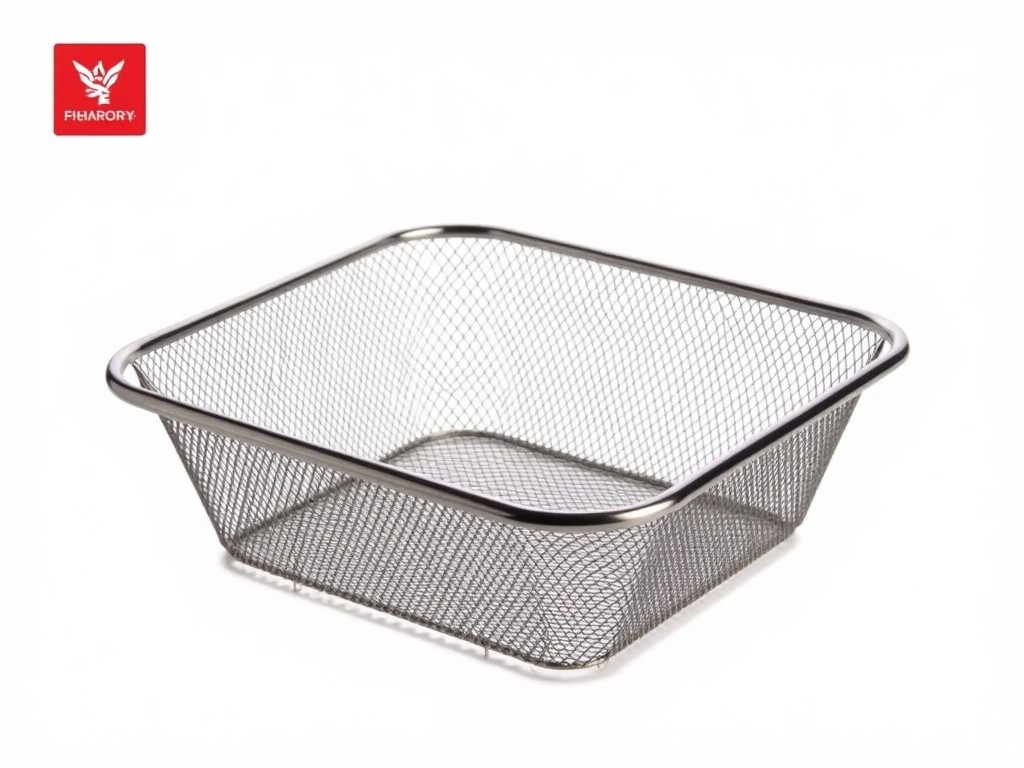
This product page details the technical specifications, material characteristics, and functional design of a 304 stainless steel kitchen basket manufactured in China. It is intended for industrial
China 304 Stainless Steel Kitchen Basket
This product page details the technical specifications, material characteristics, and functional design of a 304 stainless steel kitchen basket manufactured in China. It is intended for industrial buyers evaluating components for commercial kitchen equipment, food service fixtures, or OEM integration. The focus is on measurable engineering properties rather than subjective claims.
Material Composition and Corrosion Resistance
The basket is constructed from AISI 304 stainless steel, containing approximately 18% chromium and 8% nickel by weight. This composition provides resistance to oxidation and mild chemical exposure commonly encountered in kitchen environments, including contact with water, detergents, and food acids. The passive chromium oxide layer reforms when damaged, maintaining surface integrity under normal use conditions.
Unlike lower-grade steels, 304 does not require protective coatings to resist rust in humid or wet conditions. However, prolonged exposure to chlorides (e.g., from salt or bleach) may lead to pitting corrosion over time. For applications involving frequent salt exposure, alternative grades such as 316 may be more suitable, though at higher cost.
Structural Design and Load Characteristics
The basket features a welded wire mesh or perforated sheet construction, depending on the model. Wire diameter typically ranges from 1.2mm to 2.0mm, with aperture sizes between 5mm and 15mm. These dimensions balance drainage efficiency with structural rigidity, preventing deformation under typical loads of 5kg to 15kg when evenly distributed.
Edges are folded or rolled to eliminate sharp protrusions, improving safety during handling. Corner joints are reinforced with additional welds or bends to resist twisting forces. The base is often designed with slight elevation or feet to promote airflow and prevent water pooling, reducing the risk of stagnation and microbial growth.
Dimensional Tolerances and Customization
Standard dimensions are available in common sizes such as 300mm x 200mm x 100mm (LxWxH), but custom lengths, widths, and heights can be produced according to client specifications. Tolerances on linear dimensions are typically ±1.5mm for cut lengths and ±2.0mm for formed features, depending on the manufacturing process used.
Customization options include handle integration, lid compatibility, internal dividers, and surface finishes such as brushed or electropolished. Electropolishing reduces surface roughness to below 0.4µm Ra, improving cleanability and reducing particle adhesion. These modifications are evaluated case-by-case to ensure structural integrity is not compromised.
Manufacturing Process and Quality Control
Production involves CNC wire bending, automated welding, and precision forming. Welds are inspected visually and via dye penetrant testing to detect surface-breaking flaws. Non-destructive testing is not routinely applied to all units but is available upon request for critical applications.
Each batch undergoes material verification using portable XRF analyzers to confirm chromium and nickel content within 304 specification ranges. Final inspection includes dimensional checks, weld integrity assessment, and surface cleanliness verification. Units are packaged with protective separators to prevent scratching during transit.
Typical Applications in Food Service Environments
These baskets are commonly used in dishwashing systems for holding utensils, glassware, or small cookware during wash cycles. Their open design allows water and detergent to circulate freely while retaining items. In food preparation areas, they serve as draining stations for washed produce or as temporary storage for cleaned tools before reuse.
In institutional kitchens such as hospitals or schools, the baskets support standardized workflows by providing consistent, reusable containers that withstand frequent cleaning and thermal cycling. Their compatibility with automated handling systems depends on consistent dimensions and smooth surfaces, which are maintained through tight process control.
Comparison with Alternative Materials
| Property | 304 Stainless Steel | Galvanized Steel | Polypropylene |
|---|---|---|---|
| Corrosion Resistance (Wet Environment) | High (passive layer) | Moderate (zinc coating degrades) | Excellent (inert) |
| Max Continuous Use Temp | 870°C | 200°C (coating limit) | 100°C |
| Tensile Strength (Typical) | 500–700 MPa | 300–500 MPa | 20–40 MPa |
| Cleanability (Surface Roughness) | 0.4–0.8 µm Ra (brushed) | 1.0–2.0 µm Ra | 0.2–0.5 µm Ra |
| Relative Cost (per kg) | 1.0x | 0.6x | 0.3x |
The table above compares 304 stainless steel with galvanized steel and polypropylene across key performance indicators. While polypropylene offers superior chemical resistance and lower cost, it lacks the thermal stability and mechanical strength required for high-temperature dishwashing or autoclave cycles. Galvanized steel is initially less expensive but risks coating failure in humid conditions, leading to rust and potential contamination. 304 stainless steel provides a balanced solution for applications requiring durability, hygiene, and repeated thermal exposure.
Packaging and Shipping Considerations
Baskets are typically packed in corrugated cardboard boxes with internal dividers or foam inserts to prevent movement and surface damage. For bulk orders, units may be stacked on pallets and secured with stretch film. Export packaging complies with ISPM 15 standards for wood-based materials when applicable.
Each package includes a label with part number, material grade, quantity, and destination marking. No desiccants are included by default, as 304 stainless steel does not require moisture protection for short-term storage. However, moisture-barrier packaging can be provided upon request for long-term transit in high-humidity climates.
Lead Times and Sampling
Standard production lead time is 2–4 weeks after drawing approval and deposit receipt. This timeline assumes material availability and standard tooling. Custom features such as special handles or finishes may extend lead time by 1–2 weeks depending on complexity.
Samples are available upon request. A sample fee may apply, which is creditable toward a subsequent order. Sample production typically takes 5–7 business days. Buyers are advised to provide detailed specifications including dimensions, wire gauge, aperture size, and any required certifications to ensure accurate sample production.
More Products

Send Inquiry
If you are interested in our products, leave your information here and we will be in touch shortly.