China Perforated Copper Sheet Metal
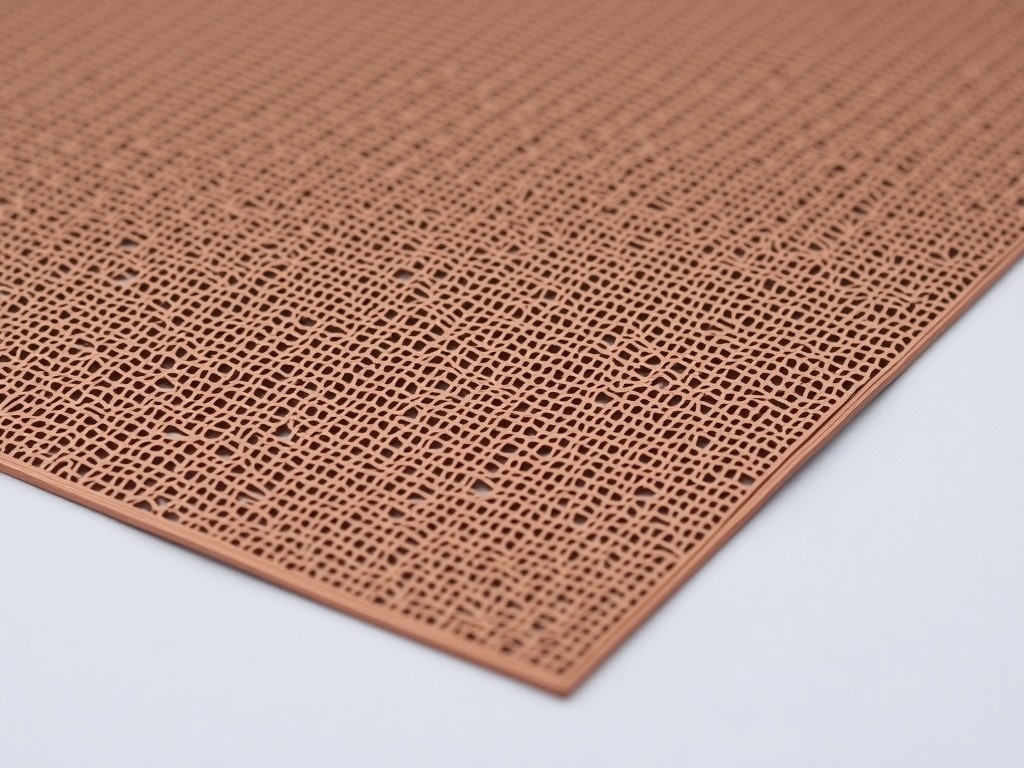
Perforated copper sheet metal is manufactured by punching or laser-cutting precise hole patterns into solid copper blanks. The process maintains the inherent properties of copper—high electrical and
China Perforated Copper Sheet Metal
Perforated copper sheet metal is manufactured by punching or laser-cutting precise hole patterns into solid copper blanks. The process maintains the inherent properties of copper—high electrical and thermal conductivity, corrosion resistance, and antimicrobial characteristics—while introducing controlled openings for airflow, filtration, or aesthetic purposes. Hole size, shape, spacing, and open area percentage are engineered to meet specific functional requirements.
Copper used in perforated sheets typically conforms to ASTM B152 or C11000 electrolytic tough pitch (ETP) grade, ensuring minimum 99.9% copper content. Thickness ranges from 0.2 mm to 6.0 mm, with standard tolerances adhering to ISO 9445-2 for thickness and ISO 9013 for hole positioning. Surface finishes include mill finish, brushed, or oxidized, depending on end-use environmental exposure.
Perforation patterns are defined by pitch (center-to-center distance), hole diameter, and arrangement—commonly staggered 60° or square grids. Open area, expressed as a percentage of total surface, ranges from 5% to over 70%, directly influencing pressure drop in fluid dynamics or light transmission in architectural applications.
Technical Specifications
| Parameter | Typical Range | Standard Reference |
|---|---|---|
| Material Grade | C11000 (ETP), C10200 (OF) | ASTM B152 |
| Thickness | 0.2 mm – 6.0 mm | ISO 9445-2 |
| Hole Diameter | 0.5 mm – 50.0 mm | Custom per drawing |
| Pitch (Staggered 60°) | 1.0 mm – 100.0 mm | Custom per drawing |
| Open Area | 5% – 75% | Calculated from pattern |
| Sheet Size | Max 1500 mm x 3000 mm | Custom cutting available |
| Tolerance (Position) | ±0.1 mm | ISO 9013 |
Material Properties and Performance
Electrical conductivity of C11000 copper perforated sheet remains approximately 100% IACS, minimally affected by perforation when open area is below 50%. Thermal conductivity stays near 400 W/m·K, enabling effective heat dissipation in enclosures or busbar shielding. These properties are critical in electrical grounding grids, transformer cooling screens, and RF shielding where both conductivity and ventilation are required.
Corrosion resistance in atmospheric environments is excellent due to the formation of a stable patina layer (Cu₂O, CuO, and basic copper sulfates). In marine or industrial atmospheres, corrosion rates typically remain below 1 µm/year. For aggressive chemical environments, alloy selection (e.g., C10200 oxygen-free copper) or post-treatment passivation may be specified to mitigate dezincification or ammonia-related stress corrosion cracking.
Antimicrobial efficacy is retained in perforated copper surfaces, with studies showing >99.9% reduction of bacteria such as E. coli and S. aureus within two hours of contact. This property supports use in HVAC plenums, food processing equipment touchpoints, and public infrastructure surfaces where hygiene is a design criterion, even with reduced surface area due to perforations.
Common Applications
- Electrical grounding and lightning protection systems where perforated copper tapes or sheets provide low-impedance paths while allowing moisture drainage and reducing wind uplift forces on rooftop installations.
- Heat exchanger fins and distributor plates in HVAC and power electronics, where hole patterns optimize airflow distribution and enhance convective heat transfer without compromising structural integrity of the copper core.
- Architectural cladding and facade panels requiring visual permeability, light diffusion, or rain screen functionality; perforations reduce material weight and solar heat gain while maintaining durability and developing a natural patina over time.
- EMI/RFI shielding enclosures for sensitive electronics, where precisely sized holes block wavelengths above a cutoff frequency while permitting cable entry, ventilation, or optical access—governed by the relationship between hole size and electromagnetic wavelength.
- Filtration components in chemical processing or fluid handling systems, where copper’s compatibility with potable water and certain chemicals, combined with custom hole geometries, enables particle separation or bubble distribution in aeration tanks.
Customization Options
Hole patterns are not limited to round shapes; slotted, square, hexagonal, or custom decorative geometries are achievable via CNC punching or laser cutting. Pattern density and open area are adjusted based on fluid dynamic calculations, acoustic transmission loss requirements, or electromagnetic shielding effectiveness (SE) targets, often validated through computational modeling prior to production.
Edge treatments include deburring, rounding, or flanging to prevent injury during handling and improve structural rigidity. Sheets can be supplied flat, coiled (for thinner gauges), or fabricated into cylinders, cones, or boxes via forming operations, with perforation continuity maintained across bends where feasible.
Surface treatments such as lacquering, clear coating, or chemical oxidizing (to accelerate patina formation) are available to stabilize appearance or enhance resistance to specific environments. All customizations are subject to manufacturability reviews, with minimum hole size constrained by tool strength and material thickness to avoid tearing or burring during punching.
Quality Control and Inspection
Dimensional verification includes thickness measurement via micrometer or laser gauging at multiple points per sheet, hole diameter inspection using optical comparators or vision systems, and positional accuracy checked against CAD templates. Tolerance stacks are monitored to ensure cumulative deviation does not affect fit in mating assemblies, particularly in shielding or sealing applications.
Material verification involves mill test reports (MTRs) confirming copper purity and tensile properties. Surface inspection identifies scratches, oil residue, or oxidation inconsistencies under controlled lighting. For critical applications, eddy current testing may be employed to detect subsurface cracks or material thinning around hole perimeters introduced during high-speed punching.
Each batch undergoes open area validation through either image analysis software or airflow bench testing, particularly when used in HVAC or filtration roles. Packaging includes interleaving sheets with acid-free paper or plastic film to prevent surface abrasion, with pallets secured and humidity-controlled for export to avoid staining or white rust formation during transit.
For technical inquiries, custom specifications, or quotation requests, please provide your application details including required thickness, hole pattern, open area, dimensions, and any environmental or compliance factors.
Request a Quote or Technical Consultation
More Products

Send Inquiry
If you are interested in our products, leave your information here and we will be in touch shortly.