China Perforated Metal Aluminum Sheet
Perforated aluminum sheets are manufactured from specific alloy grades chosen for their balance of formability, corrosion resistance, and strength-to-weight ratio. Commonly used alloys include
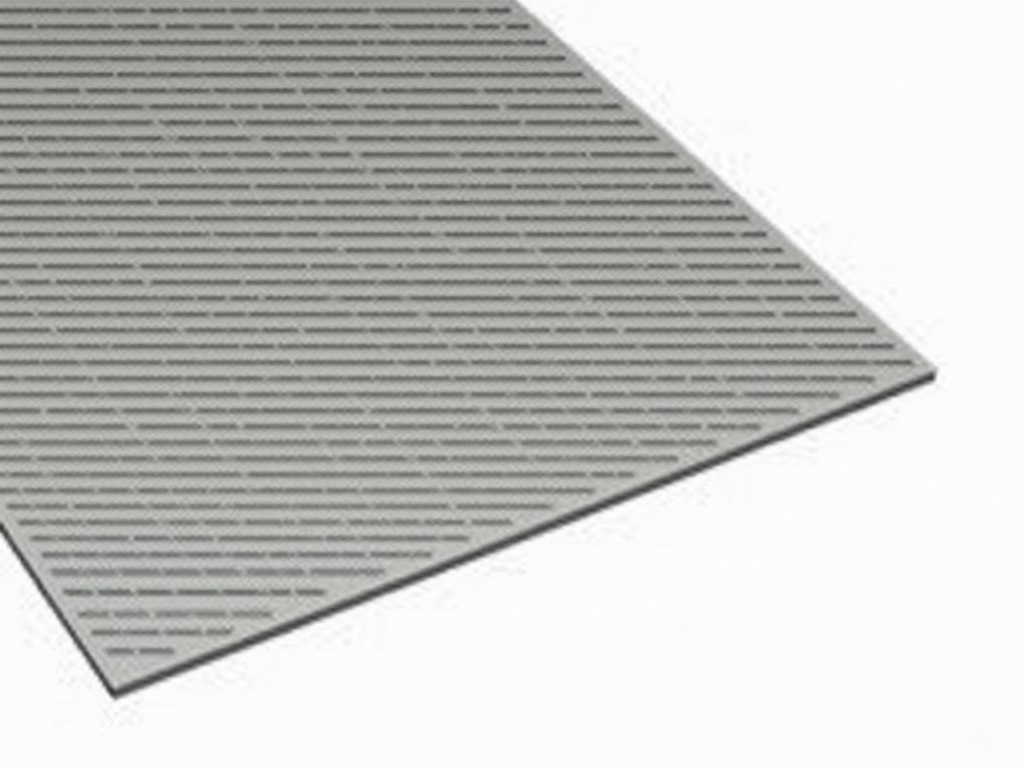
China Perforated Metal Aluminum Sheet
Material Composition and Alloy Selection
Perforated aluminum sheets are manufactured from specific alloy grades chosen for their balance of formability, corrosion resistance, and strength-to-weight ratio. Commonly used alloys include 3003-H14 for general applications requiring good workability and moderate strength, 5052-H32 for environments with higher moisture or salt exposure due to superior corrosion resistance, and 6061-T6 when structural load-bearing capacity is a priority. The temper designation (e.g., H14, H32, T6) indicates the degree of strain hardening and aging, directly influencing the sheet’s ability to withstand perforation without cracking or deformation. Buyers should specify the alloy and temper based on the intended environmental exposure and mechanical demands of the final application.
Perforation Patterns and Open Area Calculation
The functionality of a perforated sheet is defined by its hole pattern, size, spacing, and resulting open area percentage. Standard patterns include round, square, slotted, and hexagonal arrangements, each suited to different flow, filtration, or aesthetic requirements. Open area is calculated as the ratio of hole area to total sheet area and directly impacts airflow, light transmission, or sound absorption performance. For example, a 60% open area round hole pattern with 3mm diameter holes on 5mm centers provides significant airflow while maintaining structural continuity. Custom patterns are available upon request, but tooling costs and lead times increase with complexity, so standard patterns are recommended for cost-sensitive projects unless specific performance criteria necessitate a unique design.
Thickness Tolerances and Flatness Control
Sheet thickness is critical for both perforation integrity and end-use performance. Typical thicknesses range from 0.5mm to 6.0mm, with tolerances adhering to ASTM B209 or EN 573-3 standards depending on the alloy. Thinner sheets (below 1.0mm) are more prone to deformation during punching and require tighter process control to maintain flatness. Thicker sheets (>3.0mm) demand higher tonnage presses and may exhibit edge burring, necessitating secondary deburring or vibratory finishing. Flatness is measured in I-units or as a deviation from a reference plane, with perforated sheets typically held to Class II or III flatness standards unless otherwise specified. Buyers should communicate flatness requirements early, as achieving tight tolerances after perforation often requires roller leveling or stretcher leveling as a post-process.
Surface Treatments and Finishing Options
While aluminum naturally forms a protective oxide layer, additional surface treatments enhance durability, appearance, or functional properties in specific environments. Anodizing (Type II or III) increases surface hardness and allows for color dyeing, useful in architectural or decorative applications. Chemical conversion coatings such as Alodine or Iridite improve paint adhesion and provide baseline corrosion protection without altering dimensions. For outdoor exposure, powder coating offers a thick, uniform finish with UV stability and impact resistance, available in RAL or Pantone colors. Mill finish remains the default for industrial applications where appearance is secondary and cost efficiency is prioritized. Each treatment adds process steps and cost, so selection should align with the expected service life and maintenance schedule.
Comparison of Common Perforation Parameters
| Parameter | Typical Range | Notes |
|---|---|---|
| Hole Diameter | 0.8mm – 12.0mm | Smaller holes increase tooling wear; larger holes reduce structural margin |
| Center-to-Center Spacing | 1.5mm – 25.0mm | Must be >1.2x hole diameter to prevent tear-out |
| Open Area (%) | 15% – 70% | Determines flow, acoustic, and visual properties |
| Sheet Thickness | 0.5mm – 6.0mm | Thinner sheets limit minimum hole size due to punch strength |
| Standard Width | 1000mm, 1220mm, 1250mm | Lengths typically coiled or cut to 2440mm or 3050mm |
Industrial Applications and Functional Justification
Perforated aluminum sheets are selected in industrial settings not merely for their appearance but for specific engineering functions. In HVAC systems, they serve as diffuser plates where the open area and hole distribution govern air velocity and noise reduction — high-open-area patterns minimize pressure drop while maintaining effective air dispersion. As machine guards or safety barriers, the perforations allow visibility and light transmission while meeting OSHA or ISO 14120 requirements for gap size to prevent entanglement. In filtration applications, such as pre-filters for air intake or liquid separation, the hole size and pattern are matched to particle retention criteria, with the aluminum’s corrosion resistance ensuring longevity in humid or chemically exposed environments. Architectural cladding uses perforated panels for solar shading, where the pattern is calculated to block direct summer sun while allowing winter penetration and daylighting — performance validated through solar angle analysis rather than aesthetic preference alone.
Quality Control and Inspection Protocol
Consistent quality in perforated aluminum sheets relies on standardized inspection at multiple stages. Incoming coil or sheet stock is verified for alloy composition via XRF spectroscopy and thickness using micrometers or laser gauges. During perforation, punch alignment and clearance are monitored to prevent burring or hole elongation; sampling includes visual inspection under magnified light and dimensional checks of hole diameter and pitch using calibrated gauges or vision systems. Post-perforation, flatness is assessed using a straight edge and feeler gauge or optical comparators against defined tolerance bands. Surface treatments are checked for coating thickness (e.g., epoxy powder >60μm) and adhesion via cross-hatch testing (ASTM D3359). Final packaging includes edge protection and interleaving to prevent abrasion during transit, with each bundle labeled with heat number, dimensions, and inspection traceability.
Customization and Ordering Considerations
While standard perforation patterns and stock sizes reduce lead time and cost, many projects require custom specifications. Buyers should provide hole shape, diameter, spacing, open area target, sheet dimensions, alloy preference, temper, and any required surface finish. For architectural or OEM integration, CAD drawings or DXF files of the pattern are preferred to ensure accurate tooling setup. Minimum order quantities apply to custom tooling, typically starting at 500kg for new patterns, though standard patterns can be ordered in smaller cut-to-length quantities. Lead times vary: 7–10 days for stock items, 15–25 days for custom perforations, and an additional 5–7 days if anodizing or powder coating is included. Quotations should include tooling amortization, material yield, and processing steps to avoid unexpected costs.
Packaging and Logistics for Export
To prevent damage during international shipment, perforated aluminum sheets are packaged with specific protective measures. Sheets are stacked on wooden or plastic pallets with corner boards and edge protectors to avoid deformation. Interleaving with polyethylene film or kraft paper between layers prevents surface scratching from contact. Bundles are secured with steel or polyester strapping and stretch-wrapped to guard against moisture and dust. For long-haul ocean freight, desiccant packs are included inside the wrapping to control humidity, and packages are marked with humidity indicators. Each pallet includes a packing list with material certification, dimensions, weight, and origin details. Buyers should confirm whether fumigation-treated pallets are required for destination countries and specify any special labeling needs for customs or warehouse scanning.
Inquiry and Technical Support
Providing complete technical details at the quotation stage ensures accurate pricing and reduces the risk of miscommunication or rework. Essential information includes: required alloy and temper, hole shape and size, spacing or open area percentage, overall sheet dimensions, quantity, surface finish preference, and any applicable industry standards (e.g., ASTM, EN, ISO). For applications involving structural load, fluid dynamics, or acoustic performance, sharing performance criteria allows engineers to recommend optimal patterns and thicknesses. Samples of standard patterns are available upon request to validate hole quality and flatness before full production. To begin the inquiry process, please submit your specifications through the technical contact form.
Submit Specification for Quotation
More Products

Send Inquiry
If you are interested in our products, leave your information here and we will be in touch shortly.