China Perforated Sheet Metal Panels
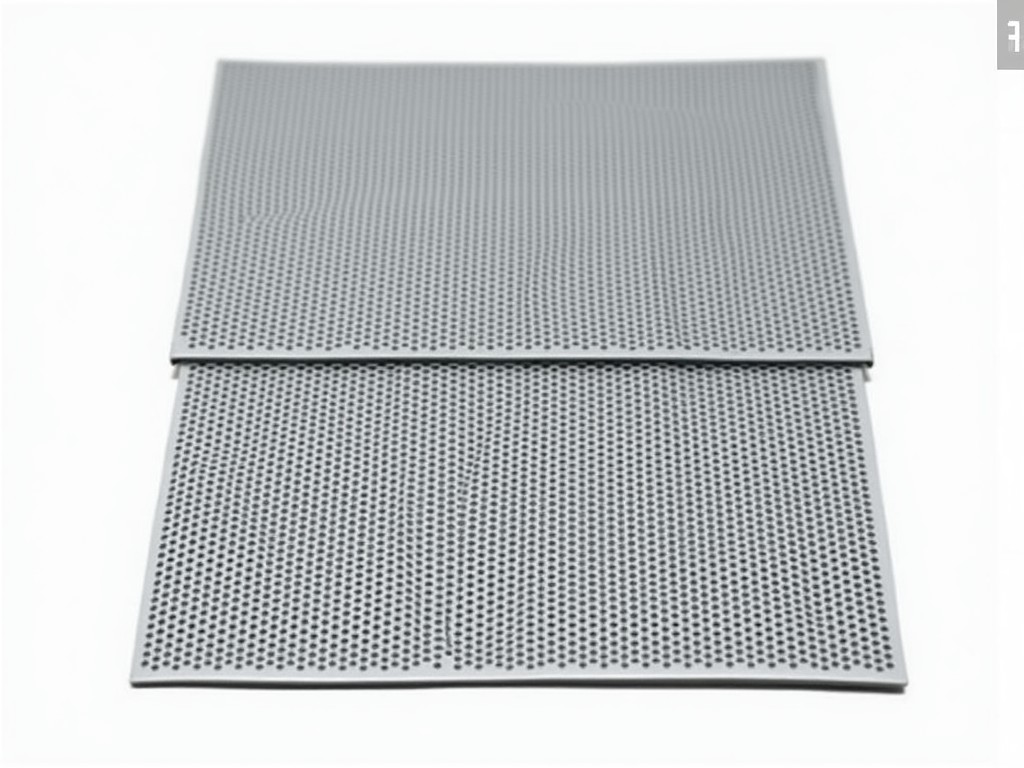
Perforated sheet metal panels are engineered components featuring precisely patterned holes or slots punched into flat metal stock. These openings serve functional purposes beyond aesthetics,
China Perforated Sheet Metal Panels
Perforated sheet metal panels are engineered components featuring precisely patterned holes or slots punched into flat metal stock. These openings serve functional purposes beyond aesthetics, including fluid or air passage, light diffusion, sound attenuation, and structural weight reduction. The perforation pattern—defined by hole shape, size, spacing (pitch), and arrangement—directly determines the panel’s open area percentage, structural integrity, and performance in specific applications.
Manufacturing perforated panels requires controlled stamping, punching, or laser cutting processes applied to coils or sheets of metal. The choice of method depends on material thickness, hole geometry, production volume, and required tolerances. Stamping is efficient for high-volume runs with standard patterns, while laser cutting offers flexibility for complex or custom designs without tooling costs. Regardless of method, maintaining dimensional accuracy and burr-free edges is critical to ensure performance and safety in downstream use.
Material Selection and Properties
The base material significantly influences the panel’s corrosion resistance, strength, weight, and suitability for environmental conditions. Common options include cold-rolled steel for cost-effective indoor applications, galvanized steel for moderate outdoor exposure, stainless steel (grades 304/316) for corrosive or hygienic environments, and aluminum for lightweight, non-magnetic needs. Material thickness typically ranges from 0.5 mm to 3.0 mm, selected based on load requirements and deflection limits.
Mechanical properties such as yield strength and tensile strength must be evaluated post-perforation, as the hole pattern reduces the effective load-bearing cross-section. Engineers calculate the ligament efficiency—the ratio of remaining material to total area—to ensure the panel meets structural demands. Surface treatments like powder coating, anodizing (for aluminum), or passivation (for stainless steel) can further enhance durability and appearance without compromising perforation integrity.
Perforation Patterns and Open Area Design
Hole shape options include round, square, slot, hexagonal, and custom geometries, each affecting flow dynamics, filtration efficiency, and visual appearance. Round holes are most common due to predictable flow characteristics and ease of manufacturing. Slot perforations offer higher open area in a single direction, beneficial for airflow or screening applications. The pitch—the distance between hole centers—determines structural density; tighter pitches increase strength but reduce open area.
Open area percentage, calculated as the ratio of hole area to total panel area, is a key performance metric. Typical values range from 15% to 60%, depending on hole size and spacing. For example, a 5 mm round hole on a 10 mm pitch yields approximately 19.6% open area, while the same hole size on a 6 mm pitch increases open area to about 54.5%. Designers select patterns based on required flow rates, pressure drop limits, acoustic absorption, or visual transparency, often using computational models to validate performance.
Industrial Applications and Functional Benefits
In HVAC systems, perforated panels serve as diffuser faces or return air grilles, where the pattern ensures uniform air distribution while minimizing noise and pressure loss. The open area and hole geometry are tuned to match duct velocity and desired throw patterns. In industrial filtration, panels act as protective screens or support media for filter cartridges, requiring corrosion-resistant materials and precise hole dimensions to prevent bypass or clogging.
Architectural applications utilize perforated panels for sun shading, facade cladding, or interior partitions. Here, the pattern balances daylight penetration, solar heat gain reduction, and visual privacy. Acoustic panels use perforated backs with absorbent backing materials to dampen sound through Helmholtz resonance, where hole size and cavity depth are tuned to target frequencies. Machine guards and safety barriers rely on the panel’s strength and visibility to protect operators while allowing monitoring and ventilation.
Customization and Manufacturing Considerations
Custom perforation designs are developed based on CAD drawings or physical samples, with tooling or laser paths generated to match specified hole layout, border margins, and panel dimensions. Edge treatments—such as flanging, hemming, or framing—are added to improve rigidity, ease installation, or prevent sharp edges. Panels can be supplied as flat sheets, rolled coils, or pre-formed components depending on installation method and handling requirements.
Tolerances are critical in applications requiring alignment or sealing. Hole position tolerance typically ranges from ±0.1 mm to ±0.5 mm, depending on the process and material thickness. Overall panel flatness is controlled to prevent buckling or gaps during installation, with deviations usually kept under 1–3 mm per meter. Quality checks include visual inspection for burrs or deformation, open area verification via flow testing, and dimensional validation using calipers or optical comparators.
| Parameter | Typical Range or Specification |
|---|---|
| Material Thickness | 0.5 mm – 3.0 mm |
| Hole Diameter (Round) | 1.0 mm – 20.0 mm |
| Pitch (Center-to-Center) | 2.0 mm – 50.0 mm |
| Open Area Percentage | 15% – 60% |
| Standard Width (Coil) | 1000 mm – 1500 mm |
| Maximum Length | Customizable up to 6000 mm |
Quality Assurance and Testing
Manufacturers implement process controls to monitor hole consistency, burr height, and material deformation during perforation. Statistical process control (SPC) tracks key variables like punch force, clearance, and feed rate to maintain repeatability. Final inspection includes sampling plans per ISO 2859-1, with checks for hole blockage, edge quality, and coating adhesion where applicable. Test reports documenting material grade, thickness, and perforation parameters are available upon request.
For applications requiring certified performance—such as acoustic ratings or fire resistance—panels may undergo third-party testing to validate compliance with standards like ASTM C423 (sound absorption) or ASTM E84 (surface burning characteristics). Traceability is maintained through batch numbers or laser marking, enabling correlation of performance data to specific production runs. Packaging methods include interleaving with protective film, edge guards, and palletizing to prevent scratches or bending during transit.
More Products

Send Inquiry
If you are interested in our products, leave your information here and we will be in touch shortly.