China Stainless Steel Ultrasonic Basket
Stainless steel ultrasonic baskets are precision-engineered components designed to hold parts during ultrasonic cleaning processes in industrial manufacturing, laboratory, and maintenance
China Stainless Steel Ultrasonic Basket
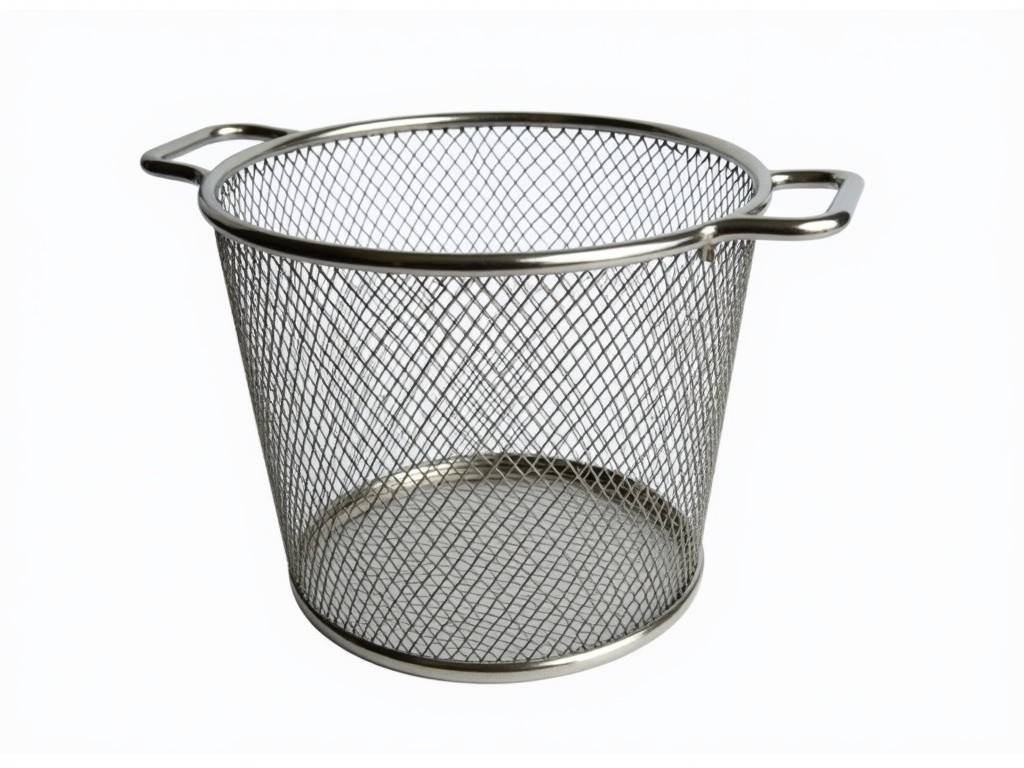
Stainless steel ultrasonic baskets are precision-engineered components designed to hold parts during ultrasonic cleaning processes in industrial manufacturing, laboratory, and maintenance environments. Their primary function is to position workpieces optimally within the cleaning tank while allowing unrestricted propagation of ultrasonic waves through the fluid medium. Material selection, mesh geometry, and structural integrity directly influence cleaning efficiency, part protection, and equipment longevity.
These baskets are fabricated from austenitic stainless steel grades selected for corrosion resistance, mechanical strength, and compatibility with common cleaning chemistries including alkaline solutions, solvents, and mild acids. The ultrasonic transparency of the basket structure is critical—excessive material density or poor mesh design can attenuate sound waves, reducing cavitation intensity and compromising cleaning performance.
Material Composition and Grade Selection
The most commonly used stainless steel grades for ultrasonic baskets are AISI 304 and AISI 316L, chosen based on the chemical aggressiveness of the cleaning process. Grade 304 provides adequate resistance to neutral and mildly alkaline solutions at temperatures up to 80°C, making it suitable for general-purpose degreasing and particulate removal. Grade 316L, with its molybdenum addition, offers superior resistance to chlorides and oxidizing agents, extending service life in environments involving rinse acids, passive films, or high-salinity contaminants.
Wire diameter typically ranges from 0.8 mm to 2.0 mm, balancing structural rigidity with ultrasonic permeability. Thicker wires increase basket durability but may shadow adjacent parts if mesh opening ratios fall below 60%. Optimal designs maintain open area ratios between 65% and 80% to ensure uniform energy distribution. Surface finish is generally kept to a 2B or BA mill finish to minimize crevices where contaminants could accumulate, supporting easier post-cleaning inspection.
For high-temperature applications exceeding 100°C or prolonged exposure to oxidative chemistries, low-carbon variants like 316L are preferred to prevent sensitization and intergranular corrosion. Material test reports (MTRs) are available upon request to validate alloy composition and heat treatment status for regulated industries.
Design Characteristics and Structural Features
Basket geometry is determined by part dimensions, weight, and orientation requirements during cleaning. Common configurations include rectangular, cylindrical, and custom-profiled forms with reinforced rims and stress-relieved corners to prevent deformation under load. Handle assemblies are integrated using TIG welding or mechanical fastening to ensure lift integrity, with load ratings typically designed for 2–5 kg depending on wire gauge and frame spacing.
Mesh patterns are either woven or welded. Woven meshes offer flexibility and easier repair but may exhibit slight movement under vibration. Welded meshes provide rigid, fixed aperture geometry, preferred in automated lines where positional consistency affects rinse or drying stages. Aperture sizes range from 0.5 mm to 3.0 mm, selected based on the smallest feature requiring containment—finer meshes prevent loss of small components but increase flow resistance, necessitating higher tank agitation or frequency tuning.
Edge treatments include rolled rims or welded flanges to eliminate sharp burrs that could damage parts or operator hands. Internal baffles or dividers may be added to segregate dissimilar materials or prevent part nesting, which can shadow ultrasonic energy. All welding is performed using low-heat-input techniques to preserve corrosion resistance in the heat-affected zone.
Applications Across Industrial Sectors
In precision machining, these baskets hold turned, milled, or ground components during post-process cleaning to remove cutting fluids, metal fines, and polishing compounds. The open mesh design allows ultrasonic energy to reach blind holes, internal threads, and complex geometries where spray washing fails. Aerospace suppliers use them to clean turbine blades, fuel nozzles, and hydraulic manifolds without risking surface pitting from entrapment.
Medical device manufacturers rely on stainless steel ultrasonic baskets for cleaning implants, surgical instruments, and catheter components prior to sterilization. The non-shedding, passivatable surface meets ISO 13485 cleanliness requirements, while the ability to withstand repeated autoclave cycles ensures compatibility with reprocessing workflows. Electronics assemblers use them to remove flux residues from PCBs and connectors, where fine mesh prevents solder ball loss during defluxing.
Automotive suppliers deploy baskets for cleaning fuel injectors, transmission valves, and brake caliper pistons. The chemical resistance of 316L grade withstands prolonged exposure to hydrocarbon solvents and aqueous alkaline cleaners used in degreasing lines. In laboratory settings, baskets support sample preparation in analytical workflows, holding glassware or sensor arrays during ultrasonic baths without introducing metallic contamination.
| Industry | Typical Cleaning Challenge | Basket Design Response |
|---|---|---|
| Precision Machining | Embedded swarf in internal threads | Fine mesh (0.8–1.2 mm), deep cylindrical form |
| Medical Devices | Biofilm removal from lumened instruments | Electropolished 316L, welded mesh, no crevices |
| Electronics | Flux residue under QFNs and BGAs | Ultra-fine mesh (0.5 mm), low-profile tray |
| Automotive | Carbon deposits in fuel injector orifices | Solvent-resistant 316L, agitation-compatible frame |
Customization Parameters and Engineering Considerations
Customization begins with a dimensional envelope defined by the part’s length, width, height, and weight, along with required orientation (horizontal, vertical, suspended). Wire diameter and mesh aperture are selected based on part fragility, minimum feature size, and cleaning chemistry compatibility. Frame reinforcement is added when the basket must support loads exceeding 3 kg or withstand frequent handling in automated transfer systems.
Surface treatments such as electropolishing or passivation are available to enhance corrosion resistance and reduce particle adhesion. Electropolishing removes a controlled layer of surface metal, smoothing micro-roughness and improving cleanability—particularly valuable in semiconductor or pharmaceutical applications. Passivation treatments (e.g., citric or nitric acid) restore the chromium oxide layer after welding, ensuring uniform corrosion resistance across fabricated joints.
For applications involving elevated temperatures (>80°C) or ultrasonic frequencies above 40 kHz, thermal expansion and resonant frequency matching are evaluated to prevent fatigue-induced cracking. Stiffening ribs or dual-frame designs may be incorporated to maintain geometric stability under cyclic stress. All designs are validated for ultrasonic transparency using hydrophone mapping or foil testing when required by quality protocols.
Quality Assurance and Inspection Protocol
Dimensional verification is performed using calibrated calipers and CMMs to confirm critical features such as overall dimensions, mesh squareness, and handle alignment within ±0.5 mm tolerance. Wire diameter and mesh count are verified against specification using optical comparators or calibrated mesh screens. Visual inspection under 10x magnification checks for weld integrity, surface defects, and loose joints—particularly at stress points like corners and handle attachments.
Material confirmation is conducted via PMI (Positive Material Identification) using XRF analyzers to validate alloy grade before shipment. For regulated industries, full traceability is maintained from mill test report to finished product. Ultrasonic transmission testing is available upon request, where a standardized test coupon is cleaned in the basket to measure cavitation intensity relative to a bare tank baseline—ensuring the design does not attenuate effective energy by more than 15%.
Load testing is performed to confirm safe working capacity, typically at 1.5x the rated load for 10 minutes without permanent deformation. All baskets undergo a final rinse and drying process before packaging to prevent contamination during storage. Non-conforming items are segregated and either reworked or scrapped per internal quality procedures.
Packaging and Logistics
Baskets are packaged individually in polyethylene bags to prevent surface scratching during transit, then placed in corrugated cardboard cartons with internal dividers or foam inserts to immobilize multiple units. Corner protectors and edge guards are added for baskets with protruding handles or delicate mesh ends. Each carton is labeled with part number, quantity, material grade, and heat treatment status for traceability.
For export shipments, cartons are stacked on pallets and secured with stretch wrap or strapping to prevent shifting. Moisture-barrier liners are included when shipping to humid climates to mitigate condensation-related staining during long transit times. Palletized loads comply with ISPM 15 standards for international shipping, and fumigation certificates are available upon request.
Typical lead times range from 2–4 weeks for standard configurations and 4–6 weeks for fully customized designs involving special materials or complex geometries. Sample units can be produced within 5–7 business days for approval prior to bulk production. Shipping terms are flexible, with options for EXW, FOB, or CIF based on buyer preference and logistics arrangements.
For technical inquiries, customization requests, or to discuss specific application requirements, please contact our engineering team. We provide detailed dimensional drawings, material certifications, and ultrasonic transparency data upon request to support your procurement and qualification processes.
More Products

Send Inquiry
If you are interested in our products, leave your information here and we will be in touch shortly.