China Window Security Mesh Grilles
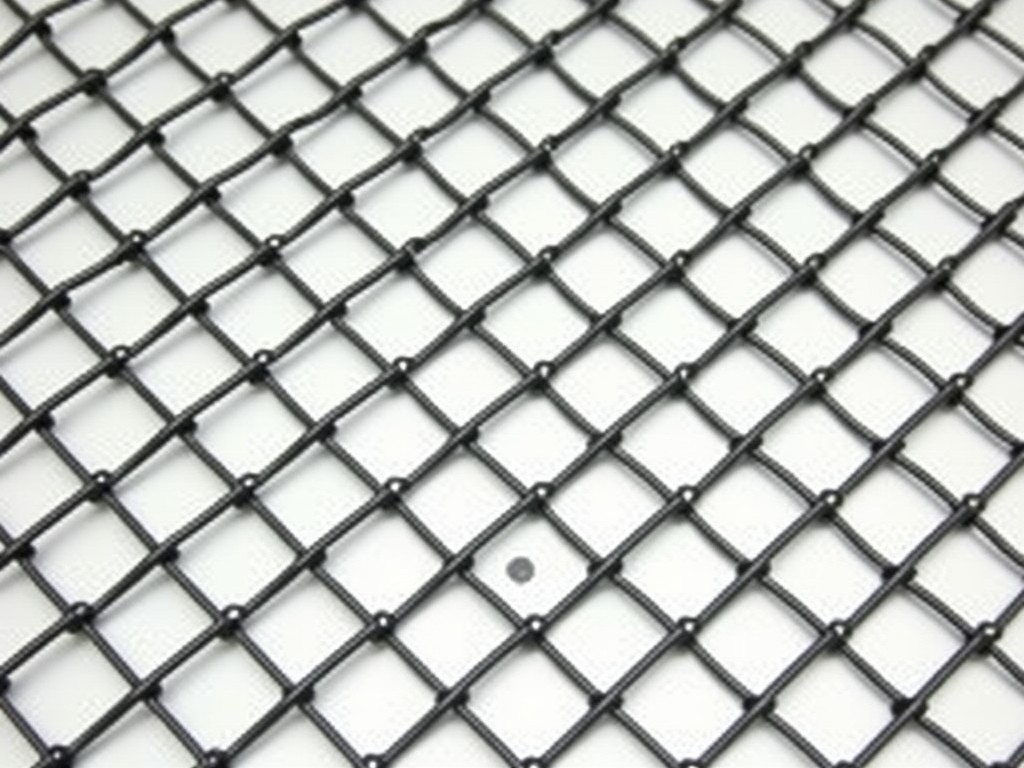
Window security mesh grilles are engineered barriers designed to prevent unauthorized entry while maintaining ventilation, visibility, and daylight transmission. Unlike solid bars or shutters, these
China Window Security Mesh Grilles
Window security mesh grilles are engineered barriers designed to prevent unauthorized entry while maintaining ventilation, visibility, and daylight transmission. Unlike solid bars or shutters, these systems use interwoven or welded wire patterns to create a physical deterrent that resists cutting, prying, and impact forces. Their effectiveness depends on wire diameter, aperture size, material composition, and anchoring method—factors that must align with the threat level and architectural constraints of the installation site.
Material Selection and Mechanical Properties
The most common materials for security mesh grilles are stainless steel (grades 304 and 316), galvanized steel, and aluminum alloys. Stainless steel 304 offers tensile strength between 500–700 MPa and excellent corrosion resistance in urban environments, while 316 grade adds molybdenum for enhanced resistance to chloride-induced pitting in coastal or industrial zones. Galvanized steel provides a cost-effective option with zinc coating thickness typically ranging from 20–50 µm, suitable for inland applications with moderate humidity. Aluminum alloys, such as 6063-T5, deliver tensile strength of approximately 200–250 MPa with natural oxide layer protection, ideal where weight reduction is critical.
Wire diameter directly influences shear and tensile resistance. Standard configurations use wires from 1.2 mm to 3.0 mm in diameter. A 2.0 mm stainless steel wire, for example, can withstand shear forces exceeding 1.5 kN per wire before permanent deformation, depending on temper and alloy. Aperture size—typically ranging from 6 mm × 6 mm to 25 mm × 25 mm—must balance security with airflow and visibility. Smaller apertures (e.g., 8 mm) significantly increase resistance to tool insertion but reduce open area by up to 40% compared to larger openings, affecting HVAC efficiency and natural lighting.
Structural Design and Installation Methods
Security mesh grilles are manufactured as either welded or woven panels. Welded mesh features perpendicular wires fused at every intersection, providing rigid structural integrity and resistance to distortion under load. Woven mesh, produced by interlacing wires in a over-under pattern, offers greater flexibility and energy absorption during impact events but may exhibit localized deformation if not properly tensioned. For high-security applications, welded construction is preferred due to its predictable load paths and ease of precise dimensional control.
Installation typically involves mounting the grille within a metal or uPVC frame that is anchored into the window reveal or surrounding masonry. Frame materials match or exceed the grille’s corrosion resistance—commonly extruded aluminum with powder coating or stainless steel channels. Anchoring methods include mechanical fasteners (e.g., stainless steel screws or bolts into concrete or brick), chemical adhesives for fragile substrates, or retrofit clips for existing window systems. Proper pre-drilling and use of isolation washers prevent galvanic corrosion when dissimilar metals are in contact.
Performance Testing and Validation Criteria
Industrial buyers should verify performance claims through standardized testing rather than relying on marketing assertions. Relevant benchmarks include EN 1627:2011 for burglary resistance (classified from RC1 to RC6), where RC2 and RC3 levels are typical for window grilles resisting manual tools like screwdrivers and crowbars for 3–5 minutes. Impact resistance is assessed per LPS 1175: Issue 8, using defined impact energies (e.g., 10–50 J) delivered via soft and hard body tools to simulate forced entry attempts. Corrosion endurance is evaluated via salt spray testing (ASTM B117), with 500+ hours for 304 stainless and 1000+ hours for 316 grade indicating suitability for harsh environments.
Mesh deflection under load is another critical metric. A grille rated for RC2 should exhibit less than 5 mm deformation at the center when subjected to a 1.5 kN point load over a 50 mm diameter area—indicating it will not allow sufficient gap for hand or tool insertion. Airflow reduction, measured as percentage loss relative to an open window, typically ranges from 15% to 35% depending on aperture and wire density; this data should be provided for HVAC load calculations. Visibility transmission, often assessed via luminance contrast or open area ratio, remains above 70% for apertures ≤12 mm, preserving occupant comfort and situational awareness.
Customization and Project-Specific Adaptation
Security mesh grilles are rarely off-the-shelf products; they are tailored to the opening dimensions, architectural style, and threat assessment of each project. Customization begins with precise measurement of the window reveal—accounting for tolerances, reveals, and any obstructions like handles or hinges. The grille panel is then fabricated to match these dimensions, with tolerances typically held to ±2 mm to ensure snug fit without binding. Frame profiles can be customized in depth (e.g., 25 mm, 40 mm, 50 mm) to accommodate varying wall thicknesses or to integrate with existing window hardware.
Surface finishes are selected based on environmental exposure and aesthetic requirements. Powder coating offers UV-stable color options in RAL shades, with thickness of 60–80 µm for exterior durability. Anodizing is available for aluminum frames, providing hardness of 250–350 HV and corrosion resistance in marine atmospheres. For stainless steel, electropolishing or passivation treatments enhance surface purity and reduce contamination risks in food processing or pharmaceutical facilities. Mesh patterns can also be adapted—such as diamond weave for increased tensile strength in diagonal directions or rectangular apertures optimized for horizontal sliding window operation.
Applications Across Industrial and Commercial Sectors
In commercial buildings, window security mesh grilles are commonly installed in ground-floor retail units, pharmacies, and banks where visual merchandising must remain unobstructed yet intrusion risk is high. The ability to maintain clear sightlines while resisting smash-and-grab attempts makes them preferable to roller shutters in pedestrian zones. In industrial facilities, they protect control rooms, warehouses, and ground-level offices in manufacturing plants, preventing unauthorized access without compromising natural light for worker well-being or obstructing CCTV views.
Educational institutions use these grilles on dormitory and classroom windows to deter break-ins while meeting fire safety codes that require operable windows for ventilation and escape. Unlike fixed bars, security mesh allows windows to remain functional for emergency egress when designed with releasable internal mechanisms. Healthcare facilities apply them in ground-floor patient wards and pharmacies, where ligature resistance is not required but protection against opportunistic theft of equipment or medication is essential. Transportation hubs such as train stations and bus terminals deploy them on ticket booths and service windows to safeguard staff and cash handling areas.
| Parameter | Typical Range | Relevant Standard |
|---|---|---|
| Wire Diameter | 1.2 mm – 3.0 mm | ASTM A510 / EN 10218-2 |
| Aperture Size | 6 mm × 6 mm – 25 mm × 25 mm | EN 1627:2011 (Annex B) |
| Tensile Strength (Wire) | 200 MPa – 700 MPa | ISO 6892-1 |
| Salt Spray Resistance | 500+ hrs (304), 1000+ hrs (316) | ASTM B117 |
| Airflow Reduction | 15% – 35% | ASHRAE Fundamentals |
Quality Control and Manufacturing Considerations
Consistent performance begins with raw material verification. Incoming wire stock is certified for chemical composition (e.g., Cr/Ni content for stainless steel) and mechanical properties via mill test reports. During production, weld integrity in welded mesh is monitored through non-destructive testing—typically ultrasonic or magnetic particle inspection—to detect lack of fusion or cracks. Tension is maintained across the panel during welding or weaving to prevent sagging or distortion, with final flatness verified against a reference plane using feeler gauges or laser scanning.
Dimensional accuracy is critical for installation success. Each panel is inspected for squareness (diagonal difference <3 mm), edge straightness, and wire alignment. Frames are checked for twist and bow using precision straight sections. Surface coating thickness is measured via magnetic or eddy current probes to ensure compliance with specified microns. Final assembly includes a dry-fit check to confirm interference-free insertion into the opening, with clearances documented for thermal expansion. Packaging uses corner protectors and moisture-barrier wraps to prevent damage during transit, especially for export shipments to humid climates.
Lead Times, Sampling, and Procurement Guidance
Standard production lead times for customized security mesh grilles range from 3 to 6 weeks after drawing approval and material confirmation, depending on complexity and order volume. Expedited options may be available for stock profiles or simple geometries. Samples are typically provided upon request—either as full-scale window sections or representative 300 mm × 300 mm coupons—allowing buyers to assess mesh texture, finish quality, and frame fit before committing to production. Sample costs are often credited toward the final order.
To obtain an accurate quotation, buyers should provide: exact window opening dimensions (width × height), reveal depth, wall construction type (e.g., brick, concrete, stud wall), required security level (e.g., RC2 per EN 1627), preferred material and finish, and any operational constraints such as need for inward-opening window compatibility or integration with existing hardware. Environmental exposure—coastal, industrial, or inland—directly influences material selection and coating specifications. Clear communication of these factors reduces revision cycles and ensures the delivered product meets both functional and compliance expectations.
For technical consultation, customization options, or to request a quotation based on your project specifications, please contact our engineering team.
More Products

Send Inquiry
If you are interested in our products, leave your information here and we will be in touch shortly.