Deep Strainer Basket Stainless Steel Kitchen Sink
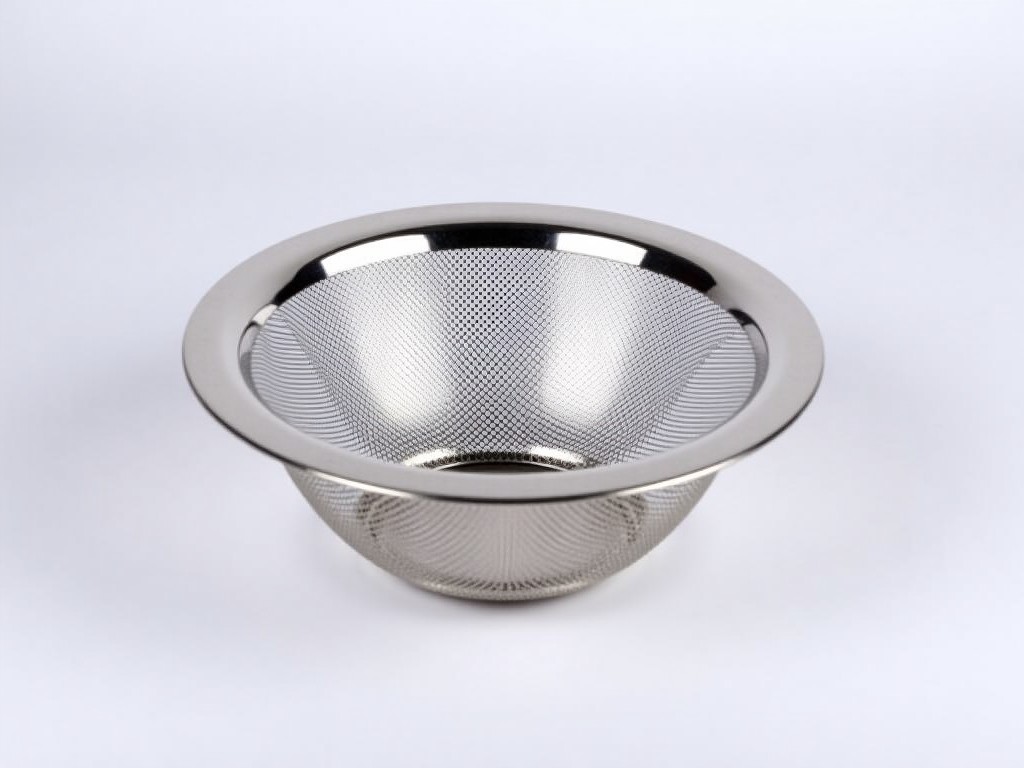
A deep strainer basket for stainless steel kitchen sinks is a critical component designed to prevent debris from entering drain lines while maintaining high flow rates in commercial and industrial
Deep Strainer Basket Stainless Steel Kitchen Sink
A deep strainer basket for stainless steel kitchen sinks is a critical component designed to prevent debris from entering drain lines while maintaining high flow rates in commercial and industrial kitchen environments. Unlike standard baskets, its increased depth accommodates higher volumes of solids before requiring maintenance, reducing clog frequency in high-throughput settings such as food processing plants, institutional cafeterias, and large-scale hospitality operations.
Material Composition and Corrosion Resistance
The strainer basket is constructed from austenitic stainless steel, typically AISI 304 or 316 grade, selected for its resistance to chlorides, organic acids, and thermal cycling common in kitchen waste streams. Grade 316 contains molybdenum, enhancing pitting resistance in environments with frequent exposure to salt, detergents, and food residues. The material is non-magnetic in its annealed state and maintains structural integrity at temperatures up to 870°C, though operational limits are defined by the sink system’s thermal ratings.
Surface finish is typically a No. 4 brushed finish (Ra 0.4–0.6 μm), which minimizes crevice corrosion and facilitates cleaning. Passivation treatment is applied post-manufacturing to remove free iron and stabilize the chromium oxide layer, a critical step for longevity in wet, chemically active environments. Unlike coated or plated alternatives, stainless steel baskets do not delaminate or degrade under mechanical scrubbing or high-pressure washdowns.
Dimensional Design and Hydraulic Performance
The basket’s depth is engineered to exceed standard models by 40–60%, typically ranging from 75mm to 110mm, depending on sink bowl dimensions and expected solids load. This increased depth extends service intervals by allowing greater sediment accumulation before flow restriction occurs. The open area ratio—defined as the percentage of open surface relative to total basket area—is optimized between 45% and 55% to balance debris capture efficiency with minimal pressure drop.
Perforation patterns are staggered or radial, with hole diameters ranging from 3mm to 6mm. Smaller holes (3–4mm) capture fine particulates like coffee grounds or tea leaves but increase clog risk in high-solids applications; larger holes (5–6mm) are preferred for vegetable trimmings or meat processing waste. Flow rates are validated per ASME A112.18.1 standards, with typical baskets maintaining >90% of nominal drain capacity under partial load conditions.
Manufacturing Considerations and Tolerances
Baskets are formed via deep drawing or stamping from 0.8–1.2mm sheet stock, followed by TIG welding of the rim and handle assemblies. Wall thickness uniformity is critical; variations exceeding ±0.1mm can lead to stress concentrations and premature fatigue at the base weld. Dimensional tolerances are held to ±0.5mm for diameter and ±1.0mm for depth to ensure proper seating within the sink’s strainer flange and prevent bypass flow.
The handle is integrally formed or welded with a minimum 25mm clearance from the sink deck to allow finger access without interference from faucet bodies or accessories. Edge treatment includes deburring and radius finishing (R0.5–1.0mm) to eliminate sharp points that could damage seals or pose safety risks during handling. Each unit undergoes dimensional inspection using calibrated fixtures before packaging.
Applications in Industrial Kitchen Systems
Deep strainer baskets are specified in installations where waste streams contain high volumes of fibrous or particulate matter, such as vegetable prep lines, seafood processing stations, or poultry evisceration lines. In these environments, standard baskets may require cleaning every 15–30 minutes during peak operation; deep variants extend this interval to 60–90 minutes, reducing labor downtime and improving workflow continuity. The increased depth also prevents bypass during surge flows, a common issue in multi-compartment sinks where simultaneous discharge from multiple bowls can temporarily exceed drain capacity.
In facilities subject to hygiene audits (e.g., HACCP, ISO 22000), the basket’s smooth, crevice-free design supports effective cleaning and sanitization. Unlike mesh or wire alternatives, the solid perforated construction eliminates entrapment points for biofilm formation. Compatibility with standard 3.5-inch (89mm) or 4.5-inch (114mm) sink outlets ensures retrofit capability across existing installations without modifying drain plumbing.
Comparison Table: Standard vs. Deep Strainer Basket
| Parameter | Standard Basket | Deep Basket |
|---|---|---|
| Typical Depth | 40–60mm | 75–110mm |
| Solids Holding Capacity | Baseline (1x) | 1.8–2.2x |
| Cleaning Interval (High Solids) | 15–30 min | 60–90 min |
| Pressure Drop at 50% Load | 15–25% increase | 8–15% increase |
| Material Compatibility | AISI 304/316 | AISI 304/316 |
| Retrofit Compatibility | Standard 3.5"/4.5" outlets | Standard 3.5"/4.5" outlets |
Quality Control and Validation
Each basket undergoes hydrostatic testing to verify leak-free integration with the sink drain assembly, typically at 1.5x rated working pressure for 60 seconds. Surface contour is verified using coordinate measuring machines (CMM) or laser scanners to ensure radial symmetry and proper seating depth. Material certification (EN 10204 3.1) is available upon request, documenting chemical composition and mechanical properties of the stainless steel batch used.
Functional validation includes flow rate testing with standardized debris simulants (e.g., potato starch, cellulose fibers) to measure time-to-clog under controlled conditions. Results are compared against baseline models to quantify performance improvement. Visual inspection under 10x magnification confirms absence of burrs, cracks, or incomplete welds. These procedures are documented per internal QC protocols aligned with ISO 9001:2015 requirements.
More Products

Send Inquiry
If you are interested in our products, leave your information here and we will be in touch shortly.