2026-10-05
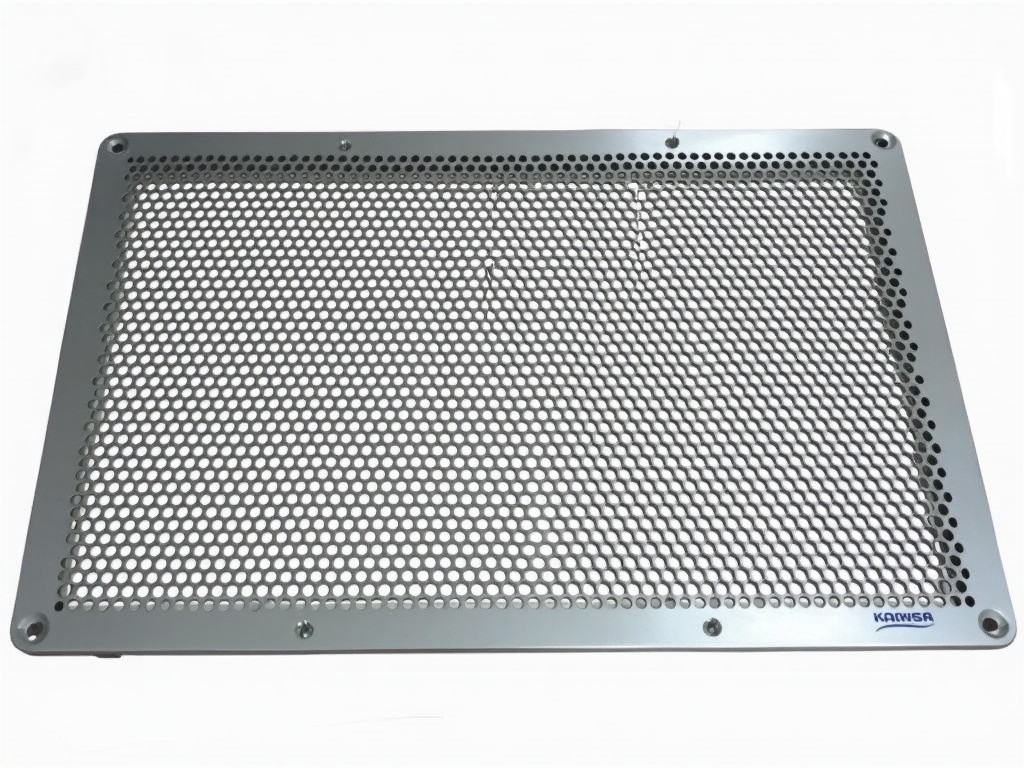
Factory Direct Perforated Sheet Metal Speaker Grill
Perforated speaker grills serve as protective barriers for audio transducers while allowing acoustic transparency. The design balances mechanical strength, airflow resistance, and sound transmission
Factory Direct Perforated Sheet Metal Speaker Grill
Perforated speaker grills serve as protective barriers for audio transducers while allowing acoustic transparency. The design balances mechanical strength, airflow resistance, and sound transmission loss. Industrial buyers evaluate these components based on open area percentage, hole geometry, material thickness, and edge finishing—parameters that directly affect both durability and audio performance. This page explains the technical considerations behind factory-direct perforated sheet metal speaker grills to support informed procurement decisions.
Acoustic and Mechanical Design Principles
The acoustic performance of a speaker grill is primarily governed by its open area ratio—the percentage of open space relative to total surface area. Typical open area for speaker grills ranges from 30% to 60%, depending on hole size, pitch, and pattern. Lower open area increases sound attenuation, particularly in mid-to-high frequencies, while higher open area reduces structural rigidity. Hole shape also influences diffraction and turbulence; round holes offer predictable airflow, whereas slotted or hexagonal patterns may reduce visible obstruction but complicate tooling.
Material thickness affects both vibration resistance and manufacturing feasibility. Thinner gauges (e.g., 0.5 mm to 0.8 mm) are easier to perforate but may require additional stiffening ribs or framing to prevent resonance. Thicker materials (1.0 mm to 1.5 mm) improve impact resistance but increase tooling wear and may necessitate deburring to avoid sharp edges. The choice depends on mounting method, expected mechanical loads, and environmental exposure.
Material Selection and Corrosion Resistance
Common materials include cold-rolled steel, galvanized steel, stainless steel (grades 304 and 316), and aluminum alloys. Cold-rolled steel offers high strength and low cost but requires surface treatment for corrosion protection. Galvanized steel provides sacrificial zinc coating suitable for indoor or mildly humid environments. Stainless steel resists oxidation in harsh conditions, with grade 316 preferred for coastal or chemical exposure. Aluminum provides lightweight options with natural oxide layer protection, though it is softer and more prone to denting.
Surface treatments such as powder coating, anodizing (for aluminum), or passivation (for stainless steel) enhance durability and appearance. Powder coating allows color matching to equipment housings while adding a uniform insulating layer. Anodizing increases aluminum’s surface hardness and wear resistance. Passivation removes free iron from stainless steel surfaces to improve corrosion resistance. These treatments are applied after perforation to ensure complete coverage of cut edges.
Perforation Patterns and Tooling Considerations
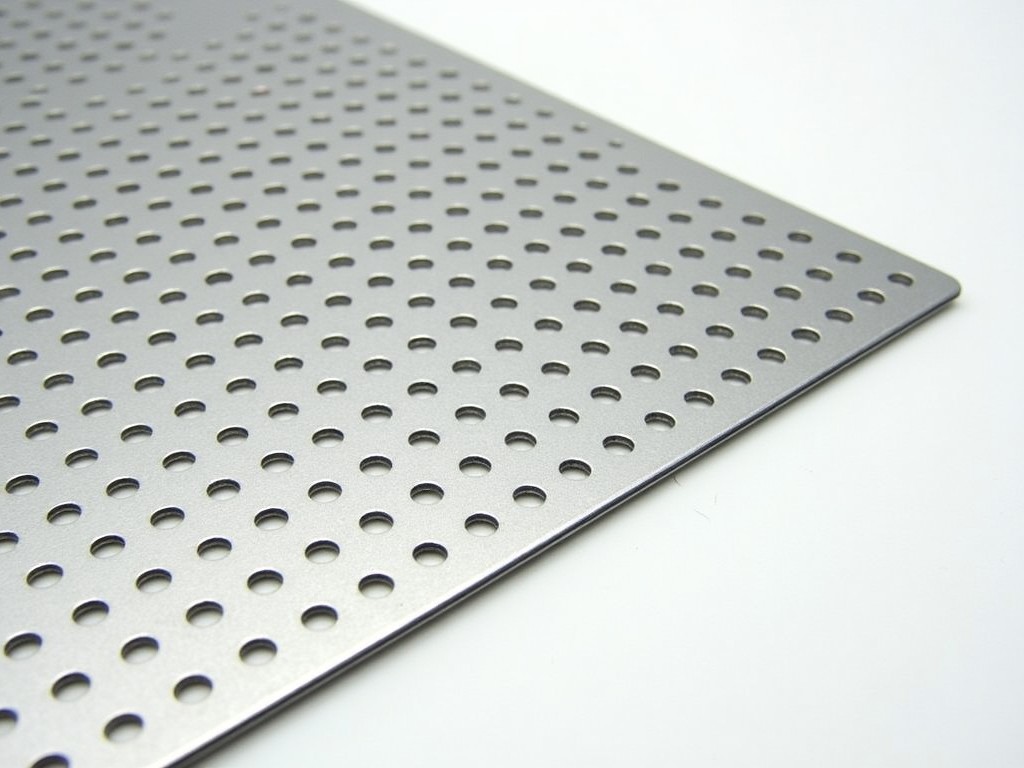
Standard perforation patterns include staggered and straight rows of round holes, with center-to-center pitch defining hole density. Common pitches range from 2 mm to 6 mm for hole diameters between 0.8 mm and 3.0 mm. Staggered patterns maximize open area while maintaining material integrity; straight rows simplify alignment during assembly. Custom patterns—such as logos, logos, or variable density zones—are possible but require specialized CNC turret presses or laser systems, increasing lead time and cost.
Tooling wear is a significant factor in long-term production consistency. Round punches experience less edge loading than complex shapes, resulting in longer tool life. Burr formation depends on punch sharpness, clearance, and material ductility. Secondary operations like vibratory deburring or electrochemical smoothing may be required to meet safety standards for exposed edges. Manufacturers typically monitor tool wear through hole diameter variation and edge roughness measurements.
Customization and Integration Features
Factory-direct production allows integration of application-specific features during the blanking stage. These include mounting holes, tabs, bends, or formed frames that eliminate secondary assembly steps. For example, a grill may be designed with integral snap-fit tabs to secure into a molded plastic housing without fasteners. Edge treatments such as hemmed, curled, or flanged borders improve handling safety and provide sealing surfaces for gaskets.
Acoustic backing materials—such as open-cell foam, woven fabric, or hydrophobic membranes—can be laminated or adhesively bonded to the grill surface. These layers prevent dust ingress while maintaining acoustic transparency. The choice of backing depends on IP rating requirements, environmental conditions, and cleaning protocols. Some designs incorporate recessed pockets to hold backing material without adhesives, improving serviceability.
Quality Control and Inspection Criteria
Dimensional inspection focuses on overall flatness, hole positional accuracy, and edge conformity. Flatness is typically measured using dial indicators or optical comparators, with tolerances ranging from 0.5 mm to 1.5 mm over 300 mm length, depending on material and thickness. Hole location is verified via coordinate measuring machines (CMM) or vision systems, ensuring pattern consistency across panels. Edge burr height is kept below 0.1 mm for safe handling in consumer-facing applications.
Surface finish is assessed for coating uniformity, adhesion, and absence of defects such as pitting or orange peel. Powder coating thickness is measured with magnetic or eddy current gauges, targeting 60–80 microns for standard durability. Salt spray testing (ASTM B117) may be conducted on sample lots to validate corrosion resistance, particularly for outdoor or industrial use. Acoustic transmission loss is occasionally sampled using impedance tubes to confirm performance alignment with design intent.
Applications in Audio and Industrial Equipment
Perforated speaker grills are used in professional audio monitors, stage speakers, and installation cabinets where protection and sound clarity are both critical. In these applications, the grill must withstand frequent handling, transport vibrations, and occasional impact without deforming or rattling. The open area is often tuned to complement the speaker’s dispersion characteristics, ensuring minimal high-frequency loss while preventing cone damage from debris or accidental contact.
In industrial settings—such as public address systems in factories, transportation hubs, or outdoor installations—grills must resist environmental stressors like moisture, UV exposure, and chemical pollutants. Here, material selection (e.g., stainless steel 316 or coated aluminum) and sealing integration become priority factors. Some designs incorporate drainage channels or hydrophobic coatings to prevent water accumulation behind the grill, which could impair sound output or promote corrosion.
Comparison of Common Configurations
| Parameter | Typical Range | Selection Criteria |
|---|---|---|
| Open Area (%) | 30–60 | Balances acoustic transparency and mechanical strength |
| Hole Diameter (mm) | 0.8–3.0 | Smaller holes reduce visibility but increase pressure drop |
| Material Thickness (mm) | 0.5–1.5 | Thinner for weight savings; thicker for impact resistance |
| Common Materials | Cold-rolled, Galvanized, SS 304/316, Aluminum | Based on environment, cost, and weight requirements |
| Surface Treatment | Powder coat, Anodize, Passivate, None | Depends on corrosion exposure and appearance needs |
Factory Direct Advantages
Sourcing perforated speaker grills directly from the manufacturer eliminates intermediary markups and allows tighter control over specifications. Buyers can provide detailed drawings or CAD models for quote generation, ensuring that hole pattern, material, thickness, and finishing match exact requirements. Direct engagement also facilitates design for manufacturability (DFM) feedback—such as adjusting hole pitch to reduce tooling wear or suggesting hemmed edges to eliminate deburring costs.
Lead times are often shorter for standard configurations due to existing tooling and material inventory. Custom orders benefit from direct communication with engineering teams, reducing revision cycles. Volume pricing becomes accessible at lower thresholds since there are no distributor layers. Additionally, traceability is improved—material certifications, perforation logs, and inspection records can be provided upon request, supporting quality audits and regulatory compliance.
For OEMs integrating grills into larger assemblies, factory-direct suppliers can align production schedules with downstream processes. This includes optional pre-assembly of fasteners, application of adhesive backing, or packaging in kits tailored to specific workstations. Such integration reduces handling errors and streamlines just-in-time delivery systems.
To initiate a quotation, provide the following: material preference, thickness, overall dimensions, hole diameter and pattern, required surface treatment, and any secondary features (e.g., mounting holes, bends, backing lamination). Quantities and target delivery dates help determine optimal production routing. Samples can be arranged upon approval of technical specifications to validate fit, finish, and acoustic performance before full-scale production.
Request Technical Quote
RELATED PRODUCTS
More Products

×
Send Inquiry
If you are interested in our products, leave your information here and we will be in touch shortly.