Factory Direct Perforated Stainless Steel Panels
Perforated stainless steel panels combine structural integrity with controlled airflow, light transmission, and acoustic performance through precisely engineered hole patterns. These panels are
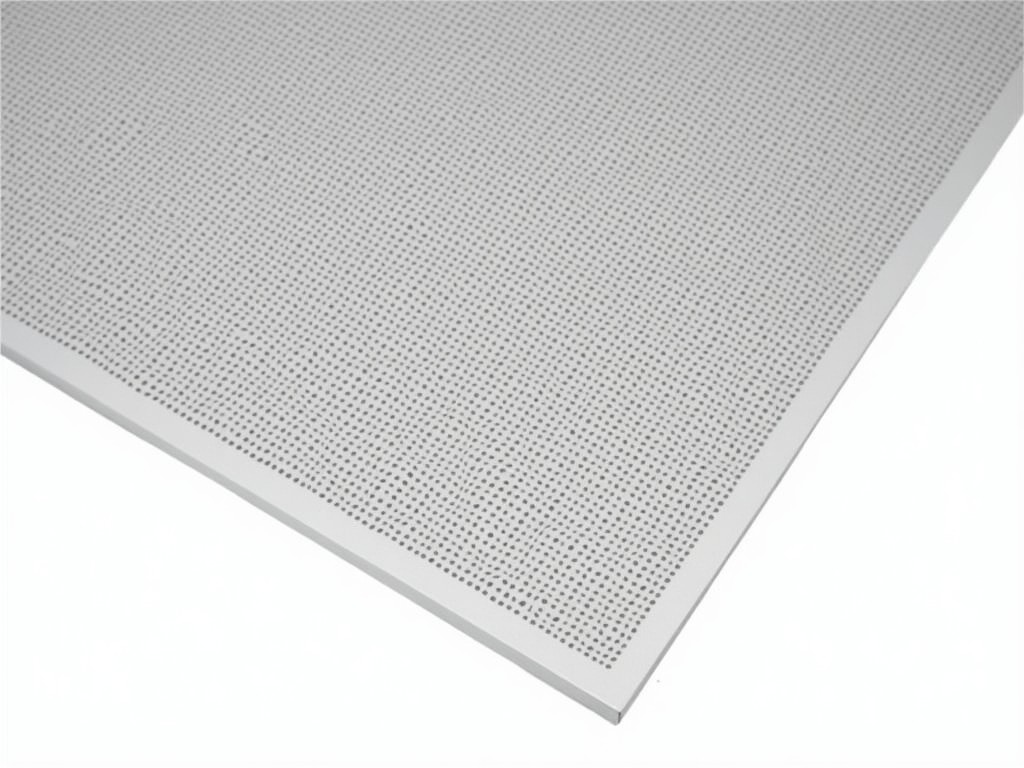
Factory Direct Perforated Stainless Steel Panels
Perforated stainless steel panels combine structural integrity with controlled airflow, light transmission, and acoustic performance through precisely engineered hole patterns. These panels are manufactured directly from raw coil or sheet stock, eliminating intermediary handling and ensuring traceability from mill to finished product. For industrial applications requiring corrosion resistance, repeatable dimensional accuracy, and surface consistency, factory-direct sourcing reduces lead time variability and material handling risks.
Material Selection and Mechanical Properties
Commonly available grades include 304 and 316L stainless steel, selected based on environmental exposure and mechanical demands. Grade 304 offers adequate resistance to atmospheric corrosion and mild chemical exposure, with a typical tensile strength of 515 MPa and yield strength of 205 MPa. Grade 316L incorporates molybdenum for enhanced pitting resistance in chloride-rich environments, maintaining similar tensile strength but improving longevity in marine or chemical processing settings. Both grades retain full ductility after perforation, allowing forming without cracking when bend radii exceed 2t (where t is material thickness).
Thickness options typically range from 0.8 mm to 3.0 mm, with thinner gauges preferred for decorative or filtration applications and thicker sections used in load-bearing guards or machine enclosures. Hole diameter, pitch, and open area percentage are interdependent variables; for example, a 3 mm diameter hole on a 6 mm staggered pitch yields approximately 23% open area, while a 5 mm hole on a 10 mm pitch increases open area to roughly 39%. These parameters directly influence pressure drop, sound absorption coefficients, and light diffusion characteristics.
Perforation Patterns and Functional Implications
Pattern geometry affects both performance and manufacturability. Staggered (60°) hole arrangements provide higher structural integrity compared to straight rows at the same pitch, due to improved load distribution across the ligament between holes. Round holes remain the most common choice for general-purpose applications due to low tooling cost and predictable flow dynamics. Slotted or square perforations are selected when directional airflow or specific particle retention is required, though they increase stress concentration at corners and may necessitate thicker material or reduced open area to maintain equivalent strength.
Open area percentage directly correlates with pressure drop in ventilation systems; doubling open area approximately halves pressure drop at constant velocity, assuming turbulent flow conditions. Acoustic performance follows mass-law principles; perforated panels backed by absorbent material act as resonant absorbers, with peak absorption frequency determined by hole diameter, cavity depth, and panel thickness. For industrial noise control, combinations of 3–5 mm holes with 50–100 mm air cavities typically target mid-frequency ranges (500–2000 Hz).
Surface Finishes and Edge Treatments
Mill finish (2B) is standard for structural or concealed applications where appearance is secondary. Brushed (#4) finish introduces unidirectional grit lines that mask minor surface imperfections and are frequently specified for architectural or equipment-facing surfaces. Electropolishing removes embedded contaminants and micro-burrs from perforation edges, improving corrosion resistance and cleanability in pharmaceutical or food processing environments. All finishes preserve the base material’s passivation layer, provided post-perforation cleaning removes ferritic contaminants from tooling wear.
Edges can be left as-cut, deburred, or folded to a specified radius (e.g., 5 mm hem) to eliminate sharp edges and increase rigidity. Hemmed edges add approximately 2–3 mm to the overall panel dimension per side and are recommended for panels subjected to frequent handling or installed in high-traffic areas. Laser-perforated edges may exhibit micro-recast layers; mechanical punching avoids thermal effects but requires regular tool sharpening to maintain hole quality.
Dimensional Tolerances and Flatness Control
Length and width tolerances typically adhere to ±2 mm for sheared edges and ±0.5 mm for laser-cut edges, depending on panel size and cutting method. Perforation registration tolerance—the positional accuracy of holes relative to panel edges—is generally maintained within ±0.25 mm for CNC-controlled punch presses and ±0.1 mm for laser systems. Cumulative pitch error over 1000 mm is limited to ±1.5 mm to ensure alignment in multi-panel assemblies.
Flatness is measured as deviation from a reference plane, with typical values ranging from 3–5 mm/m for standard perforation levels. Higher open area percentages (>40%) increase susceptibility to bowing due to uneven stress relief during perforation; this is mitigated through staggered perforation sequencing, intermediate annealing, or tension leveling post-process. For critical applications such as precision machinery guards or optical enclosures, flatness specifications of <1.5 mm/m are achievable via roller leveling and stress-relief annealing.
Quality Assurance and Inspection Protocols
Visual inspection occurs under 500 lux illumination at 300 mm distance to detect surface defects, burrs, or incomplete perforations. Dimensional verification uses calibrated calipers and coordinate measuring machines (CMM) for hole location and edge straightness. Open area is verified through either direct measurement of hole dimensions and count or indirect calculation via weight comparison against a solid blank of identical dimensions and grade.
Edge quality is assessed by tactile and magnified visual examination; acceptable burr height is typically <0.1 mm for hand-touch applications and <0.05 mm for food-contact surfaces. Material traceability is maintained via mill test reports (MTRs) linked to each coil, with perforation logs recording tooling used, batch numbers, and operator identification. Non-conforming panels are segregated and evaluated for rework (e.g., deburring, edge trimming) or scrap based on defect severity and location.
Typical Industrial Applications
In HVAC systems, perforated panels serve as return air grilles and diffuser faces, where open area and pattern symmetry influence airflow uniformity and noise generation. Machine guards utilize these panels to balance visibility with protection; hole size is selected to prevent ingress of tools or limbs while maintaining adequate sightlines for operational monitoring. Acoustic enclosures for generators or compressors rely on perforation-backed absorption to attenuate broadband noise without compromising ventilation.
Food processing equipment employs perforated stainless steel for drainage trays, washing stations, and sorting screens, where cleanability and resistance to acidic or alkaline washdowns are essential. Architectural facades and sunscreens leverage controlled light transmission and shadow patterns to reduce solar gain while maintaining aesthetic coherence. Industrial filtration applications—such as liquid-solid separation or pulp washing—use customized hole patterns to achieve specific retention ratings and flow rates under differential pressure.
Comparison of Common Specifications
| Parameter | Typical Range | Notes |
|---|---|---|
| Material Thickness | 0.8 – 3.0 mm | Thinner gauges for filtration; thicker for structural guards |
| Hole Diameter | 1.0 – 10.0 mm | Smaller holes increase strength but reduce open area |
| Pitch (Staggered) | 2.0 – 20.0 mm | Affects open area and ligament strength |
| Open Area | 5% – 50% | Impacts pressure drop, acoustics, and light transmission |
| Standard Width | 1000 – 1500 mm | Limited by coil width and handling equipment |
| Standard Length | 2000 – 3000 mm | Longer lengths available with segmented logistics |
Customization and Ordering Considerations
Panels are produced to customer-specified dimensions, hole patterns, and edge treatments. Required inputs for quotation include: material grade, thickness, overall size, hole diameter and pattern (straight or staggered, pitch), open area target or hole count per unit area, edge finish (as-cut, deburred, hemmed), and surface treatment (2B, brushed, electropolished). Drawings or DXF files are preferred for complex patterns or non-rectangular shapes; simple rectangular panels with standard perforations can be specified via parameters.
Minimum order quantities vary by thickness and perforation complexity; standard patterns on 304 stainless steel typically accept orders from 1 m², while custom tooling or exotic grades may require higher volumes. Lead times range from 10–15 business days for stock-grade, standard-pattern panels to 4–6 weeks for new tooling or material sourcing. Samples are available upon request, usually provided as 150×150 mm coupons representing the specified grade, thickness, and perforation pattern.
More Products

Send Inquiry
If you are interested in our products, leave your information here and we will be in touch shortly.