Factory Direct Perforated Stainless Steel Sheet 4X8
Perforated stainless steel sheets in 4x8 foot dimensions are manufactured directly from coil or plate stock using precision punch presses or laser systems. The 4x8 size refers to the nominal panel
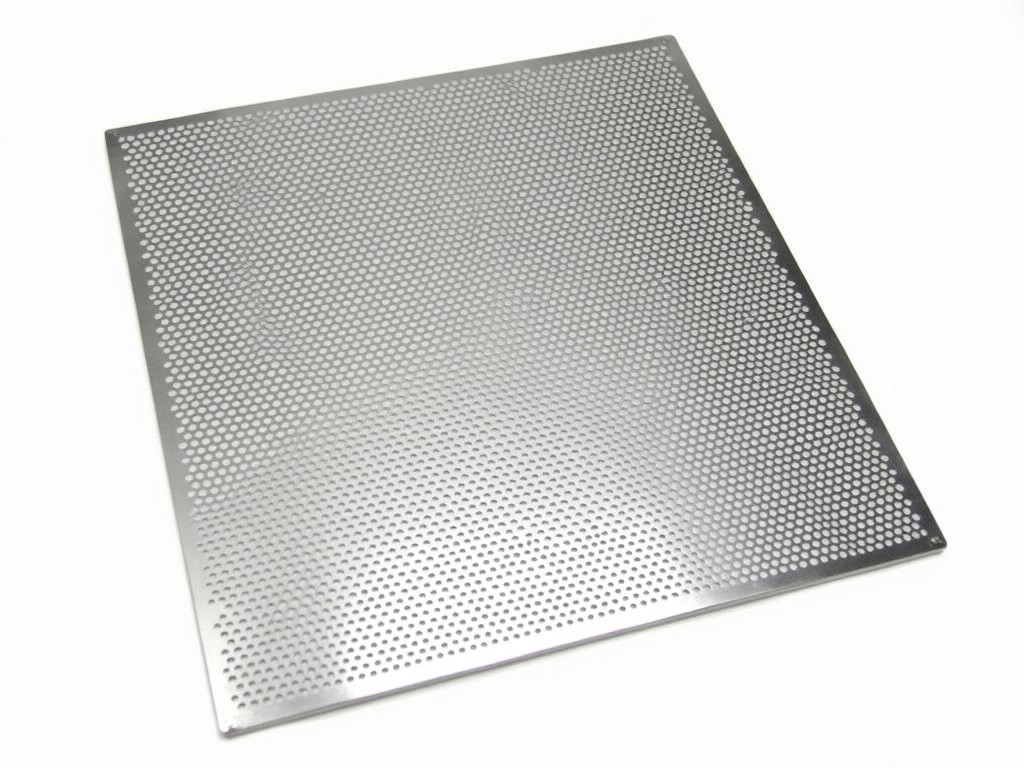
Factory Direct Perforated Stainless Steel Sheet 4x8
Perforated stainless steel sheets in 4x8 foot dimensions are manufactured directly from coil or plate stock using precision punch presses or laser systems. The 4x8 size refers to the nominal panel dimensions—48 inches wide by 96 inches long—before any edge trimming or secondary processing. These sheets are produced without intermediate distributors, allowing direct control over material specifications, perforation patterns, and dimensional tolerances from raw material to finished product.
This direct manufacturing approach eliminates handling steps that can introduce surface contamination or dimensional variation, particularly important for applications requiring consistent open area, edge quality, or corrosion resistance. Buyers receive material traceable to specific heat lots with full mill test reports available upon request.
Material Specifications and Grade Selection
Stainless steel grades are selected based on environmental exposure, mechanical requirements, and cost considerations. Grade 304 (UNS S30400) provides general-purpose corrosion resistance suitable for indoor environments, food processing areas, and light chemical exposure with a typical yield strength of 30 ksi and tensile strength of 75 ksi. Grade 316 (UNS S31600) adds molybdenum for enhanced resistance to chlorides and acids, making it appropriate for marine environments, chemical processing, and outdoor architectural applications with similar mechanical properties but superior pitting resistance.
Sheet thickness typically ranges from 0.025 inch (24 gauge) to 0.125 inch (1/8 inch), with thinner gauges (0.025–0.036 inch) used for filtration, screening, and decorative applications where flexibility and weight are concerns, while thicker gauges (0.060 inch and above) support structural loads, security barriers, and industrial equipment guards. Thickness tolerance follows ASTM A480/A480M standards, typically ±0.002 inch for cold-rolled sheet under 0.075 inch thick.
Surface finish options include No. 2B (dull cold-rolled finish), No. 4 (brushed directional finish), and BA (bright annealed), each affecting reflectivity, scratch visibility, and cleaning ease. The 2B finish is most common for industrial use due to its uniform appearance and compatibility with perforation processes without requiring additional surface preparation.
Perforation Patterns and Open Area Calculations
Perforation patterns are defined by hole shape, size, arrangement, and pitch (center-to-center distance). Common hole shapes include round, square, slot, and hexagonal, with round holes being most prevalent due to predictable flow characteristics and ease of manufacturing. Hole diameters typically range from 0.020 inch to 0.500 inch, selected based on the required balance between open area, structural integrity, and particle retention.
Arrangement patterns—such as staggered (60° or 45°) or straight (90°)—affect both open percentage and directional strength. Staggered 60° patterns provide the highest open area for a given hole size and pitch while maintaining uniform load distribution. Open area percentage is calculated as (hole area per unit cell) / (unit cell area) × 100, where unit cell geometry depends on the arrangement. For example, a 0.125-inch diameter round hole on a 0.250-inch staggered 60° pitch yields approximately 23% open area.
Critical design considerations include margin width (unperforated border), which typically ranges from 0.5 to 2.0 inches on all edges to facilitate handling, framing, or welding, and hole-to-edge distance, which must be sufficient to prevent tearing during punching—generally recommended at minimum 1.5 times the hole diameter for thin gauges.
Industrial Applications and Functional Benefits
In food and beverage processing, perforated stainless steel sheets serve as drying trays, washing baskets, and conveyor covers where the open area allows liquid drainage, steam penetration, and easy cleaning while preventing product loss. The non-reactive nature of grades 304 and 316 ensures no contamination of edible products, and the smooth surface withstands frequent washdowns with caustic or acidic sanitizers.
Architectural applications utilize these panels for sunshades, facade screens, and interior partitions where the perforation pattern controls light transmission, visibility, and airflow while providing a modern aesthetic. The directional No. 4 finish can be oriented to minimize glare, and the material’s fire resistance (non-combustible per ASTM E136) supports compliance with building codes for interior and exterior use.
Industrial settings employ perforated sheets as machine guards, ventilation panels, and acoustic enclosures. The holes permit airflow for motor cooling or sound attenuation while maintaining physical protection against moving parts. In filtration systems, specific hole sizes and open areas are engineered to achieve desired flow rates and particle capture efficiency for liquids or gases, with stainless steel offering compatibility with a wide range of process fluids without degradation.
Quality Control and Dimensional Verification
Dimensional inspection begins with raw material verification, including thickness measurement via micrometer or laser gauge and width/length confirmation using calibrated tape or vision systems. Perforation accuracy is assessed through optical comparison or digital imaging to verify hole size, location, and pattern consistency across the sheet surface, with typical tolerances of ±0.005 inch for hole diameter and ±0.010 inch for hole position relative to datum edges.
Open area verification is conducted using either direct measurement (counting holes in a known area and calculating) or indirect methods such as air flow testing for filtration applications, where pressure drop across a known area correlates to open percentage. Surface quality is inspected for burrs, roll marks, or perforation-induced deformation, with acceptable limits defined by industry standards such as ANSI/NAAMM MBG 531 for metal bar gratings, adapted for perforated sheet where applicable.
Flatness is measured using a straightedge and feeler gauge or optical comparator, with typical tolerances not exceeding 0.050 inch deviation over any 12-inch length for standard temper material. Custom flatness requirements (e.g., for precision screening) may necessitate stress-relieving annealing or leveling processes, which are available upon request based on application needs.
| Parameter | Typical Range / Value | Specification Reference |
|---|---|---|
| Sheet Dimensions (Nominal) | 48 in × 96 in | Industry Standard |
| Thickness Range | 0.025 in – 0.125 in | ASTM A480/A480M |
| Available Grades | 304, 316, 304L, 316L | ASTM A240/A240M |
| Hole Diameter Range | 0.020 in – 0.500 in | Manufacturer Capability |
| Standard Open Area | 15% – 40% | Application Dependent |
| Margin Width (Unperforated) | 0.5 in – 2.0 in | Customizable |
| Surface Finish | No. 2B, No. 4, BA | ASTM A480/A480M |
| Flatness Tolerance | ≤0.050 in over 12 in | Typical for Standard Temper |
Customization and Ordering Considerations
Beyond standard 4x8 panels, custom dimensions are available through shearing or laser cutting to meet specific installation requirements, with length and width tolerances typically held to ±0.0625 inch for sheared edges and ±0.032 inch for laser-cut edges. Hole patterns can be modified to suit directional flow needs, acoustic performance, or visual design, including variable open area zones, graduated density, or custom shapes such as logos or text integrated into the perforation layout.
Secondary operations include deburring to remove sharp edges formed during punching, particularly important for safety guards or food contact surfaces; surface treatments such as passivation (per ASTM A967) to enhance corrosion resistance after welding or fabrication; and forming operations like bending, rolling, or framing to create enclosures, trays, or panels with specific geometries. All customizations are quoted based on material usage, machine setup time, and process complexity.
Minimum order quantities vary by thickness and grade, with thinner gauges often requiring higher minimums due to coil setup, while thicker plates may allow smaller runs. Lead times depend on material availability, pattern complexity, and finishing requirements, typically ranging from 2–4 weeks for standard perforated sheets and 4–6 weeks for highly customized orders. Mill test reports and dimensional inspection certificates are provided with each shipment upon request.
For technical consultation on perforation pattern selection, material grade suitability, or dimensional tolerances for your specific application, contact our engineering team to discuss project requirements and receive a detailed quotation.

More Products

Send Inquiry
If you are interested in our products, leave your information here and we will be in touch shortly.