Factory Supply Stainless Steel Tea Infuser Basket
Industrial tea infusion requires precise control over particle retention, flow resistance, and material compatibility. The stainless steel tea infuser basket is engineered to meet these demands in
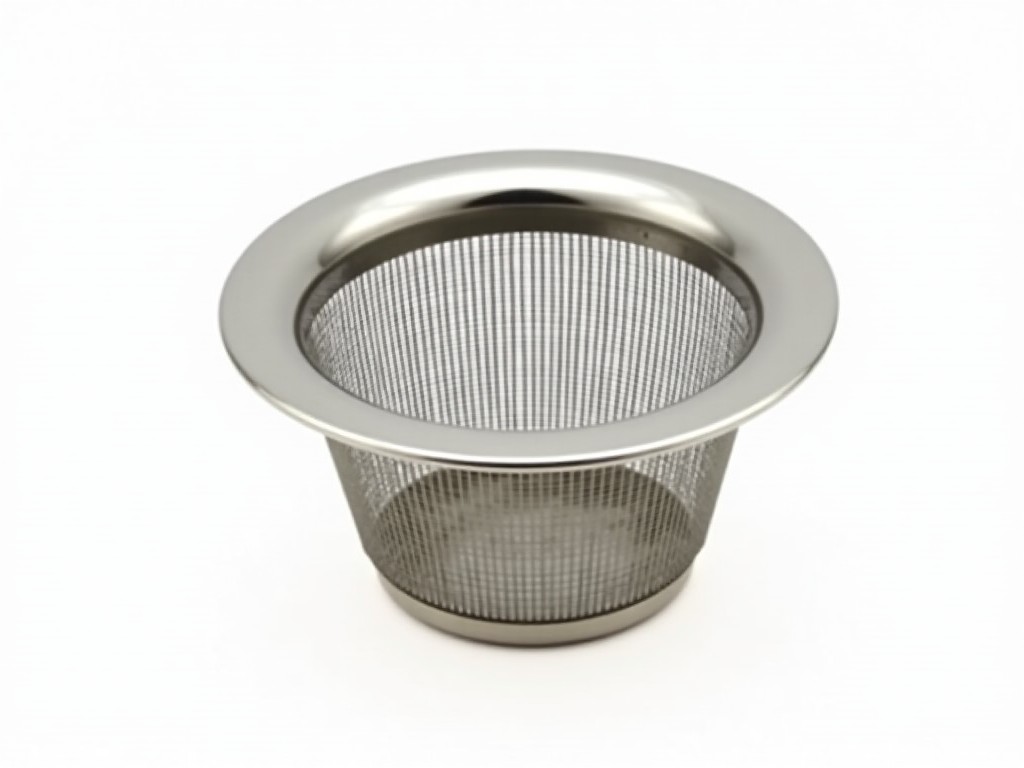
Factory Supply Stainless Steel Tea Infuser Basket
Industrial tea infusion requires precise control over particle retention, flow resistance, and material compatibility. The stainless steel tea infuser basket is engineered to meet these demands in high-volume food processing environments where hygiene, durability, and consistent extraction are non-negotiable.
Unlike disposable or low-grade alternatives, this component is designed for repeated cleaning cycles, exposure to elevated temperatures, and contact with acidic or alkaline infusions without degradation. Its geometry optimizes both infusion efficiency and ease of maintenance.
Material Composition and Grade Selection
The basket is constructed from austenitic stainless steel, specifically AISI 304 or 316L grades, selected based on the chemical profile of the infusion medium. Grade 304 provides adequate resistance to most food-grade infusions at temperatures below 80°C, while 316L is specified for chloride-containing environments or prolonged exposure to organic acids where pitting corrosion is a concern.
Wire diameter typically ranges from 0.8mm to 1.2mm, balancing structural integrity with open area for optimal fluid dynamics. The mesh aperture is precision-controlled between 0.2mm and 0.5mm to retain fine particulates such as tea fannings or herb powders without impeding flow rate.
All surfaces undergo electropolishing post-manufacture to reduce surface roughness to Ra ≤ 0.4µm, minimizing microbial adhesion and facilitating CIP (clean-in-place) procedures. This finish also eliminates micro-scratches that could harbor contaminants or accelerate corrosion initiation.
Design Geometry and Functional Parameters
The basket employs a cylindrical or conical profile with a perforated base and woven mesh sidewall. Standard diameters range from 50mm to 120mm, with heights scalable from 40mm to 150mm to accommodate varying infusion chamber volumes. The open area ratio typically falls between 45% and 65%, calculated to maintain sufficient flow velocity while ensuring >98% retention of particles above the mesh threshold.
Reinforced rim structures prevent deformation under hydraulic pressure during backflushing or pneumatic agitation. Handle or flange options are integrated for automated lifting systems, reducing manual intervention in continuous processing lines. The base design avoids dead zones where sediment could accumulate, promoting uniform extraction and simplifying drainage.
Thermal expansion coefficients are matched to mating components (typically stainless steel housings) to prevent stress-induced leakage or misalignment during thermal cycling between 4°C and 95°C. Dimensional tolerances are held to ±0.3mm on critical interfaces to ensure repeatable sealing in automated systems.
Performance Characteristics in Process Conditions
Under standard infusion conditions (80°C, 10% w/w tea solids, 0.5 m/s superficial velocity), pressure drop across the basket remains below 1.8 kPa, indicating minimal resistance to flow. This allows integration into gravity-fed or low-pressure pump systems without requiring auxiliary pressurization.
Extraction efficiency, measured as polyphenol yield relative to total available solids, consistently exceeds 92% over 30-minute cycles when using standardized tea blends. This performance is sustained over 500+ cleaning cycles with no measurable decline in flow characteristics or retention integrity.
The basket demonstrates no measurable leaching of iron, chromium, or nickel ions under FDA-compliant simulants (acetic acid, ethanol, saline) at 70°C for 2 hours, confirming compliance with 21 CFR §177.2400 for repeated food contact use.
Customization Options for Industrial Integration
Standard configurations serve as baseline models; dimensional scaling, mesh specification, and end-fitting geometry are adjustable to match existing infusion vessels or automated handling systems. Clients provide CAD models or physical samples for reverse engineering to ensure drop-in compatibility.
Alternative mesh patterns—such as Dutch weave or perforated plate with laser-drilled holes—are available for applications requiring higher mechanical strength or specific particle cutoff curves. Surface treatments can include passivation or electropolishing to enhance corrosion resistance in aggressive media.
Integration features such as quick-release clamps, alignment pins, or sanitary gasket grooves are machined to order. All customizations undergo dimensional validation via CMM inspection before release, with inspection reports available upon request.
Quality Assurance and Traceability
Each basket is marked with a laser-etched lot code enabling traceability to raw material certification, melt number, and production shift. Material test reports (MTRs) confirming chemical composition and mechanical properties are maintained for every batch.
Visual inspection follows ISO 105A2 standards for surface defects, with magnification up to 10x to detect scratches, pits, or incomplete welds. Functional testing includes bubble point verification to confirm mesh integrity and hydraulic flow testing at specified pressure differentials.
Packaging uses recyclable polyethylene liners inside rigid cardboard cartons to prevent deformation during transit. Units are separated by dividers to avoid abrasion, and humidity indicators are included for shipments to high-moisture climates.
| Parameter | Typical Value / Range | Notes |
|---|---|---|
| Stainless Steel Grade | AISI 304 / 316L | Selected based on infusion chemistry |
| Wire Diameter | 0.8mm – 1.2mm | Balances strength and open area |
| Mesh Aperture | 0.2mm – 0.5mm | Retains fines; maintains flow |
| Surface Roughness (Ra) | ≤ 0.4µm | Electropolished finish |
| Open Area Ratio | 45% – 65% | Optimized for flow vs. retention |
| Operating Temperature | 4°C – 95°C | Matches food process limits |
| Pressure Drop (std. conditions) | < 1.8 kPa | At 0.5 m/s velocity, 80°C |
| Extraction Efficiency | > 92% | Polyphenol yield, 30-min cycle |
Industrial buyers evaluating infusion hardware prioritize long-term operational stability over initial cost. The stainless steel tea infuser basket reduces total cost of ownership by eliminating replacement frequency, minimizing downtime for cleaning validation, and ensuring consistent product quality across batches.
Its compatibility with standard CIP protocols and resistance to thermal fatigue make it suitable for continuous operation in beverage extraction lines, nutraceutical production, and specialty food processing facilities. Documentation supporting regulatory compliance is available for audit purposes.
More Products

Send Inquiry
If you are interested in our products, leave your information here and we will be in touch shortly.