Factory Supply Stainless Steel Wire Basket Tray
Factory environments require durable material handling solutions that withstand chemical exposure, temperature fluctuations, and mechanical stress. Stainless steel wire basket trays are engineered to
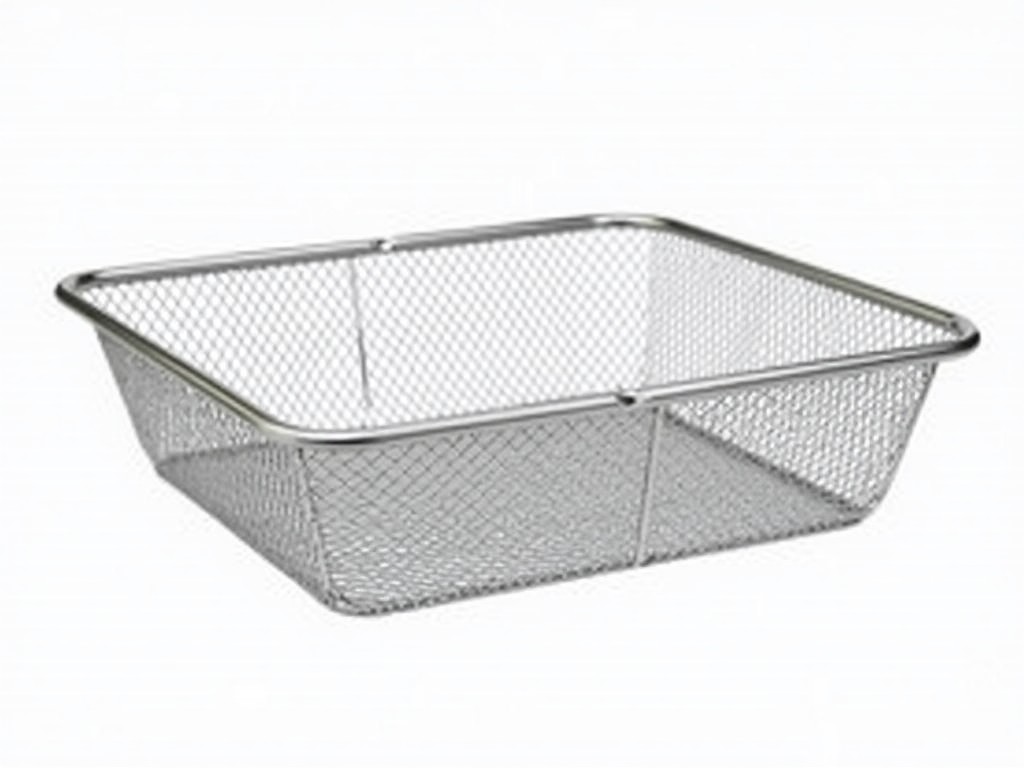
Stainless Steel Wire Basket Trays for Factory Supply
Factory environments require durable material handling solutions that withstand chemical exposure, temperature fluctuations, and mechanical stress. Stainless steel wire basket trays are engineered to meet these demands by combining open-grid airflow with structural rigidity. Unlike solid trays, their perforated design reduces liquid accumulation and facilitates drainage during cleaning or cooling cycles. This makes them particularly suitable for food processing, pharmaceutical manufacturing, and metal finishing operations where hygiene and process efficiency are critical.
The wire construction minimizes surface contact area, reducing the risk of product adhesion and simplifying sanitation procedures. Load capacity depends on wire gauge, mesh spacing, and frame geometry—factors that must be evaluated based on the specific application. For instance, heavier components in automotive assembly may require thicker wires and closer spacing, while lightweight electronic parts benefit from finer meshes to prevent fall-through. Understanding these variables ensures the tray performs reliably under operational loads without permanent deformation.
Material Selection and Corrosion Resistance
Stainless steel grades are selected based on the environmental conditions of the factory floor. Grade 304 provides adequate resistance to mild acids, alkalis, and humidity in general manufacturing settings. For environments with chloride exposure—such as food processing with salt brines or coastal facilities—grade 316 offers superior pitting resistance due to its molybdenum content. Choosing the correct grade prevents premature corrosion, which could compromise structural integrity and introduce contamination risks.
Surface finish also influences performance. A 2B mill finish is standard for industrial use, balancing cost and corrosion resistance. Electropolishing may be specified in pharmaceutical or semiconductor applications to further reduce surface roughness and inhibit microbial retention. Passivation treatments remove free iron from the surface after welding or forming, enhancing the natural chromium oxide layer. These processes are not cosmetic; they directly affect service life and compliance with industry hygiene standards.
Design Parameters and Load Characteristics
Basket tray dimensions are defined by length, width, and height, but functional performance depends on secondary characteristics. Wire diameter typically ranges from 2.0 mm to 5.0 mm, with 3.0 mm and 4.0 mm being common for medium-duty applications. Mesh opening sizes vary from 10 mm × 10 mm for fine-part retention to 50 mm × 50 mm for large components or high-flow drainage. Frame profiles—such as rolled edges or reinforced corners—add stiffness without significantly increasing weight.
Uniformly distributed load (UDL) capacity is a key engineering metric. A standard 600 mm × 400 mm × 100 mm tray with 3.0 mm wires and 25 mm mesh may support 150 kg UDL, while the same size with 4.0 mm wires and 15 mm mesh can exceed 300 kg. Point loads from concentrated weights require separate analysis, as they induce localized stress concentrations. Deflection limits are typically set to L/150 under load to prevent interference with adjacent equipment or conveyor systems.
Customization Options for Industrial Integration
Standard dimensions rarely match exact process requirements, making customization essential. Length and width can be adjusted in 50 mm increments to fit conveyor widths, shelving systems, or automated guided vehicle (AGV) footprints. Height is often tailored to part stacking needs—shorter trays for high-density storage, taller versions for bulk handling or immersion processes. Custom lengths beyond 1200 mm may require intermediate support beams to prevent sagging under load.
Additional features include detachable handles for manual transport, stackable feet for vertical storage, and liners made of PTFE or silicone for non-stick surfaces. Corner reinforcements can be added for high-impact zones, and removable dividers allow internal compartmentalization for sorting or batch separation. All modifications are designed to maintain open airflow and ease of cleaning, preserving the core advantages of the wire basket concept.
| Parameter | Typical Range | Notes |
|---|---|---|
| Wire Diameter | 2.0 – 5.0 mm | Selected based on load and mesh size |
| Mesh Opening | 10 mm – 50 mm | Square or rectangular patterns available |
| Load Capacity (UDL) | 50 – 500 kg | Dependent on size, wire, and mesh |
| Standard Lengths | 300 – 1200 mm | Custom lengths available with reinforcement |
| Surface Finish | 2B Mill, Electropolished | Passivation available upon request |
Quality Control and Manufacturing Considerations
Production begins with precision cutting and bending of stainless steel wire to exact dimensions. Automated welding ensures consistent joint strength at all intersections, critical for maintaining load distribution. Each tray undergoes visual inspection for weld defects, wire protrusion, and dimensional accuracy. Load testing is performed on a sampling basis to validate UDL ratings, especially for custom designs. These procedures are not optional steps—they directly determine whether the tray will perform safely over its intended service life.
Traceability is maintained through batch markings that link raw material certificates to finished products. This supports compliance with ISO 9001 and industry-specific standards such as FDA 21 CFR or EHEDG where applicable. Non-destructive testing methods like dye penetrant inspection may be used for critical welds in hygienic zones. Documentation including material test reports (MTRs) and inspection certificates is available upon request, providing procurement teams with verifiable evidence of conformance.
Applications in Industrial Workflows
In metal stamping plants, wire basket trays transport hot-formed parts between presses and quenching tanks, allowing rapid cooling while preventing part-to-part contact that could cause surface marring. The open design prevents lubricant pooling, reducing slip hazards and extending fluid life. In electronics manufacturing, they hold circuit boards during wave soldering or conformal coating, where static-dissipative coatings can be applied to the frame if required. Their thermal stability ensures no warping under repeated heating cycles.
Food processing facilities use them for blanching, steaming, and cooling vegetables or pasta, where water drainage and steam circulation are essential to product quality. Pharmaceutical labs rely on them for holding glassware during autoclaving—any residue trap could compromise sterilization. Even in warehousing, they serve as durable bins for small hardware or fasteners, outperforming plastic containers in longevity and resistance to UV degradation or oil exposure. Each application leverages the core advantages: drainage, visibility, cleanability, and strength-to-weight ratio.
More Products

Send Inquiry
If you are interested in our products, leave your information here and we will be in touch shortly.