Metal Sheet Perforated Round Hole
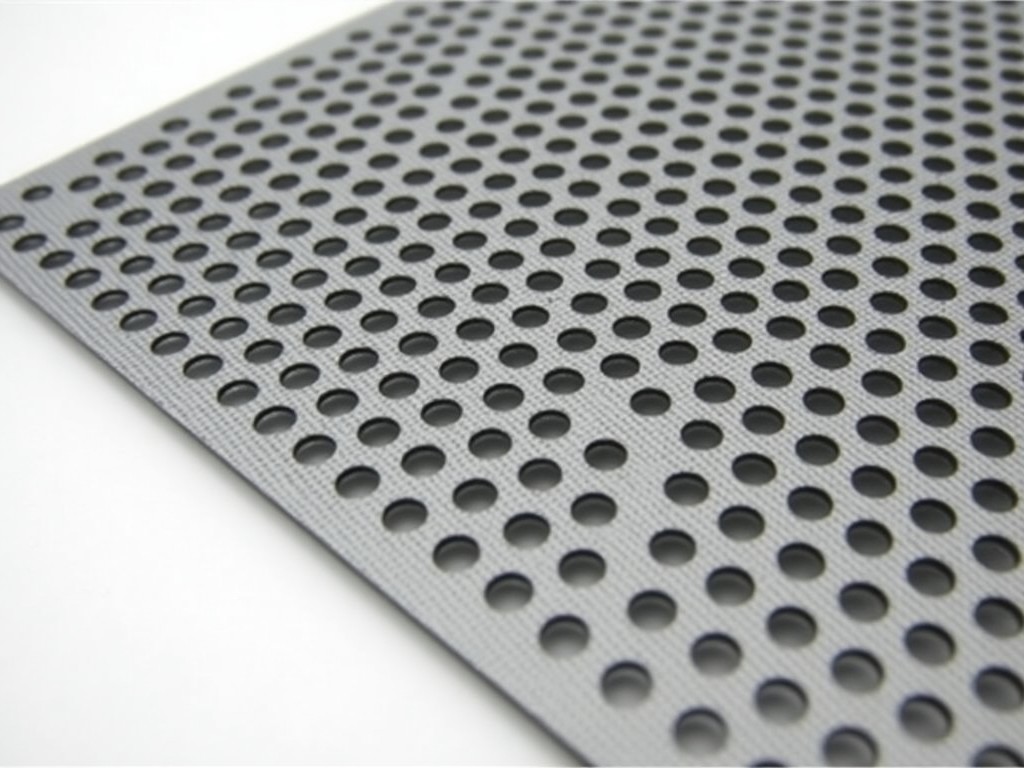
Perforated metal sheets with round holes are engineered components used where controlled fluid flow, light transmission, acoustic management, or particulate separation is required. The pattern
Metal Sheet Perforated Round Hole
Perforated metal sheets with round holes are engineered components used where controlled fluid flow, light transmission, acoustic management, or particulate separation is required. The pattern consists of uniformly distributed circular openings punched or laser-cut into a base metal sheet, with hole diameter, pitch (center-to-center spacing), and open area ratio precisely defined to meet functional specifications. These parameters directly influence performance characteristics such as pressure drop, filtration efficiency, structural rigidity, and visual transparency.
Key Design Parameters
The functional behavior of perforated round hole sheets is governed by three interrelated variables: hole diameter, pitch, and open area percentage. Hole diameter typically ranges from 0.5 mm to 50 mm, with smaller sizes used for fine filtration and larger diameters for ventilation or decorative applications. Pitch determines the distance between hole centers and directly affects structural integrity—smaller pitches increase open area but reduce load-bearing capacity. Open area, calculated as the ratio of hole area to total sheet area, usually falls between 10% and 60%, balancing permeability with mechanical strength. Material thickness must be selected relative to hole size to prevent deformation during punching or use.
Material Selection Considerations
Base material choice depends on environmental exposure, required strength, and fabrication method. Carbon steel is common for indoor structural uses due to its cost-effectiveness and weldability, though it requires coating for corrosion resistance. Stainless steel grades 304 and 316 are selected for outdoor, chemical, or hygienic environments where oxidation resistance is critical. Aluminum offers a favorable strength-to-weight ratio and natural corrosion resistance, suitable for architectural or aerospace applications. Brass and copper are used when antimicrobial properties or electrical conductivity are needed, though they are less common due to cost and softness. Material thickness must accommodate the punching process—thinner sheets risk tearing with large holes, while thicker sheets require higher force and may cause hole distortion.
Manufacturing Processes and Tolerances
Perforation is typically achieved via mechanical punching using CNC turret presses or rotary die systems for high-volume production, or laser cutting for complex patterns or prototypes where tooling costs are prohibitive. Punching introduces minor burrs on the exit side, which may be removed via deburring or vibratory finishing if surface smoothness is critical. Tolerances on hole diameter are generally ±0.1 mm for punched holes and ±0.05 mm for laser-cut features, while positional accuracy (hole-to-hole spacing) is maintained within ±0.2 mm over 300 mm. Sheet flatness after perforation is affected by stress relief; leveling or stretcher leveling is often applied post-process to minimize curl or bow, especially in thin gauges or high-open-area designs.
Typical Applications Across Industries
In HVAC systems, perforated sheets serve as diffuser plates where controlled air dispersion reduces draft noise and improves comfort—open area and hole pattern are tuned to achieve specific throw and drop characteristics. In industrial filtration, they act as support screens for filter media, where hole size prevents media migration while maintaining low pressure drop; stainless steel is preferred in chemical processing to resist corrosion from process fluids. Architectural facades use perforated panels for solar shading and visual patterning; here, hole diameter and spacing are calculated to achieve desired shading coefficients and aesthetic effects without compromising wind load resistance. Acoustic panels employ perforated backs with absorbent backing material; the hole pattern acts as a Helmholtz resonator, targeting specific frequency ranges based on hole diameter and cavity depth. In food processing, perforated trays allow drainage and steam circulation; food-grade stainless steel with smooth, deburred surfaces meets hygiene standards and withstands frequent washdowns.
Customization Options
Standard round hole patterns include staggered (60°) and square (90°) arrangements, with staggered layouts offering higher open area for a given pitch and better flow dynamics. Custom hole sizes, non-uniform patterns, or variable pitch gradients are available for specialized applications such as graded filtration or architectural gradient effects. Sheets can be supplied flat, rolled, or fabricated into cylinders, cones, or boxes per drawing. Edge treatments include plain, hemmed, flanged, or punched for fasteners. Surface finishes range from mill finish to powder coating, anodizing (for aluminum), or passivation (for stainless steel) to enhance corrosion resistance or appearance. Secondary operations such as bending, welding, or assembly into frames are commonly performed in-house to deliver sub-assemblies ready for installation.
Quality Control and Testing
Dimensional verification is conducted using calibrated gauges, coordinate measuring machines (CMM), or optical comparators to validate hole diameter, pitch, and positional accuracy against drawing tolerances. Open area is calculated from measured dimensions and verified via flow testing when critical—for example, in aerospace ventilation plates where pressure drop must stay within limits. Visual inspection checks for burrs, deformation, or coating defects. Material test reports (MTRs) confirm alloy composition and mechanical properties. For applications requiring hygiene or corrosion resistance, salt spray testing (ASTM B117) or passivation validation (via ferroxyl testing) may be performed. All inspection criteria are documented and traceable to the production lot.
| Parameter | Typical Range | Notes |
|---|---|---|
| Hole Diameter | 0.5 mm – 50 mm | Smaller sizes for filtration; larger for ventilation/decoration |
| Pitch (Center-to-Center) | 1.0 mm – 100 mm | Determines open area and structural stiffness |
| Open Area | 10% – 60% | Balances flow rate with mechanical strength |
| Sheet Thickness | 0.3 mm – 6.0 mm | Must suit hole size and material to avoid deformation |
| Standard Materials | Carbon Steel, SS 304/316, Aluminum, Brass, Copper | Selected based on environment and functional needs |
| Tolerance (Hole Diameter) | ±0.1 mm (punching), ±0.05 mm (laser) | Positional tolerance typically ±0.2 mm over 300 mm |
| Surface Finish | Mill, Powder Coat, Anodized, Passivated, Brushed | Chosen for corrosion resistance, appearance, or hygiene |
Engineering Value and Long-Term Performance
The long-term value of perforated round hole sheets lies in their ability to deliver consistent, predictable performance over time—unlike woven screens or fabricated grids, they offer uniform open area without wire deformation or weld fatigue. In corrosive environments, properly selected stainless steel or coated carbon steel resists degradation, maintaining hole integrity and flow characteristics for years. Structural stability is preserved when open area remains below critical thresholds (typically <50% for load-bearing panels), preventing buckling under pressure or wind load. Unlike expanded metal, perforated sheets retain full material cross-section between holes, providing superior shear and tensile strength. These characteristics reduce maintenance frequency, prevent unplanned downtime, and support lifecycle cost efficiency in OEM and infrastructure applications.

More Products

Send Inquiry
If you are interested in our products, leave your information here and we will be in touch shortly.