Metal Sink Strainer Basket Suppliers
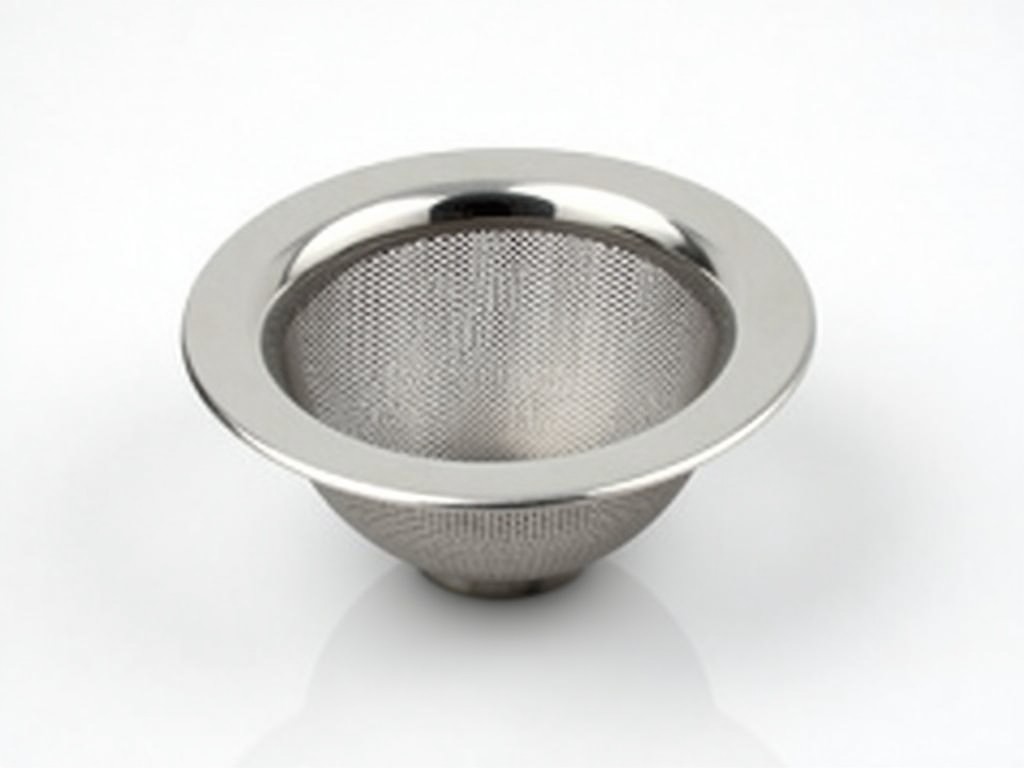
A metal sink strainer basket is a perforated or slotted component designed to fit within a sink drain opening, capturing solid debris while allowing liquid to pass. Its primary function is to prevent
Metal Sink Strainer Basket Suppliers
A metal sink strainer basket is a perforated or slotted component designed to fit within a sink drain opening, capturing solid debris while allowing liquid to pass. Its primary function is to prevent clogs in plumbing systems by intercepting food particles, utensils, and other solids before they enter the drainpipe. These components are commonly used in commercial kitchens, laboratories, healthcare facilities, and industrial washing stations where continuous drainage and debris control are critical.
The design of a strainer basket balances hydraulic efficiency with particle retention. Open area percentage—typically ranging from 25% to 40%—determines flow rate, while aperture size (often 1–6 mm) dictates the minimum particle size captured. Strainer baskets must withstand repeated thermal cycling, exposure to detergents, and mechanical stress from utensil impact without deforming or corroding. Material selection directly influences service life, with stainless steel grades offering the best balance of corrosion resistance and mechanical strength in wet, chemically active environments.
Material Options and Performance Characteristics
Strainer baskets are predominantly manufactured from austenitic stainless steels due to their resistance to pitting and crevice corrosion in chloride-containing environments common in kitchens and labs. Grade 304 (UNS S30400) provides adequate resistance for general use, while 316L (UNS S31603) offers superior protection against pitting in environments with higher chloride exposure or frequent cleaning with aggressive agents. The material’s yield strength (typically 205–515 MPa for 304, 170–480 MPa for 316L) ensures the basket maintains structural integrity under load without permanent deformation.
Alternative materials include brass (C36000) for decorative applications where corrosion exposure is minimal, and carbon steel with zinc or epoxy coating for low-cost, short-term use—though coated options risk delamination and underlying corrosion if damaged. Nickel alloys such as Monel 400 are specified in highly corrosive or high-temperature industrial processes where standard stainless steels may suffer stress corrosion cracking. Material thickness, usually between 0.8 mm and 2.0 mm, is selected based on expected mechanical loads and required stiffness to resist bowing under hydrostatic pressure.
Design Variations and Functional Adaptations
Strainer baskets vary in geometry to match specific sink configurations and drainage requirements. Common forms include cylindrical baskets with flat or flared bases, conical designs for self-cleaning action via gravity, and rectangular units tailored to trough sinks. The flange or rim that seats the basket into the sink drain may be rolled, beveled, or threaded, depending on the retention mechanism—some rely on friction fit, others use locking rings or screws to prevent displacement during vigorous washing or vibration.
Perforation patterns significantly affect performance. Round holes offer balanced flow and strength, while slotted apertures provide higher open area for viscous fluids but may allow elongated particles to pass. Some designs incorporate secondary fine-mesh liners (e.g., 0.5 mm mesh) for applications requiring removal of finer particulates, such as in photographic labs or chemical rinsing stations. Anti-vortex baffles or flow deflectors are occasionally integrated to reduce splashing and improve drainage efficiency in high-flow scenarios.
Typical Specifications and Customization Parameters
| Parameter | Typical Range / Options |
|---|---|
| Material | Stainless Steel 304, 316L; Brass C36000; Carbon Steel (coated); Nickel Alloys (upon request) |
| Basket Diameter | 50 mm – 200 mm (custom sizes available) |
| Height | 30 mm – 150 mm |
| Aperture Size | 1 mm – 6 mm (round); 2 mm x 10 mm (slot) |
| Open Area Percentage | 25% – 40% |
| Wall Thickness | 0.8 mm – 2.0 mm |
| Finish | Mill finish, polished (Ra 0.8 μm), passivated, electropolished |
| Retention Mechanism | Friction fit, locking ring, threaded flange, screw-down clamp |
Customization extends beyond dimensions to include specialized features such as integrated handles for easy removal, magnetic retention systems for metal sinks, or antimicrobial surface treatments in healthcare settings. Suppliers typically require a detailed drawing or physical sample to quote accurately, as non-standard flange angles, offset outlets, or dual-chamber designs affect tooling and production complexity. Tolerances are generally held to ±0.5 mm on critical dimensions unless tighter specifications are justified by the application.
Quality Assurance and Manufacturing Considerations
Dimensional inspection is performed using calibrated calipers, coordinate measuring machines (CMM), or optical comparators to verify basket diameter, height, flange angle, and aperture uniformity. Material verification relies on mill test certificates (MTRs) and, when required, positive material identification (PMI) via XRF to confirm alloy grade. Surface finish is assessed visually and, for critical applications, with profilometers to ensure roughness values meet hygiene or flow requirements.
Each basket undergoes a pressure or flow test to confirm hydraulic performance matches design intent—blocked or deformed units exhibit restricted flow or leakage around the seal. Visual inspection checks for burrs, sharp edges, welding defects (if applicable), and deformation from forming processes. For baskets intended for food contact, suppliers adhere to relevant FDA or EU framework regulations, ensuring materials are non-toxic and finishes are smooth enough to prevent bacterial harborage.
Packaging methods protect against impact and corrosion during transit. Baskets are typically separated by dielectric sheets or foam inserts, placed in corrugated cartons with desiccant packs for humidity control, and sealed with moisture-resistant tape. Export shipments may include vapor-corrosion inhibitors (VCI) in the packaging for long sea journeys. Lead times depend on material availability and complexity—standard configurations ship in 2–4 weeks, while custom tooling extends this to 6–8 weeks.
More Products

Send Inquiry
If you are interested in our products, leave your information here and we will be in touch shortly.