Metal Tea Infuser Basket Top Supplier
When sourcing metal tea infuser baskets for industrial food processing, the primary concern is not aesthetic appeal but functional reliability under repeated thermal cycling, mechanical stress, and
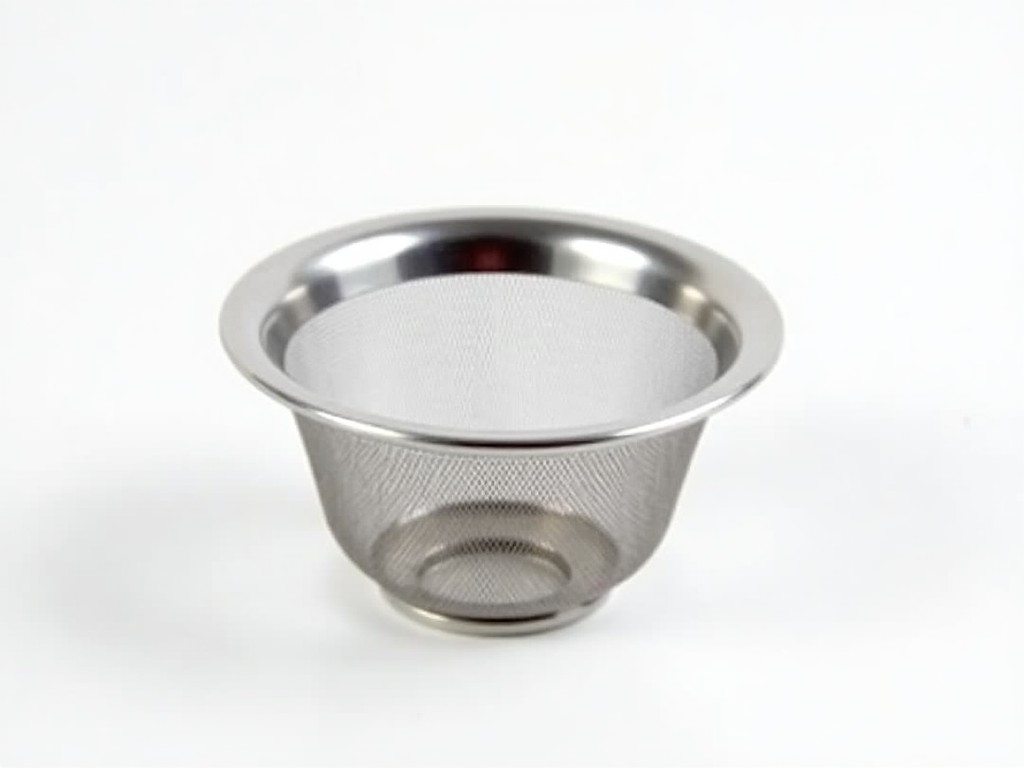
Metal Tea Infuser Basket Top Supplier: Engineering-Grade Solutions for Food Processing Applications
When sourcing metal tea infuser baskets for industrial food processing, the primary concern is not aesthetic appeal but functional reliability under repeated thermal cycling, mechanical stress, and exposure to acidic or alkaline brewing conditions. Buyers require components that maintain dimensional integrity, resist corrosion, and comply with food-contact regulations without introducing contaminants or altering brew characteristics. This page details the technical specifications, material considerations, and manufacturing logic that define a supplier capable of meeting these demands.
Material Selection: Why Stainless Steel Grades Matter in Infuser Baskets
The choice of alloy directly impacts longevity, safety, and performance in tea infusion systems. While 304 stainless steel is common in consumer goods, industrial applications often demand enhanced resistance to pitting and crevice corrosion caused by tannins, organic acids, and chloride-containing water supplies. For continuous-operation brewing lines or high-volume extraction equipment, 316L stainless steel is frequently specified due to its molybdenum content, which significantly improves resistance to halide-induced degradation.
Surface finish is equally critical. A No. 4 brushed finish (Ra 0.4–0.8 μm) minimizes crevice formation where biofilms or particulate matter could accumulate, facilitating CIP (clean-in-place) procedures. Electropolishing may be applied to further reduce surface roughness and improve passivation, though this adds cost and is only justified when microbial control or ultra-clean brewing environments are required.
Design Parameters That Affect Infusion Efficiency and Durability
Basket geometry influences both extraction yield and mechanical resilience. Mesh aperture size must balance particle retention with flow resistance—too fine, and pressure drop increases, potentially clogging the system; too coarse, and leaf particulates escape into the brew, affecting clarity and filtration downstream. Standard industrial infuser baskets typically use woven mesh with 200–400 micron openings, though custom perforation patterns (e.g., laser-drilled holes) are available for specialty teas requiring precise particle control.
Wall thickness and rim reinforcement determine resistance to deformation during handling, loading, and thermal shock. Baskets subjected to rapid temperature shifts (e.g., from cold steep to hot wash) benefit from rolled or flanged edges that distribute stress and prevent cracking at stress concentrators. Depth-to-diameter ratios are optimized based on bed depth requirements for optimal extraction kinetics—shallow baskets favor rapid infusion; deeper beds allow longer contact times for full-bodied profiles.
Manufacturing Considerations for Food-Compliant Production
Industrial suppliers must demonstrate control over manufacturing processes that could introduce contaminants. This includes using lubricants and cleaning agents that are fully rinsed and verified non-toxic, ensuring welds (if any) are smooth, crevice-free, and passivated, and avoiding materials like copper or nickel alloys that may leach into acidic brews. Stamping, deep drawing, or hydroforming are preferred over multi-part assembly to eliminate crevices and potential failure points.
Traceability is essential. Each batch should be linked to material test reports (MTRs) confirming alloy composition, and final inspection should include visual examination under magnification for surface defects, dimensional verification via calipers or CMM, and optionally, ferrite testing to confirm proper austenitic structure in 316L components. Suppliers unable to provide this level of documentation pose a compliance risk for food-regulated industries.
Customization Logic: When Standard Baskets Fall Short
Off-the-shelf infuser baskets suit standardized tea bag or loose-leaf systems, but many industrial processes require tailored solutions. For example, baskets integrated into automated extraction machinery may need specific mounting features—such as tabs, slots, or threaded inserts—to interface with conveyors or pneumatic actuators. Others may require non-standard shapes (oval, rectangular) to fit custom brewing chambers or to optimize flow dynamics in spiral or cylindrical extractors.
Mesh configuration can also be customized: double-layer mesh for enhanced fine-particle capture, gradient-density layers to prevent surface blinding, or perforated plates with varying hole patterns to manage flow distribution. These modifications are not cosmetic; they directly impact process efficiency, yield consistency, and maintenance frequency. A competent supplier will collaborate on DFM (design for manufacturability) to ensure the custom design remains producible at scale without excessive tooling costs.
Quality Control Philosophy: Building Confidence Through Verification
Reliability in food processing components is proven through systematic validation, not marketing claims. A trustworthy supplier implements incoming material verification (e.g., PMI testing for alloy confirmation), in-process checks for dimensional stability during forming, and final audits that include pressure drop testing across the mesh to detect anomalies in weave integrity or blockage. Some facilities conduct extractable testing per FDA 21 CFR 177.1520 or EU 10/2011 to confirm no substances migrate into simulant solvents under time-temperature conditions mimicking actual use.
Documentation is part of the product. Buyers should expect access to ISO 9001 certification, food-contact compliance statements, and material safety data where applicable. Batch-specific documentation—such as inspection reports or conformity declarations—should be available upon request. This transparency reduces procurement risk and supports audit readiness for distributors and OEMs integrating these components into larger systems.
Typical Specifications for Industrial Metal Tea Infuser Baskets
| Parameter | Typical Range / Option | Notes |
|---|---|---|
| Primary Material | 316L Stainless Steel | Preferred for corrosion resistance in acidic/alkaline brews |
| Mesh Aperture | 200–400 micron | Woven mesh; custom perforation available |
| Wire Diameter | 0.15–0.30 mm | Affects strength and open area percentage |
| Basket Depth | 20–80 mm | Selected based on extraction kinetics and bed depth requirements |
| Rim Treatment | Rolled, flanged, or plain | Rolled/flanged reduces stress concentration during thermal cycling |
| Surface Finish | No. 4 Brushed (Ra 0.4–0.8 μm) | Electropolishing available for enhanced cleanability |
| Temperature Range | -40°C to +200°C | Continuous use; intermittent up to 250°C possible |
Applications Where Industrial Infuser Baskets Deliver Measurable Value
Beyond traditional tea brewing, these components are used in botanical extraction for nutraceuticals, herbal medicine production, and functional beverage manufacturing. In these contexts, consistent particle retention ensures reproducible active compound yields, while corrosion resistance prevents metal leaching that could degrade sensitive phytotoxins or alter flavor profiles. The ability to withstand repeated CIP cycles with caustic or acidic sanitizers extends service life, reducing downtime and replacement frequency in 24/7 operations.
In ready-to-drink (RTD) tea production lines, infuser baskets are often integrated into large-scale extractors where leaf bed depth and flow uniformity directly impact extraction efficiency and color consistency. A poorly designed basket can cause channeling or uneven wetting, leading to batch variability that affects product quality and increases reject rates. Suppliers who understand fluid dynamics and extraction kinetics can recommend geometries that promote even distribution and minimize residence time distribution.
For technical inquiries, customization requests, or to discuss material selection for your specific brewing or extraction process, contact our engineering team. Provide details on operating temperature, cycle frequency, mesh requirements, and any regulatory constraints to receive a tailored evaluation.
Request Technical Consultation
More Products

Send Inquiry
If you are interested in our products, leave your information here and we will be in touch shortly.