Metal Tea Strainer Basket Top Supplier
Industrial metal tea strainer baskets are specialized filtration components designed for high-purity liquid processing in food, beverage, pharmaceutical, and chemical manufacturing. Unlike
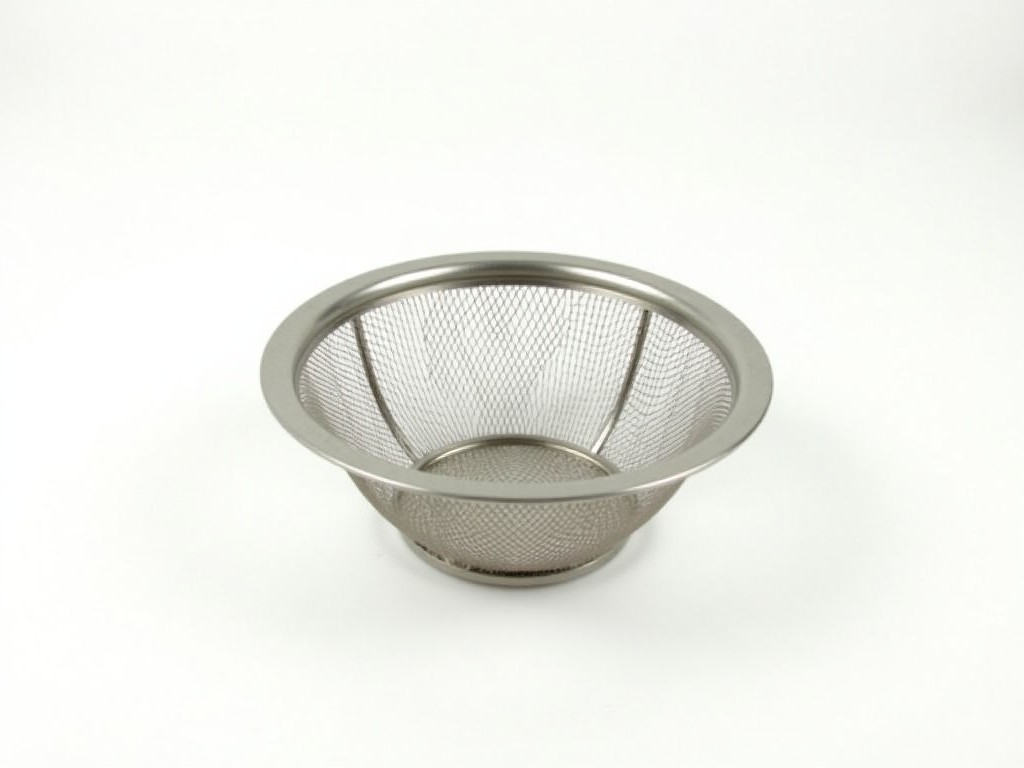
Metal Tea Strainer Basket – Precision Engineered for Industrial Filtration Applications
Industrial metal tea strainer baskets are specialized filtration components designed for high-purity liquid processing in food, beverage, pharmaceutical, and chemical manufacturing. Unlike consumer-grade strainers, these baskets are engineered to withstand continuous operation, thermal cycling, and exposure to aggressive cleaning agents while maintaining consistent particle retention characteristics. Their primary function is to separate fine particulates from liquid streams without introducing contamination or altering product integrity.
The effectiveness of a metal tea strainer basket depends on three interrelated engineering factors: mesh geometry, material compatibility, and structural integrity under load. Mesh aperture size directly determines the minimum particle size retained, while wire diameter and weave pattern influence pressure drop and mechanical durability. Material selection must resist corrosion from acidic or alkaline process fluids, withstand sterilization temperatures (typically up to 140°C for steam-in-place systems), and avoid leaching substances that could compromise product safety.
Core Design Specifications for Process Integration
Standard industrial tea strainer baskets are manufactured to precise dimensional tolerances to ensure seamless integration into existing housing assemblies. Outside diameter, height, and flange thickness are controlled to ±0.15mm to prevent bypass flow or excessive sealing pressure. The basket’s open area ratio—typically between 25% and 40% depending on mesh specification—is calculated to balance filtration efficiency with acceptable hydraulic resistance, minimizing energy consumption in pump-driven systems.
Mesh options follow international standards such as ISO 9044 and ASTM E11, with common apertures ranging from 100 microns for coarse filtration to 15 microns for fine particulate removal in ultrafiltration pre-treatment. Wire diameters are selected based on required tensile strength and fatigue resistance; for example, a 100-micron mesh typically uses 0.18mm diameter stainless steel wire, while a 20-micron mesh may require 0.08mm wire to maintain structural stability without excessive blinding.
Material Selection Based on Process Chemistry
Austenitic stainless steels dominate industrial tea strainer basket construction due to their corrosion resistance, formability, and compliance with food-contact regulations. Grade 304 (UNS S30400) is suitable for neutral pH beverages and water-based solutions, offering resistance to organic acids and chloride concentrations below 100 ppm. For environments containing higher chloride levels, organic solvents, or requiring frequent passivation, Grade 316L (UNS S31603) provides enhanced resistance to pitting and crevice corrosion due to molybdenum addition.
In applications involving extreme temperatures or highly oxidizing conditions, nickel alloys such as Inconel 600 or Hastelloy C-276 may be specified, though these are less common in tea filtration due to cost. All materials are supplied with mill test reports verifying chemical composition and mechanical properties. Surface finishes are typically electropolished to Ra ≤0.4µm to minimize product adhesion and facilitate cleaning-in-place (CIP) procedures, reducing biofilm formation risks.
Manufacturing Considerations for Dimensional Stability
The forming process for metal tea strainer baskets involves deep drawing or stamping of precision-cut mesh blanks, followed by edge rolling or welding to create a rigid, leak-proof structure. Welding techniques—such as TIG or laser seam welding—are selected to minimize heat-affected zone distortion and maintain corrosion resistance at joints. Post-forming stress relief annealing is often applied to prevent dimensional drift during thermal cycling, ensuring long-term dimensional stability in automated processing lines.
Critical dimensions such as flange flatness and mesh tension are verified using coordinate measuring machines (CMM) and optical comparators. Basket deflection under hydrostatic pressure is tested to ensure it remains below 0.5mm at design pressure, preventing mesh deformation that could alter retention characteristics. Each unit undergoes visual inspection for mesh integrity, wire breaks, or edge defects under 10x magnification before packaging.
Typical Applications in Industrial Processing Lines
Metal tea strainer baskets are integral to batch and continuous processing systems where clarity and particle-free output are critical. In tea extract production, they remove leaf fragments, dust, and insoluble solids after infusion, preventing clogging in downstream heat exchangers or filling equipment. In pharmaceutical manufacturing, similar baskets filter herbal tinctures or liquid intermediates prior to sterilization, ensuring compliance with particulate limits defined in pharmacopeial standards such as USP <788>.
Beyond tea processing, these baskets are adapted for use in juice clarification, nut milk filtration, and botanical extract production where fine sediment must be removed without altering flavor profiles or active compound concentrations. Their reusable nature reduces waste compared to disposable filters, and their cleanability supports sustainable manufacturing practices. Custom lengths and diameters are common in retrofit applications where existing housings require exact drop-in replacements.
| Parameter | Typical Range | Notes |
|---|---|---|
| Mesh Aperture | 15 – 500 microns | Selected based on target particle size | Material | SS 304, SS 316L, Nickel Alloys | Based on fluid chemistry and temperature |
| Outside Diameter | 25 – 200 mm | Customizable to housing specifications |
| Height | 15 – 150 mm | Determined by required dirt holding capacity |
| Open Area Ratio | 25% – 40% | Balances flow rate and filtration efficiency |
| Surface Finish | Electropolished (Ra ≤0.4µm) | Reduces adhesion and improves cleanability |
Quality Assurance and Traceability
Quality control begins with raw material verification, where each coil or sheet is accompanied by a mill certificate confirming alloy composition and mechanical properties. During production, in-process checks monitor mesh alignment, weld integrity, and dimensional accuracy. Final inspection includes bubble point testing to verify pore size integrity, pressure drop measurement across the basket at rated flow, and visual inspection for surface defects. All test results are documented and retained for traceability.
Baskets are packaged in individual polyethylene sleeves to prevent contamination during transit, then placed in rigid cardboard cartons with corner protection to avoid deformation. Each carton includes a packing list with part number, material grade, mesh specification, and quantity. For regulated industries, documentation packages can include material safety data sheets (MSDS), FDA compliance statements, and ISO 13485 conformity declarations upon request.
More Products
Send Inquiry
If you are interested in our products, leave your information here and we will be in touch shortly.