Micro Perforated Metal Sheet
Micro perforated metal sheets are engineered thin-gauge materials featuring arrays of precisely controlled microscopic openings. These openings typically range from 50 to 500 micrometers in diameter,
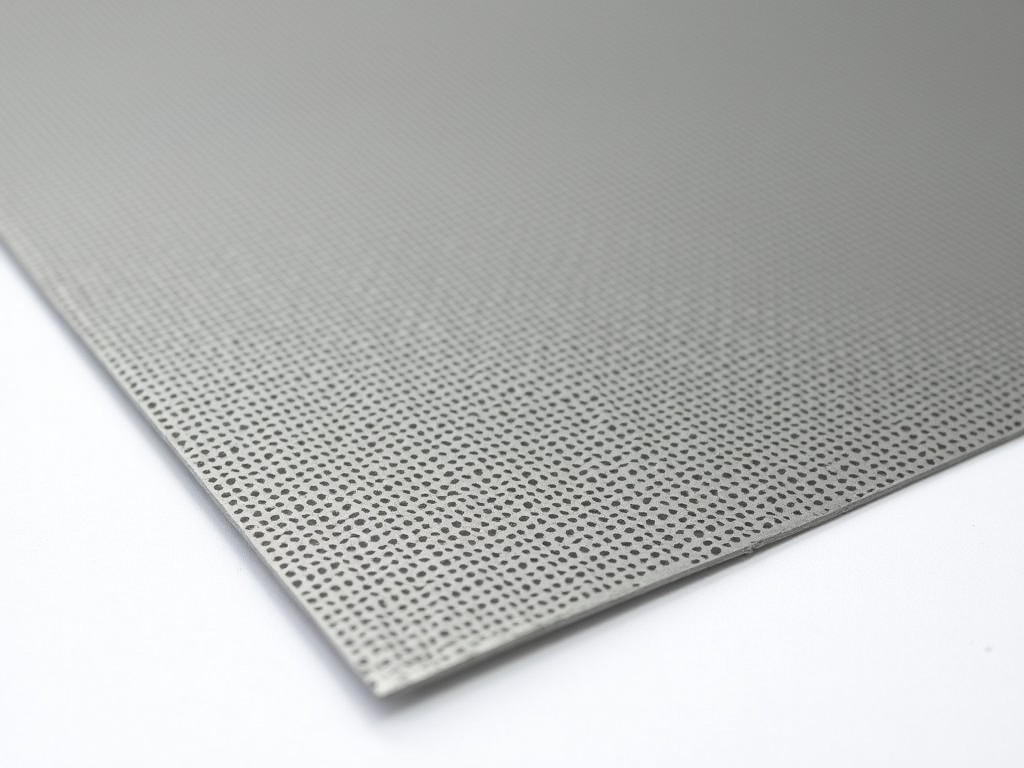
Micro Perforated Metal Sheet
Micro perforated metal sheets are engineered thin-gauge materials featuring arrays of precisely controlled microscopic openings. These openings typically range from 50 to 500 micrometers in diameter, with pitch variations from 100 to 1000 micrometers, enabling specific functional properties in filtration, acoustics, and optical applications.
The perforation process employs high-precision techniques such as laser drilling, electrochemical etching, or micro-stamping to achieve consistent hole geometry without burrs or deformation. Material thickness generally falls between 0.05 mm and 0.5 mm, depending on the base alloy and required open area ratio.
Open area ratio—the percentage of open space relative to total surface—can be tailored from 5% to over 60% by adjusting hole size, spacing, and pattern layout. This parameter directly influences airflow resistance, sound absorption coefficients, and light transmission rates in end-use scenarios.
Material Selection and Compatibility
Base materials are selected based on environmental exposure, mechanical demands, and chemical resistance. Common options include stainless steel grades 304 and 316 for corrosion resistance in humid or saline environments, aluminum alloys 1050 and 5052 for lightweight applications, and copper or brass for thermal conductivity and antimicrobial properties.
For high-temperature environments exceeding 400°C, nickel alloys such as Inconel 600 or Hastelloy C-276 may be specified due to their oxidation resistance and retained strength at elevated temperatures. Material thickness is often reduced in these alloys to compensate for higher density while maintaining flexibility.
Surface treatments like passivation, anodizing, or PVD coating can be applied post-perforation to enhance durability or modify surface energy. These treatments do not significantly alter hole dimensions when performed at low temperatures, preserving the integrity of the micro-perforation pattern.
Perforation Patterns and Tolerances
Hole arrangements follow standardized geometric patterns including square, staggered (60°), and rectangular layouts. Square patterns offer uniform flow distribution and are common in screen printing and fluid dynamics testing. Staggered arrangements maximize open area while maintaining structural continuity, beneficial in acoustic panels where panel rigidity must be preserved.
Tolerances on hole diameter typically range from ±5% to ±15% of nominal size, depending on the fabrication method and material hardness. Pitch tolerance is generally tighter, often within ±3%, to ensure pattern repeatability across large sheets. Edge distortion is minimized through controlled feed rates and backup tooling during stamping or laser processing.
Aspect ratio—the ratio of hole depth to diameter—is constrained by material thickness and process capabilities. For etched sheets, aspect ratios up to 5:1 are achievable; for laser-drilled holes in metals, ratios exceeding 10:1 may be possible with pulsed fiber lasers and assist gases. Excessive aspect ratios can lead to taper or sidewall roughness, affecting flow characteristics.
Functional Performance Characteristics
In acoustic applications, micro perforated panels function as resonant absorbers when backed by an air cavity. The absorption peak frequency depends on hole diameter, panel thickness, cavity depth, and open area ratio, following Maa’s theory. Typical absorption coefficients exceed 0.8 between 500 Hz and 2000 Hz for optimally tuned panels.
For filtration, the effective pore size governs particle retention, while open area determines pressure drop across the sheet. Stainless steel micro perforated sheets are used in precision inkjet printers, sensor protection covers, and fuel injector nozzles where particle sizes below 10 μm must be blocked without impeding fluid flow.
Optical applications leverage controlled light diffusion and transmission. When hole density is high and hole size is below the wavelength of visible light, the sheet acts as a diffuse transmission medium. This property is utilized in backlit displays, glare reduction filters, and homogenizing lenses where uniform luminance is required.
Manufacturing Considerations and Limitations
Material springback during stamping can distort hole shape, particularly in harder alloys or thinner gauges. Compensation techniques include pre-stretching the blank, using conforming dies, or incorporating draw beads to control material flow. Laser drilling avoids mechanical stress but requires precise pulse control to prevent recast layers or micro-cracking at hole edges.
Burr formation is a critical quality concern in mechanical perforation. Even sub-micron burrs can alter flow dynamics or cause particle shedding in cleanroom environments. Post-process deburring methods such as electropolishing, thermal energy method (TEM), or abrasive flow machining are selected based on material compatibility and required surface finish.
Sheet flatness after perforation is influenced by residual stress from the process. Laser etching introduces minimal thermal distortion but may cause localized annealing. Mechanical stamping can induce convex or concave deformation, necessitating roller leveling or tension leveling for applications demanding high planarity, such as optical masks or precision screens.
Typical Specifications
| Parameter | Typical Range or Value |
|---|---|
| Material Thickness | 0.05 mm – 0.5 mm |
| Hole Diameter | 50 μm – 500 μm |
| Pitch (Center-to-Center) | 100 μm – 1000 μm |
| Open Area Ratio | 5% – 60% |
| Standard Widths | 100 mm – 1220 mm |
| Standard Lengths | 200 mm – 2440 mm |
| Surface Roughness (Ra) | 0.2 μm – 0.8 μm (as-processed) |
Values represent typical industrial capabilities; actual specifications are customizable according to project requirements, material selection, and perforation method. Tolerances and edge quality depend on process capabilities and should be validated through sample evaluation.
Quality Control and Inspection
Dimensional verification employs optical microscopy, laser scanning, or coordinate measuring machines (CMM) with probes suitable for sub-millimeter features. Hole diameter and position are assessed across multiple fields of view to ensure pattern consistency. Open area ratio is calculated from image analysis of perforated regions, excluding edge zones.
Surface integrity is inspected for burrs, micro-cracks, or recast layers using interferometry or scanning electron microscopy (SEM) when required. Cleanliness levels are evaluated via particle counting or wipe tests for applications in semiconductor manufacturing or medical devices. Material thickness uniformity is confirmed using non-contact gauges or micrometer measurements at defined intervals.
Mechanical properties such as tensile strength and elongation are verified per material batch to ensure forming capability has not been compromised. For dynamic applications, fatigue resistance may be tested under cyclic pressure or vibration loads. All inspection criteria are documented in lot-specific test reports available upon request.
Customization Options
Beyond standard materials and patterns, customization includes selective perforation—where only designated zones of the sheet are perforated, leaving borders or mounting areas intact. This reduces edge handling damage and simplifies integration into assemblies. Pattern gradients, where hole size or density varies across the sheet, are achievable for specialized flow control or acoustic tuning.
Secondary operations such as bending, forming, or deep drawing can be performed post-perforation using matched tooling to avoid hole distortion. Adhesive backing, edge framing, or lamination with protective films may be added to enhance durability or enable peel-and-stick installation. Electrical conductivity can be modulated through selective plating or insulating coatings applied to specific regions.
Packaging is tailored to prevent deformation and contamination. Sheets are interleaved with acid-free paper, packed in rigid cartons or custom trays, and sealed in humidity-controlled environments for corrosion-sensitive alloys. Export packaging includes desiccants and impact indicators to monitor transit conditions. Labeling includes material grade, lot number, perforation specifications, and inspection status.
Applications Across Industries
In precision fluid handling, micro perforated sheets serve as orifice plates or flow conditioners in fuel injectors and inkjet print heads, where micron-level flow control prevents clogging and ensures droplet consistency. The smooth hole walls and absence of burrs are critical to maintaining laminar flow and preventing turbulence-induced wear.
Architectural acoustics utilize these panels as tuned absorbers in concert halls, recording studios, and open-plan offices. When mounted with an air gap behind a rigid backing, they target mid-frequency noise without the visual impact of fibrous absorbers. Their durability allows installation in high-traffic or humid environments where fabric-based solutions degrade.
Electronics manufacturing employs micro perforated sheets as solder paste stencils, EMI shielding vents, and sensor protection membranes. The precise opening dimensions enable controlled paste deposition, while the metallic body provides electrostatic dissipation and environmental sealing. Thin gauges allow conformal contact with uneven surfaces during bonding or encapsulation.
For technical inquiries, sample requests, or project-specific consultation, contact our engineering team to discuss material selection, perforation tolerances, and application-specific performance requirements.
Contact Engineering Team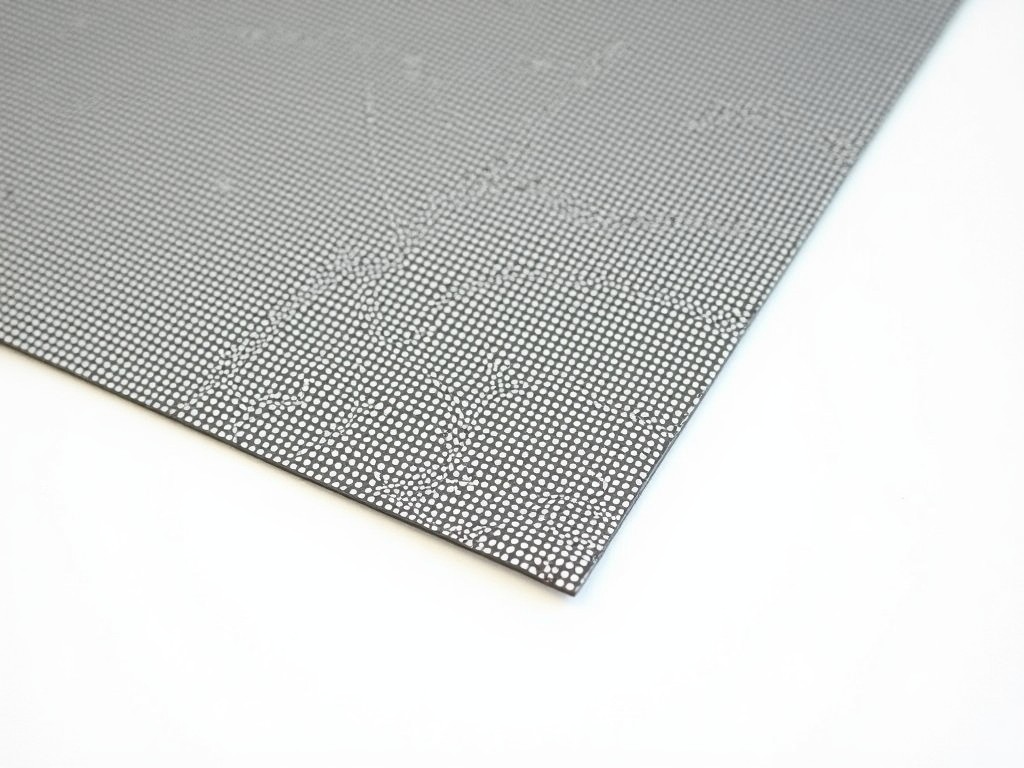

More Products

Send Inquiry
If you are interested in our products, leave your information here and we will be in touch shortly.