Micro Perforated Stainless Steel Sheet
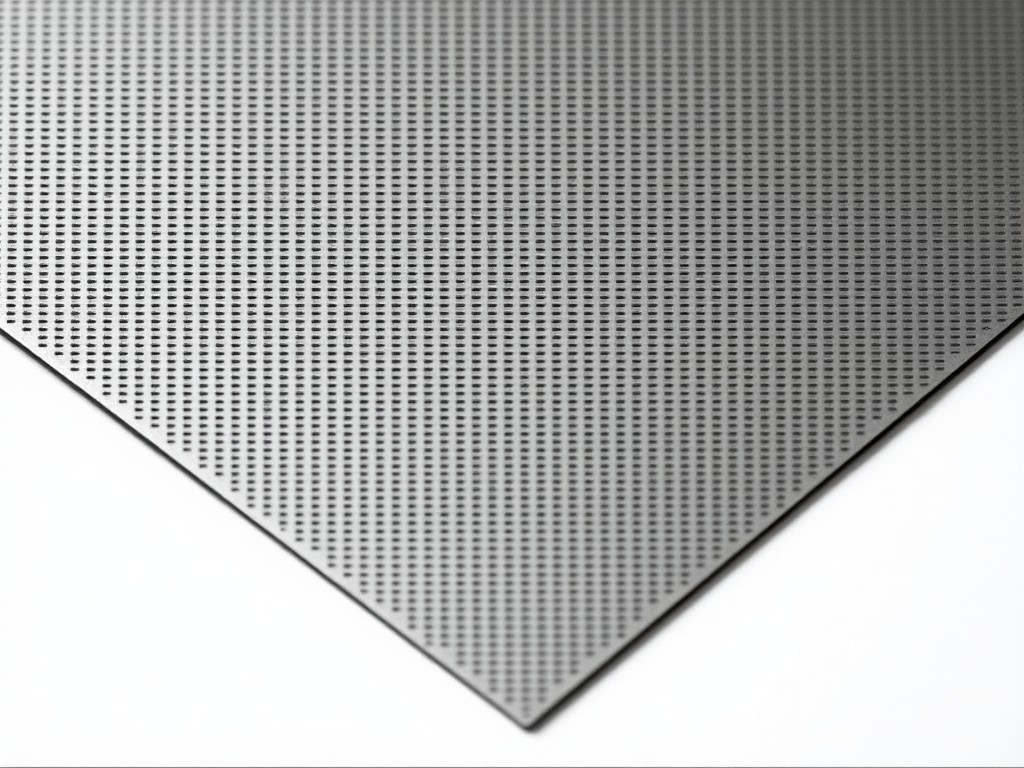
Micro perforated stainless steel sheets feature precisely engineered hole patterns with diameters typically ranging from 0.1 mm to 1.0 mm and open areas between 5% and 40%. These sheets are
Micro Perforated Stainless Steel Sheet
Micro perforated stainless steel sheets feature precisely engineered hole patterns with diameters typically ranging from 0.1 mm to 1.0 mm and open areas between 5% and 40%. These sheets are manufactured using precision punching or laser drilling techniques to achieve consistent hole size, spacing, and edge quality without burrs or deformation. The base material is selected from austenitic stainless steel grades such as 304, 316L, or 430, offering corrosion resistance suitable for indoor, outdoor, or chemically aggressive environments. Hole patterns include round, square, slotted, or custom geometries arranged in staggered or straight alignments to meet specific flow, filtration, or acoustic requirements. Each sheet undergoes dimensional verification to ensure flatness, hole integrity, and pattern repeatability across the full panel.
Material Selection and Properties
Austenitic grades 304 and 316L are commonly used due to their excellent formability during punching and resistance to intergranular corrosion. Grade 304 provides adequate protection in mild atmospheric and food-processing environments, while 316L contains molybdenum for enhanced resistance to chlorides and acidic compounds, making it suitable for marine or chemical processing applications. Ferritic grade 430 is selected when magnetic properties are required or cost sensitivity is high, though it offers lower corrosion resistance than austenitic options. Material thickness typically ranges from 0.3 mm to 2.0 mm, with thinner gauges enabling higher open area ratios but requiring careful handling to prevent distortion during perforation. Mechanical properties such as tensile strength (500–750 MPa for 304) and elongation (>40%) influence the feasibility of achieving small hole diameters without tearing or burr formation.
Perforation Specifications and Tolerances
Hole diameter tolerance is typically maintained within ±0.02 mm for precision applications, achieved through CNC-controlled punching dies or fiber laser systems with beam stabilization. Pitch (center-to-center distance between holes) ranges from 0.5 mm to 3.0 mm, directly affecting open area and structural integrity; minimum pitch is constrained by material thickness and hole size to prevent web tearing between openings. Open area percentage is calculated based on hole geometry and pitch, with round holes offering the highest flow efficiency and square or slotted patterns providing increased surface contact for filtration or screening. Edge roughness (Ra) after perforation is kept below 1.6 μm to minimize fluid turbulence or particle entrapment in cleanroom or sanitary applications. Flatness tolerance is maintained within 0.5% of sheet length to ensure seamless integration into assemblies or coating processes.
Common Applications by Industry
In food and beverage processing, micro perforated sheets are used as dryer screens, washing trays, and beverage filtration plates where fine particle retention and easy cleaning are essential; the smooth hole edges prevent bacterial harborage and comply with FDA 21 CFR standards. Acoustic architects specify these sheets as perforated facings over sound-absorbing cores in auditoriums and studios, where hole size and open area are tuned to target specific frequency absorption coefficients (typically 250–4000 Hz) without compromising structural rigidity. Fuel cell and electrolyzer manufacturers employ them as uniform flow distributors in proton exchange membranes, where consistent hole distribution ensures even gas or liquid diffusion across the active surface, reducing hotspots and improving efficiency. Medical device producers use them as breathable barriers in wearable sensors or implantable housings, balancing microbial protection with vapor transmission rates controlled by hole density and diameter.
Customization Options
Hole patterns can be customized to non-standard geometries such as hexagons, diamonds, or asymmetrical slots to achieve directional flow control or specialized filtration characteristics. Sheet dimensions are typically available up to 1500 mm x 3000 mm, with larger formats achievable through seamless welding or mechanical fastening of multiple panels under engineering supervision. Surface treatments include passivation (ASTM A967), electropolishing (Ra < 0.4 μm), or PVD coatings (TiN, CrN) for enhanced wear resistance or visual identification in multi-stage systems. Perforation can be applied to pre-formed components such as cylinders, cones, or complex geometries using rotary or laser systems, enabling integration into housings, baffles, or enclosures without post-assembly machining. Tolerance grades can be tightened to aerospace or semiconductor standards (e.g., hole position ±0.01 mm) upon request, supported by CMM or optical inspection validation.
Quality Control and Testing
Each production lot undergoes 100% visual inspection under magnified lighting to detect burrs, mis-holes, or edge deformation caused by tool wear or material inconsistencies. Hole diameter and positional accuracy are verified using automated optical systems or coordinate measuring machines (CMM) on a statistically significant sample per batch, with results traceable to ISO 17025 calibrated equipment. Open area is calculated from measured hole count and dimensions, cross-verified against theoretical values to detect systematic deviations in pitch or stamping accuracy. Material thickness is measured at multiple points using micrometers or laser gauges to ensure uniformity, with variation typically held below ±0.03 mm. For critical applications, additional testing such as salt spray (ASTM B117), helium leak detection, or airflow uniformity testing can be performed and documented in inspection reports accompanying shipment.
Packaging and Handling
Sheets are separated by interleaving paper or polyethylene film to prevent surface scratching during stacking and transit. Bundles are secured with corrosion-resistant straps and placed on fumigated wooden pallets or recyclable plastic skids rated for the load dimensions. Moisture barriers (VCI paper or desiccant packs) are included for shipments to humid climates or extended storage periods to prevent surface oxidation, particularly for uncoated 304 or 316L grades. Custom packaging options include wooden crates with foam edging for aerospace or medical components, or vacuum-sealed liners for particulate-sensitive environments. All packages are labeled with material grade, heat number, hole specifications, and handling instructions to ensure traceability and correct deployment upon receipt.
| Property | Typical Range / Value | Notes |
|---|---|---|
| Material Grades | 304, 316L, 430 | Others available upon request |
| Thickness | 0.3 mm – 2.0 mm | Thinner gauges require tighter process control |
| Hole Diameter | 0.1 mm – 1.0 mm | Smaller diameters limited by material thickness |
| Pitch (Center-to-Center) | 0.5 mm – 3.0 mm | Determines open area and structural limits |
| Open Area | 5% – 40% | Dependent on hole shape and arrangement |
| Flatness Tolerance | ≤0.5% of length | Measured across full sheet |
| Surface Finish (Ra) | 0.4 μm – 1.6 μm | Lower values achievable with electropolishing |
More Products

Send Inquiry
If you are interested in our products, leave your information here and we will be in touch shortly.