Mtb Ss304 Stainless Steel Welded Wire Mesh
This product consists of stainless steel wires arranged in a uniform grid pattern, joined at intersections through resistance welding. The base material is AISI SS304, an austenitic chromium-nickel
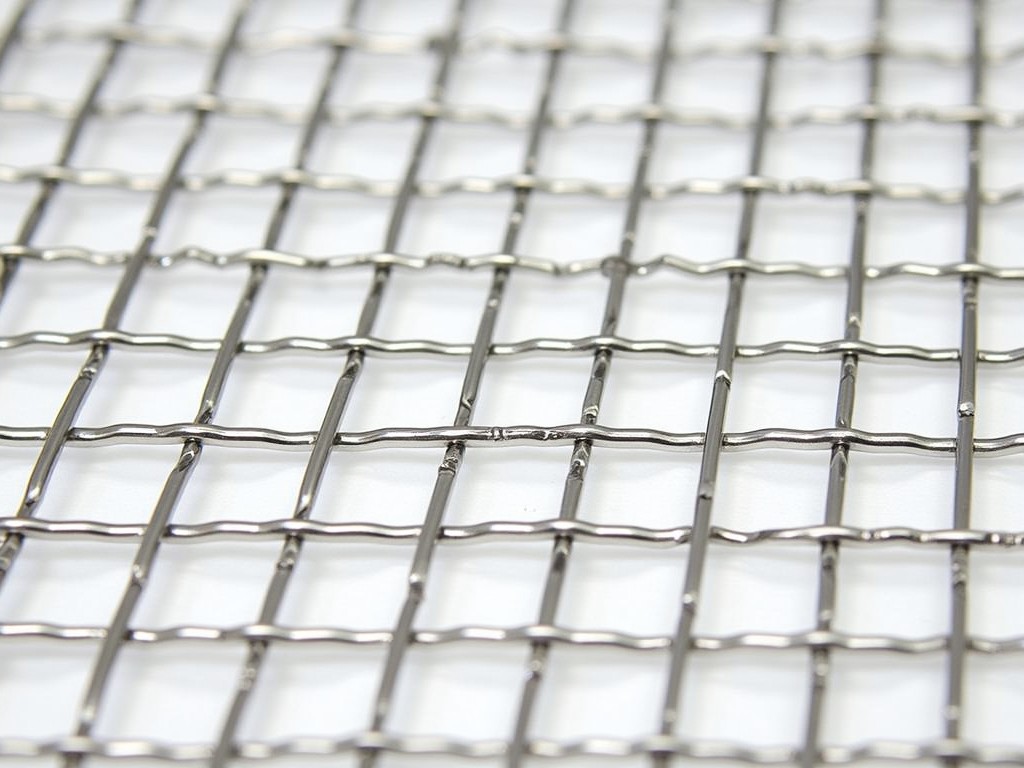
MTB SS304 Stainless Steel Welded Wire Mesh
This product consists of stainless steel wires arranged in a uniform grid pattern, joined at intersections through resistance welding. The base material is AISI SS304, an austenitic chromium-nickel alloy known for its balance of corrosion resistance, formability, and mechanical strength. The welded construction ensures dimensional stability under load, distinguishing it from woven or knitted alternatives where joint movement can occur.
Material Properties and Selection Rationale
SS304 contains approximately 18% chromium and 8% nickel, which forms a passive oxide layer that resists oxidation in ambient and mildly corrosive environments. This composition provides resistance to atmospheric corrosion, freshwater exposure, and many food-grade chemicals. The alloy maintains its tensile strength up to approximately 425°C; beyond this temperature, sensitization and loss of corrosion resistance may occur in welded zones. For continuous service above 400°C, higher-grade alloys such as SS310 or SS321 are typically considered.
The wire diameter and mesh opening are selected based on mechanical requirements. Thicker wires increase load-bearing capacity but reduce open area, affecting flow dynamics in filtration or ventilation applications. Open area percentage is calculated as (opening width / (opening width + wire diameter))² × 100 for square meshes. This parameter is critical in applications involving air flow, liquid drainage, or particle retention where pressure drop and efficiency must be modeled.
Manufacturing Process and Quality Control
The production begins with cold-drawn SS304 wire, straightened and fed into automated welding machines. Resistance spot welding fuses each wire intersection using precise electrical current and pressure, creating a metallurgical bond without filler material. The process avoids melting the wire cross-section, preserving the base material’s corrosion-resistant properties at the weld. Post-welding, the mesh may undergo stress-relief annealing to reduce residual stresses from cold drawing and welding, improving dimensional stability during fabrication.
Quality verification includes dimensional inspection of wire diameter (±0.02 mm tolerance), pitch accuracy (±0.5 mm over 300 mm), and weld shear strength. Weld strength is typically tested to exceed 60% of the parent wire’s tensile strength, ensuring joints do not fail before the wire itself under tensile load. Visual inspection checks for missed welds, burn-through, or wire deformation. Surface cleanliness is assessed to ensure no embedded particulates or oxides compromise corrosion resistance.
Typical Specifications and Customization Options
| Parameter | Typical Range | Notes |
|---|---|---|
| Wire Diameter | 0.5 mm – 3.0 mm | Custom diameters available upon request |
| Mesh Opening | 2 mm – 50 mm | Square or rectangular apertures |
| Width | Up to 2000 mm | Standard roll widths; wider via splicing |
| Length | Rolls or cut-to-size | Typical roll length: 10–30 m |
| Wire Temper | ½ hard, ¾ hard, full hard | Affects stiffness and springback |
| Surface Finish | As-welded, pickled, passivated | Passivation enhances corrosion resistance |
Industrial Applications and Functional Advantages
In food processing, SS304 welded mesh is used for drying trays, conveyor belts, and protective guards where hygiene and corrosion resistance are essential. The smooth, non-porous surface minimizes bacterial harborage, and the material withstands frequent washdowns with alkaline or acidic cleaners. Unlike coated steel, it does not risk flaking or contamination from degraded surface layers.
In architectural applications, it serves as infill for balustrades, sun screens, and facade panels. The welded structure maintains flatness under wind load, and the material’s natural silver finish requires no painting, reducing lifecycle maintenance. When used as a safety barrier, the mesh provides visibility while preventing passage of objects above a defined size—critical in machine guarding or public access areas.
For industrial filtration, the mesh acts as a support layer for filter media or as a standalone screen for coarse particle separation. Its open area allows predictable flow characteristics, and the uniform aperture size ensures consistent retention performance. In chemical plants, it is employed in baskets for holding catalysts or media during processing, where resistance to both corrosion and mechanical deformation is required.
Comparison with Alternatives
| Feature | SS304 Welded Mesh | Woven SS304 Mesh | Galvanized Welded Mesh |
|---|---|---|---|
| Corrosion Resistance | Good in ambient and mild chemical environments | Good, but joints may crevice corrode | Moderate; zinc coating degrades over time |
| Joint Integrity | Rigid, load-bearing welds | Flexible; joints can shift under load | Rigid welds, but coating may crack at joints |
| Temperature Limit | Up to 425°C (continuous) | Up to 425°C | Up to 200–250°C (coating degradation) |
| Hygienic Suitability | Excellent; smooth, cleanable surface | Good; crevices at joints can trap particles | Poor; coating may harbor bacteria |
| Typical Use Case | Food, pharma, architecture, filtration | Sieving, shielding, flexible barriers | Fencing, concrete reinforcement, low-cost guards |
Ordering Information and Technical Support
To receive a formal quotation, provide the following: wire diameter, mesh opening (width and height if rectangular), overall width and length, edge treatment (e.g., selvedge, folded, framed), and any required post-weld processing such as passivation or stress relief. For architectural or structural applications, indicate expected load conditions and environmental exposure (e.g., indoor, outdoor, marine proximity) to enable appropriate material temper and finish selection.
Samples are available upon request for validation of dimensional accuracy, surface finish, and weld quality. Sample lead time is typically 3–5 business days for standard configurations. Custom tooling or non-standard apertures may extend lead time. All dimensions are verified against ISO 9044 or equivalent industrial standards for welded wire mesh.
More Products

Send Inquiry
If you are interested in our products, leave your information here and we will be in touch shortly.