Multipurpose Stainless Steel Folding Basket
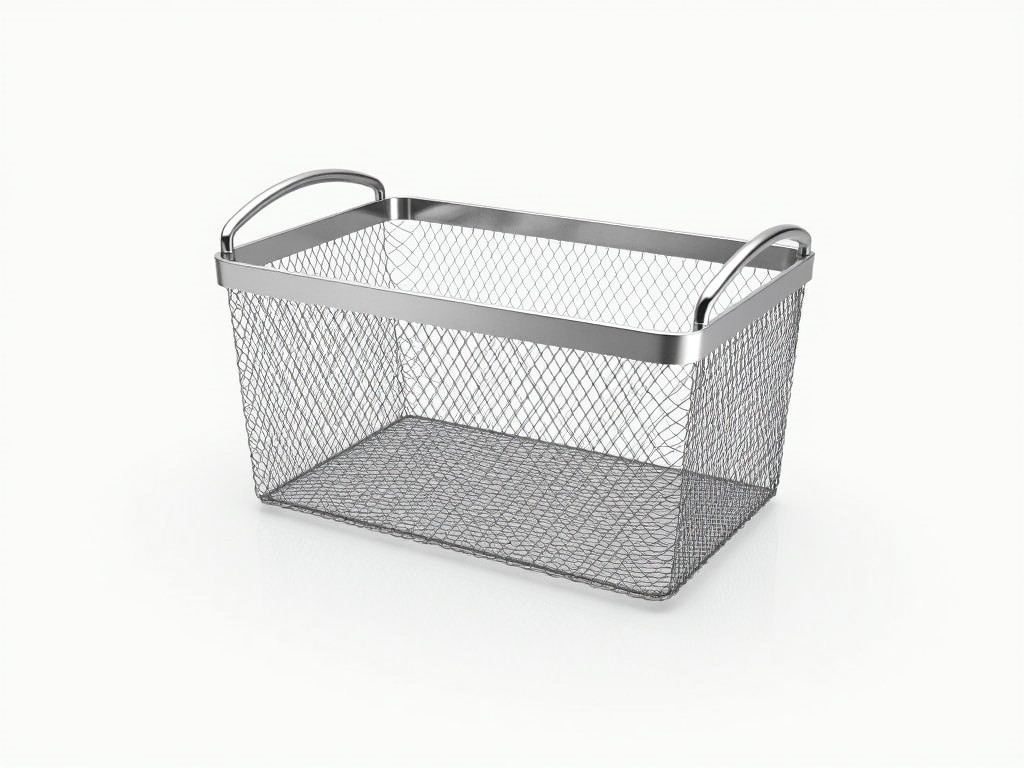
The multipurpose stainless steel folding basket is a reusable material handling solution designed for industrial environments where space efficiency, corrosion resistance, and repeated load cycling
Multipurpose Stainless Steel Folding Basket
The multipurpose stainless steel folding basket is a reusable material handling solution designed for industrial environments where space efficiency, corrosion resistance, and repeated load cycling are critical. Unlike rigid containers or disposable packaging, this basket collapses to a fraction of its deployed height, enabling efficient return logistics and storage when not in active use. Its primary function is to transport, store, and organize components, tools, or semi-finished goods across manufacturing floors, warehouses, and distribution centers while maintaining structural integrity under repeated use.
Constructed from austenitic stainless steel grades such as 304 or 316, the basket’s frame and mesh are engineered to withstand exposure to moisture, cleaning agents, and mild chemicals without degradation. The folding mechanism relies on precision-engineered pivot points and interlocking legs that lock securely in the open position and release smoothly for collapse. Load capacity is determined by frame geometry, wire diameter, and joint design—typical working loads range from 50 kg to 200 kg depending on size and configuration, with safety factors applied per ISO 14405-1 for reusable containers.
Key Design Features
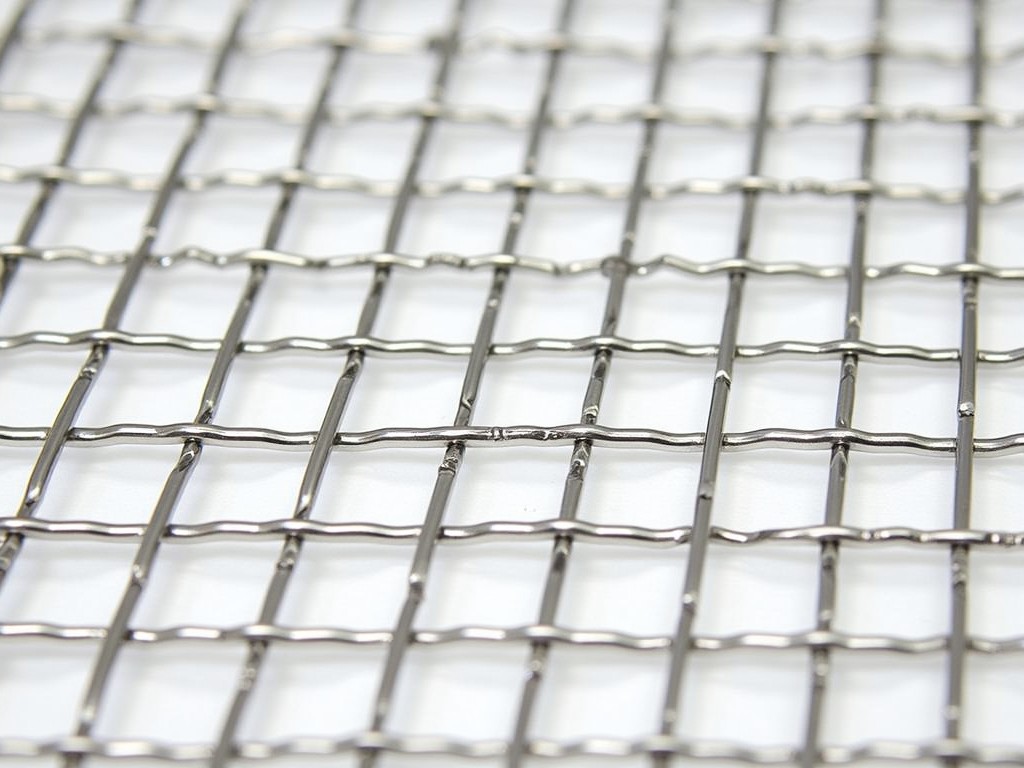
The basket’s folding action is facilitated by tapered hinge pins and spring-assist mechanisms that reduce manual effort during deployment and storage. When open, the base and sidewalls form a rigid rectangular prism; when folded, the height reduces by 60–75%, significantly improving trailer or pallet utilization in reverse logistics. Mesh openings are typically 12.5 mm × 12.5 mm or 25 mm × 25 mm, balancing visibility, drainage, and small-part containment—custom apertures are available for specific part sorting or washing applications.
Load-bearing members use round or flattened wire with diameters from 4 mm to 8 mm, selected based on required stiffness and weight constraints. Corner reinforcements include gusseted brackets or double-wire loops to prevent deformation under eccentric loading. All welds are performed using TIG or spot welding techniques to maintain corrosion resistance and avoid crevices where contaminants could accumulate—critical for food, pharmaceutical, or cleanroom-adjacent environments.
Material and Finish Options
While 304 stainless steel provides adequate resistance to atmospheric corrosion and frequent washing, 316 grade is specified for environments with chloride exposure, such as marine proximity or industrial cleaning cycles involving sodium hypochlorite. Surface finishes range from mill finish (as-welded) to electropolished or passivated treatments, the latter enhancing corrosion resistance by removing free iron and smoothing micro-surface defects. Electropolishing is commonly selected for applications requiring frequent sanitation or where particulate shedding must be minimized.
Optional coatings such as nylon or PVC overmolding on contact surfaces are available to prevent marring of delicate parts, though these add complexity to recycling and may limit high-temperature use. For extreme temperature applications (e.g., autoclave or oven cycles), bare stainless steel is preferred due to its stable mechanical properties from -196°C to +800°C. Material test reports (MTRs) and surface roughness measurements (Ra) are available upon request for quality validation.
Typical Applications
In automotive manufacturing, these baskets transport stamped metal components between stamping presses and assembly lines, where their open mesh allows fluid drainage and visual inspection without unpacking. In electronics production, they hold circuit boards or subassemblies during washing, drying, or electrostatic discharge (ESD)-controlled processes—stainless steel’s inherent conductivity helps dissipate static charge when grounded. Food processing facilities use them for blanching, cooling, or transporting vegetables and seafood through wash-down zones, relying on their resistance to acidic juices and high-pressure spray cleaning.
Pharmaceutical manufacturers utilize them for holding vials, syringes, or trays during lyophilization or sterilization cycles, where non-particulating, autoclavable containers are required. Aerospace suppliers deploy them for transporting precision-machined parts between CNC machines and inspection stations, benefiting from the basket’s dimensional stability and resistance to coolant aerosols. Distribution centers use folded baskets as returnable containers for empty pallets or totes, reducing cardboard waste and improving trailer cube utilization by up to 40% in reverse logistics.
Customization Parameters
Standard basket dimensions range from 300 mm × 200 mm to 1200 mm × 800 mm in footprint, with open heights from 150 mm to 400 mm. Custom lengths, widths, and heights are achievable within structural limits—longer spans may require additional cross-bracing or increased wire diameter to prevent sag under load. Mesh size, wire gauge, and folding angle can be adjusted to optimize for specific part geometry, weight, or handling automation compatibility (e.g., integration with conveyor guides or robotic grippers).
Accessories include drop-down fronts for easy parts retrieval, lid attachments for dust protection, and caster kits with locks for mobile use. Label holders, barcode plates, or RFID pockets can be integrated into the frame for traceability. Surface markings such as laser-etched logos or color-coded zones (via anodized aluminum inserts) are available for sorting systems. All customizations are reviewed for impact on folding mechanics, load capacity, and compliance with relevant industry standards (e.g., FDA 21 CFR, EHEDG, or IP69K where applicable).
Quality and Testing
Each basket undergoes dimensional verification at critical points—hinge alignment, sidewall squareness, and folded height tolerance—to ensure consistent performance. Load testing is performed to 125% of rated capacity for one minute, with permanent set measured afterward; acceptable deformation is typically <2% of dimension. Cycle life validation involves 500+ fold/unfold operations under load to assess fatigue resistance at hinge points and weld joints, with failure criteria defined as loss of locking function or crack initiation.
Surface quality is inspected for weld porosity, undercut, or sharp edges—especially important in manual handling environments. Passivation effectiveness may be validated via copper sulfate test or potentiostatic methods per ASTM A967. For regulated industries, documentation includes material certification, weld maps, and test reports packaged with each shipment. Quality control follows ISO 9001 principles, with traceability from raw material coil to finished product via batch or lot numbering.
| Parameter | Typical Range / Option | Notes |
|---|---|---|
| Stainless Steel Grade | 304, 316 | 316 preferred for chloride-rich environments |
| Wire Diameter | 4 mm – 8 mm | Selected based on load and span |
| Mesh Opening | 12.5 mm × 12.5 mm, 25 mm × 25 mm | Custom apertures available |
| Working Load Capacity | 50 kg – 200 kg | Depends on size and configuration |
| Folded Height Reduction | 60% – 75% | Improves return logistics efficiency |
| Surface Finish | Mill, Passivated, Electropolished | Electropolish enhances cleanability |
| Operating Temperature | -196°C to +800°C | Bare stainless steel only |
Engineering teams should consider the total lifecycle cost when evaluating folding baskets versus single-use alternatives. While initial acquisition cost is higher than corrugated boxes or plastic totes, the ability to reuse the basket hundreds of times reduces long-term expense and waste generation. Break-even analysis typically shows payback within 6–18 months depending on usage frequency, handling intensity, and disposal costs avoided. For high-mix, low-volume production, the basket’s adaptability to changing part sizes via adjustable inserts or modular frames further increases utility.
Proper maintenance extends service life—regular inspection for hinge wear, weld integrity, and surface contamination prevents unexpected failure. Cleaning protocols should avoid chlorides above 25 ppm if using 304 grade, and mechanical impacts should be minimized to prevent frame bending. Training personnel on correct folding/unfolding technique reduces stress on joints and ensures consistent locking. End-of-life recycling is straightforward due to the homogeneous stainless steel construction, allowing full material recovery in standard scrap streams.
More Products

Send Inquiry
If you are interested in our products, leave your information here and we will be in touch shortly.