Oem 3Mm Perforated Aluminum Metal Sheet
Perforated aluminum sheets with a 3mm thickness are commonly specified in industrial applications where a balance of structural rigidity, corrosion resistance, and controlled airflow or light
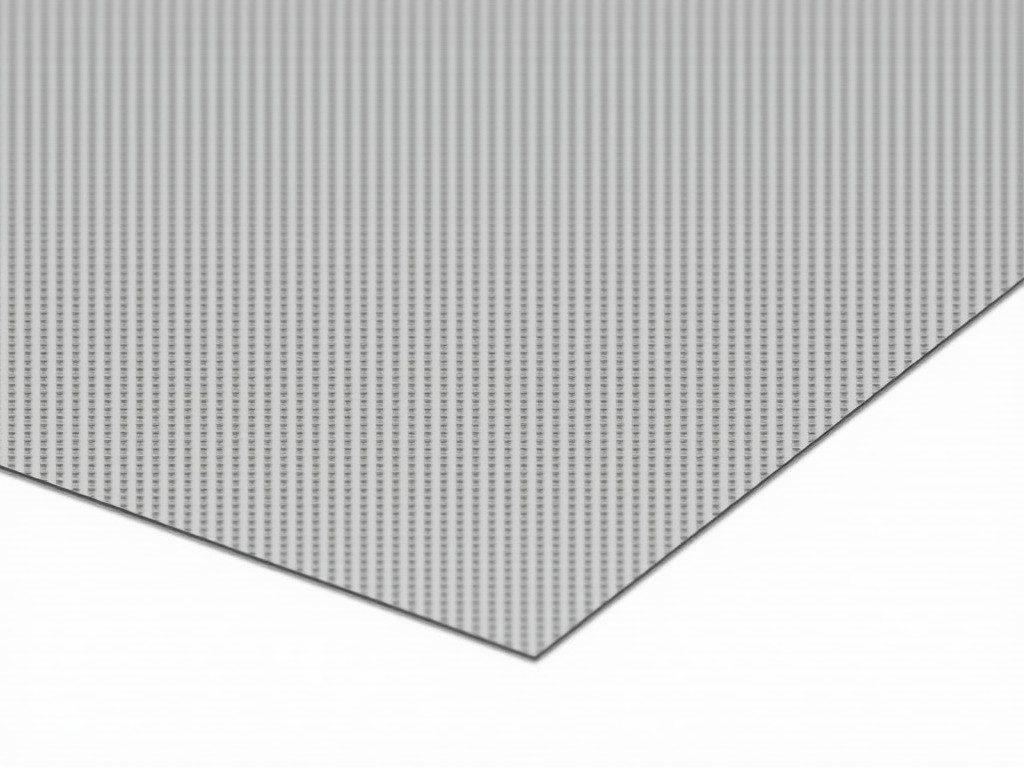
OEM 3mm Perforated Aluminum Metal Sheet
Perforated aluminum sheets with a 3mm thickness are commonly specified in industrial applications where a balance of structural rigidity, corrosion resistance, and controlled airflow or light transmission is required. The perforations are precision-punched to create consistent hole patterns that maintain material integrity while enabling functional performance.
Material Composition and Mechanical Properties
The base material is typically aluminum alloy 3003 or 5052, selected for its formability, weldability, and resistance to atmospheric corrosion. 3003 offers moderate strength with excellent workability, while 5052 provides higher tensile strength (~215 MPa) and superior performance in marine or chemical-exposed environments. Both alloys retain dimensional stability after perforation due to their low work-hardening rate.
At 3mm thickness, the sheet resists deformation under typical mechanical loads encountered in paneling, guarding, or filtration systems. The yield strength of 5052-H32 allows it to withstand bending stresses without permanent set, making it suitable for load-bearing perforated components such as walkway treads or machine guards.
Perforation Patterns and Open Area Ratios
Standard perforation patterns include round, square, slot, and hexagonal arrangements, each influencing airflow dynamics, acoustic performance, and visual transparency. Round holes are most common due to uniform stress distribution and ease of tooling. Open area—the percentage of sheet surface occupied by holes—typically ranges from 15% to 50%, depending on hole diameter and pitch.
For example, a 3mm thick sheet with 5mm diameter round holes on a 8mm staggered pitch achieves approximately 30% open area. This configuration supports effective ventilation in HVAC enclosures while limiting ingress of particulates larger than 5mm. Tighter pitches increase open area but reduce ligament strength between holes, requiring careful engineering to avoid tear-out under stress.
Surface Treatments and Finishing Options
To enhance durability or meet aesthetic requirements, perforated aluminum sheets can undergo various surface treatments. Mill finish retains the natural oxide layer, offering baseline corrosion resistance for indoor use. Anodizing (Type II or III) increases surface hardness and allows color dyeing for architectural applications. Powder coating provides a uniform, UV-stable finish in custom RAL colors, ideal for exterior façades or equipment housings.
Chemical conversion coatings such as Alodine® improve paint adhesion and corrosion resistance without significantly altering dimensions. For food-grade or cleanroom applications, electropolishing may be specified to achieve a smooth, contaminant-resistant surface. All treatments are applied post-perforation to ensure uniform coverage over hole edges and exposed surfaces.
Typical Industrial Applications
In industrial settings, 3mm perforated aluminum sheets are used as protective guards around rotating machinery, where the hole pattern allows visibility and heat dissipation while preventing contact with moving parts. Their non-sparking nature makes them suitable for environments with flammable dust or vapors.
They serve as inlet/outlet panels in electrical enclosures, providing EMI shielding when coated with conductive paint and enabling convective cooling. In architectural contexts, they function as sun screens or façade elements, where patterned perforations create controlled light diffusion and reduce solar heat gain.
Additional uses include speaker grilles, filtration pre-filters, conveyor belt supports, and decorative panels in transportation interiors. The combination of light weight (~8.1 kg/m² for 3mm aluminum) and durability allows for easy handling and long-term performance in dynamic installations.
Comparison: Perforated Aluminum vs. Alternatives
| Property | Perforated Aluminum (3mm) | Perforated Steel (3mm) | Perforated Plastic (HDPE) |
|---|---|---|---|
| Density | 2.7 g/cm³ | 7.85 g/cm³ | 0.95 g/cm³ |
| Tensile Strength | 140–215 MPa (alloy dependent) | 350–550 MPa | 20–30 MPa |
| Corrosion Resistance | Excellent (natural oxide layer) | Requires coating/galvanization | Good (chemical resistant) |
| Typical Use Case | Weight-sensitive, corrosion-prone, indoor/outdoor | High-load, static structures, cost-sensitive | Low-load, chemical tanks, noise reduction |
Compared to steel, aluminum offers one-third the density with sufficient strength for many guarding and paneling applications, reducing structural load and installation effort. While plastic perforated sheets are lighter and chemically inert, they lack the rigidity and temperature resistance (>80°C continuous) required in industrial machinery environments. Aluminum provides the optimal balance for applications demanding durability, conductivity, and environmental resilience.
Customization Capabilities
OEM suppliers typically offer full customization of hole size, shape, pitch, and pattern layout to meet specific functional requirements. Common round hole diameters range from 1.5mm to 10mm, with staggered or straight-line pitches available. Custom patterns—such as logo perforations, gradient open areas, or directional flow designs—can be programmed via CNC punch presses or laser systems.
Sheet dimensions are frequently tailored to standard widths (1000mm, 1250mm, 1500mm) and lengths up to 3000mm, with shearing or routing to exact sizes available upon request. Edge treatments include deburring, rounding, or flanging to ensure safe handling and seamless integration into assemblies. All customizations are subject to tooling feasibility and material utilization efficiency.
Quality Control and Inspection
Dimensional verification includes thickness measurement (±0.1mm tolerance), hole diameter accuracy (±0.05mm), and positional tolerance (±0.15mm) using calibrated gauges or vision systems. Open area is validated through optical scanning or mathematical calculation based on punch parameters. Surface finish is inspected for coating uniformity, adhesion, and absence of defects such as orange peel or pinholes.
Mechanical properties are confirmed via mill test reports (MTRs) for the base alloy, with optional third-party validation available. For critical applications, sample sheets may undergo burst pressure, flexural rigidity, or salt spray testing (ASTM B117) to verify performance under simulated conditions. All inspection criteria are documented and traceable to production batches.
More Products

Send Inquiry
If you are interested in our products, leave your information here and we will be in touch shortly.